
21 Modern Living Room Wall Art Ideas for a Stylish Home
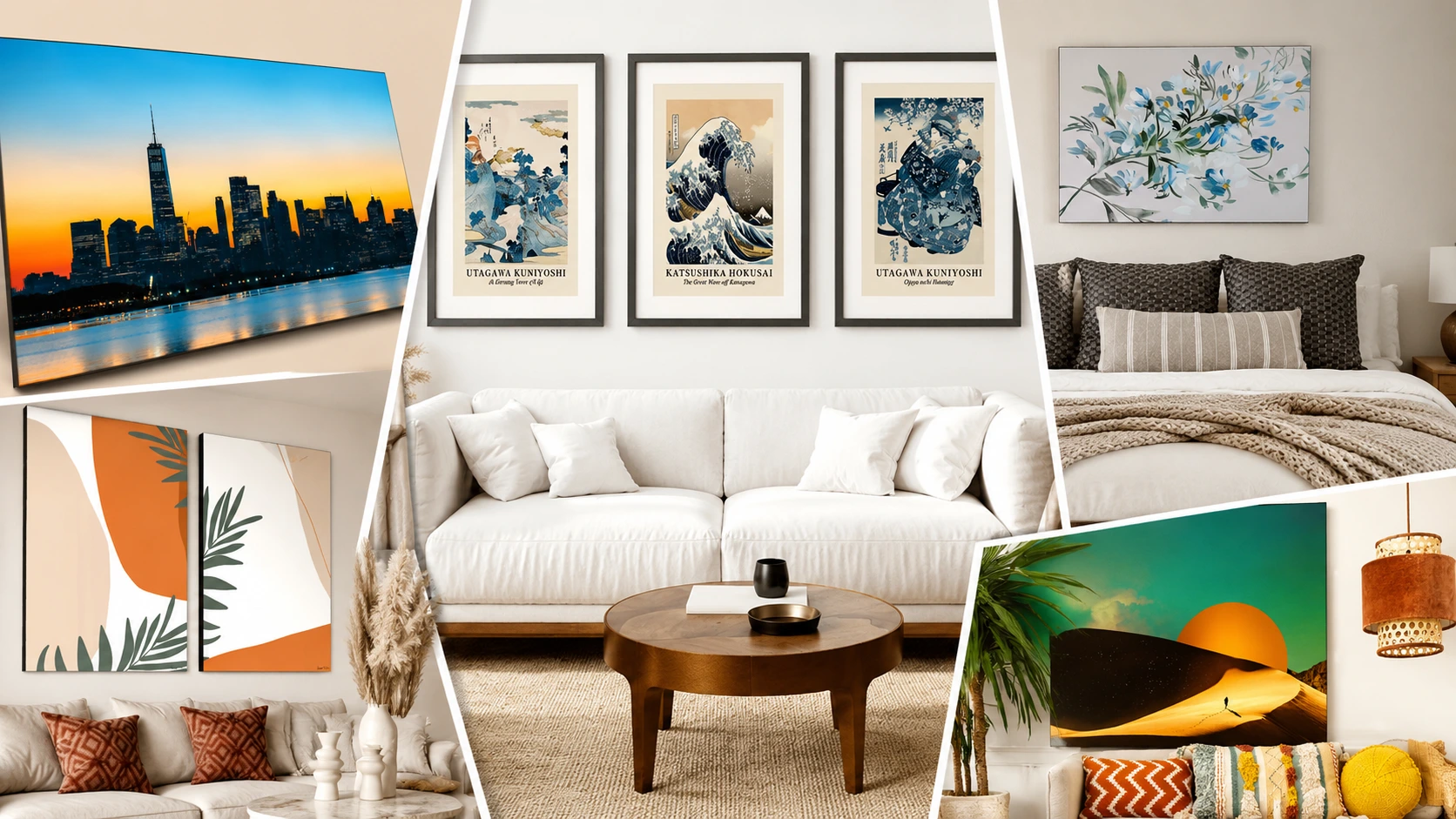
21 Modern Living Room Wall Art Ideas to Transform Your Space
An empty wall has a way of making even a well-furnished living room feel unfinished. The sofa is in place, the rug is down, the lighting is right — but something is still missing. More often than not, that missing piece is art.
The right piece of wall art does more than fill blank space. It sets the tone for the entire room, ties furniture and color palettes together, and gives a space a sense of personality that furniture alone can’t provide. And modern wall art covers far more ground than most people expect — it isn’t limited to stark, minimalist canvases. It can be bold and colorful, warm and organic, photographic, textural, or quietly monochrome.
This guide walks through 21 modern living room wall art ideas, along with practical advice on sizing, placement, and how to match artwork to your existing decor. Whether you’re working with a large open-plan living room or a smaller apartment wall, there’s an approach here that fits.
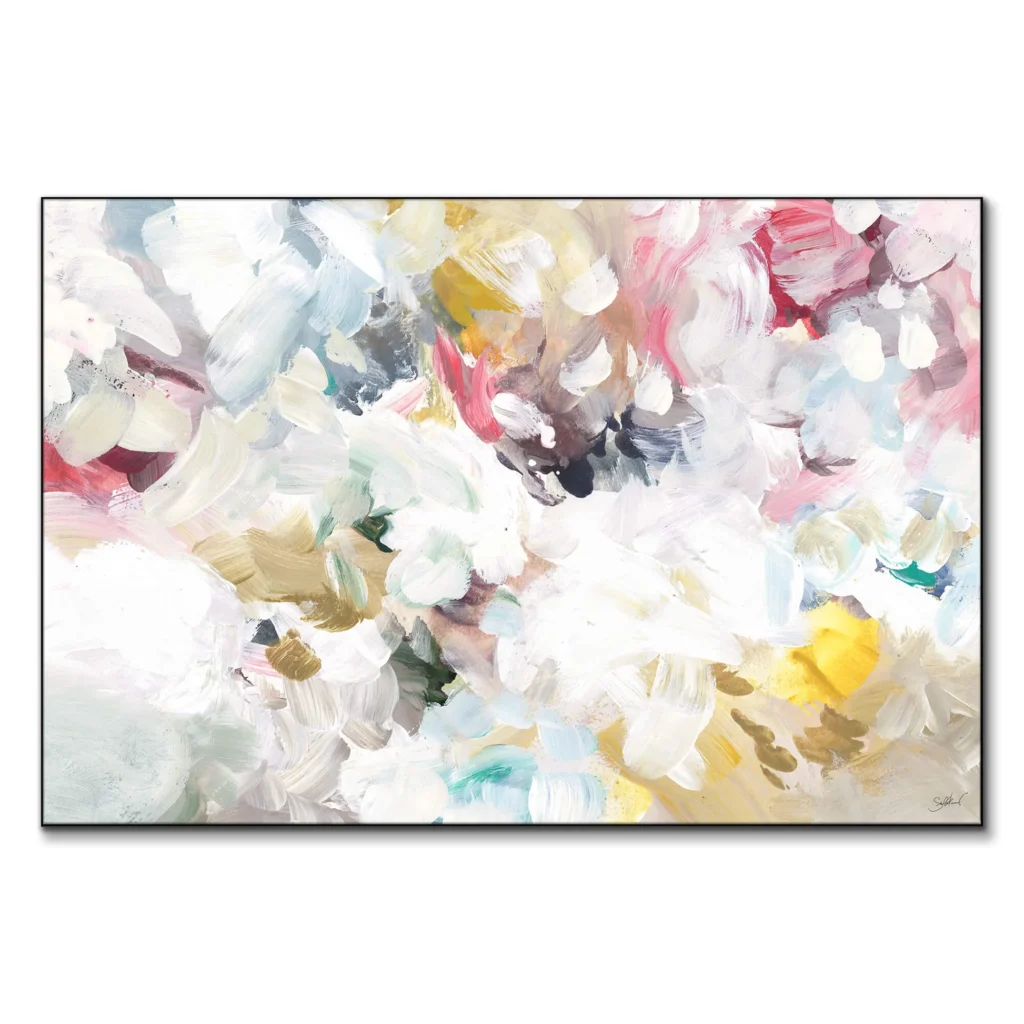
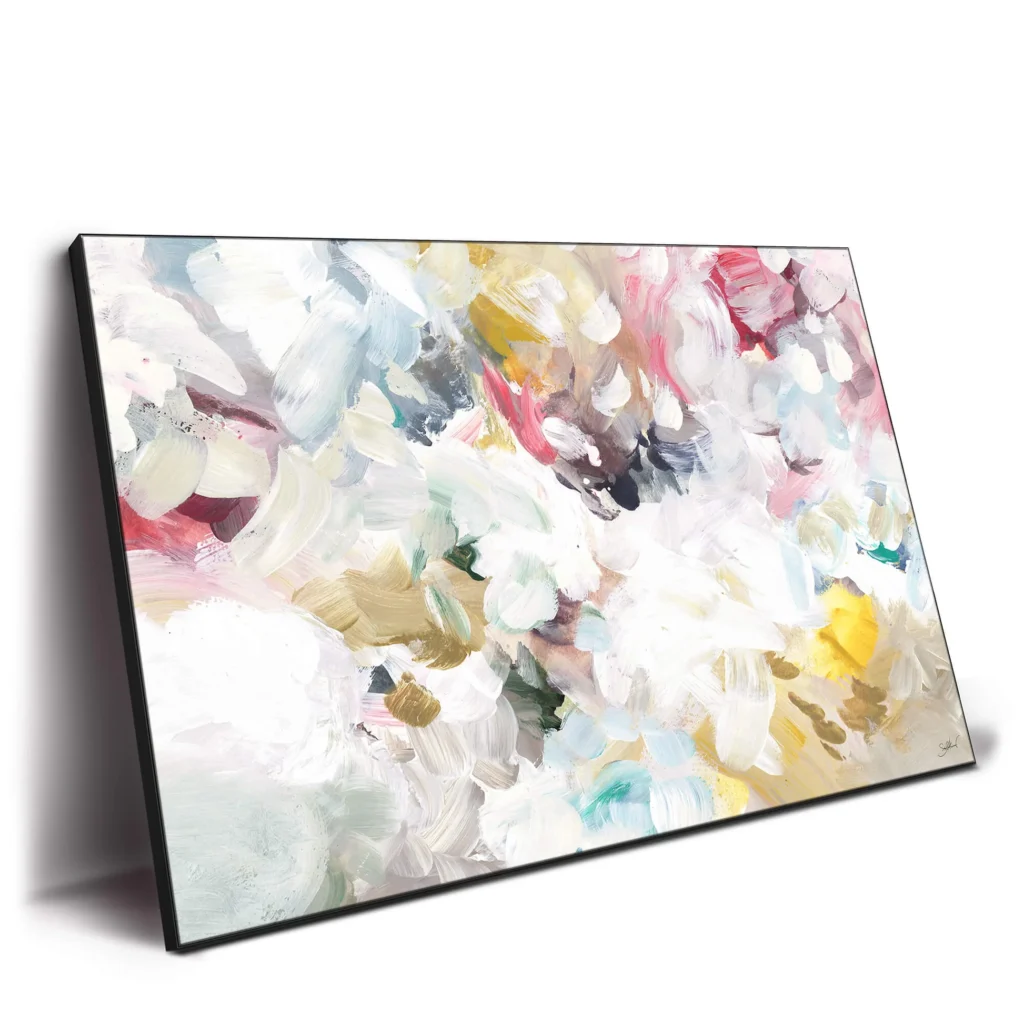
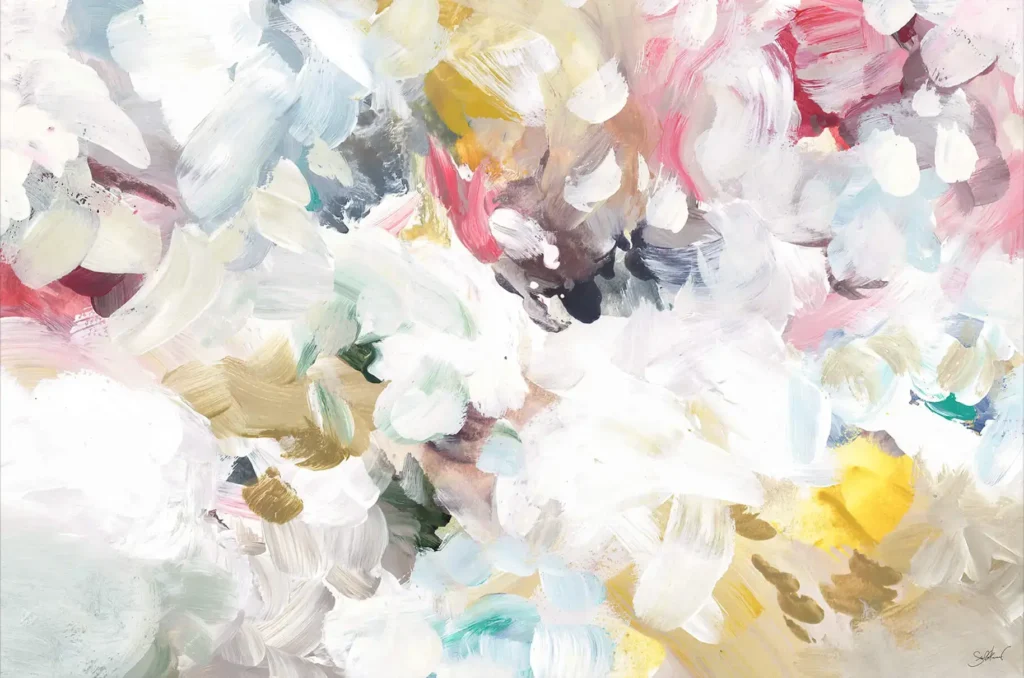
1. Create a Statement Wall With Large Abstract Art
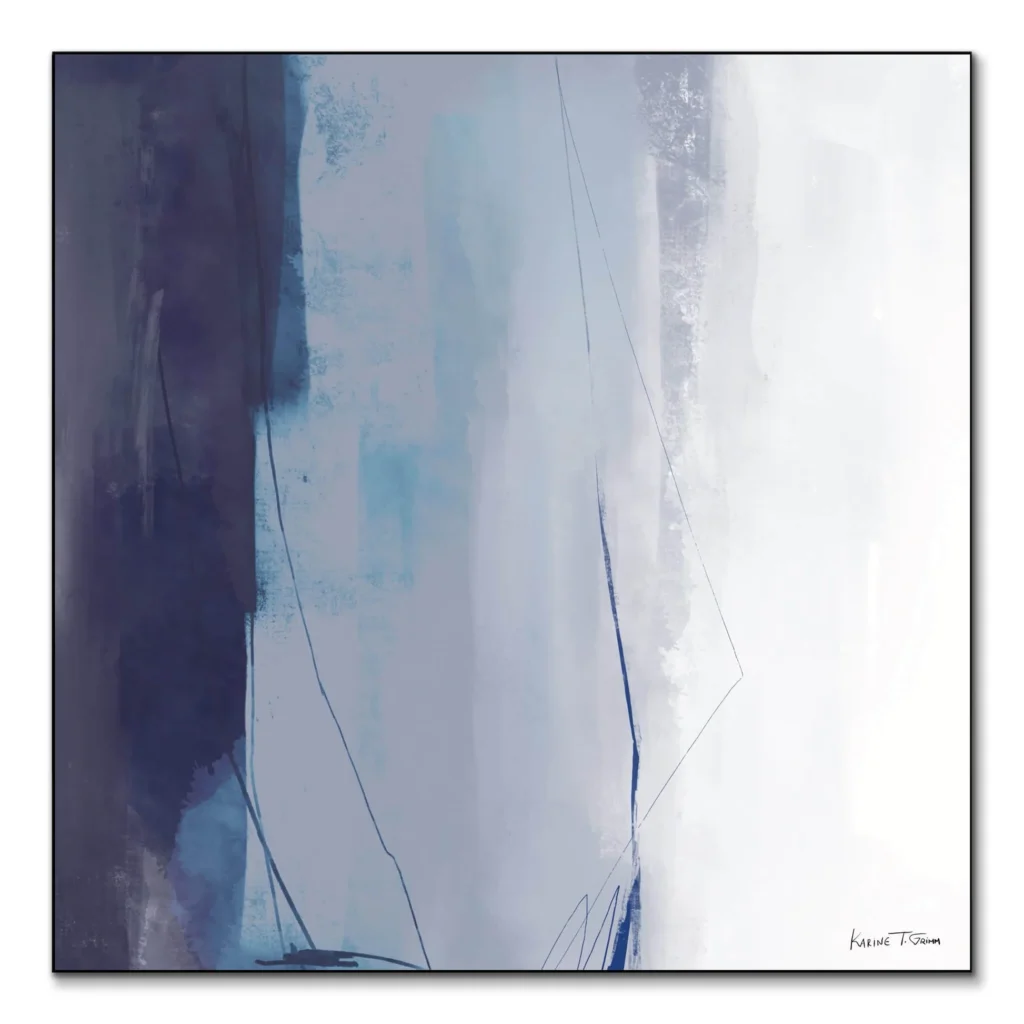
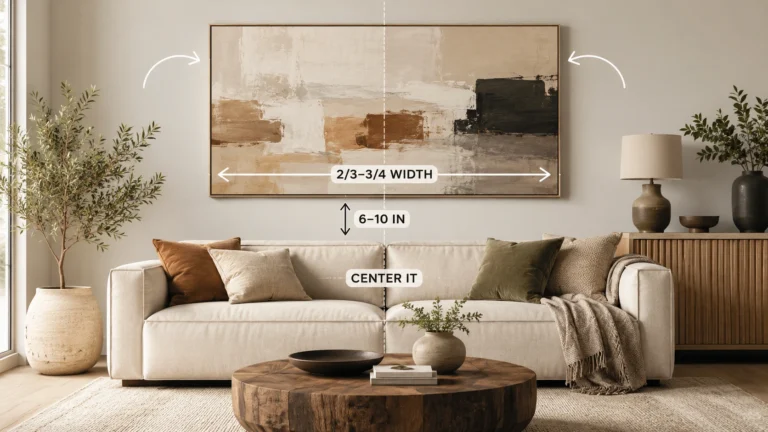
One of the most reliable ways to elevate a living room is to hang a single, oversized abstract piece above the sofa. Scale matters here — a small print above a large sofa tends to look lost, while a piece sized to roughly two-thirds the width of the furniture creates real visual balance.
Abstract art works particularly well as a focal point because it doesn’t compete with the rest of the room’s decor. Instead, it pulls the eye in and anchors the seating area, giving the space a clear sense of purpose. Color is worth considering carefully too: a piece that echoes one or two tones already in the room (a cushion, a rug, a piece of wood furniture) will feel intentional rather than random.
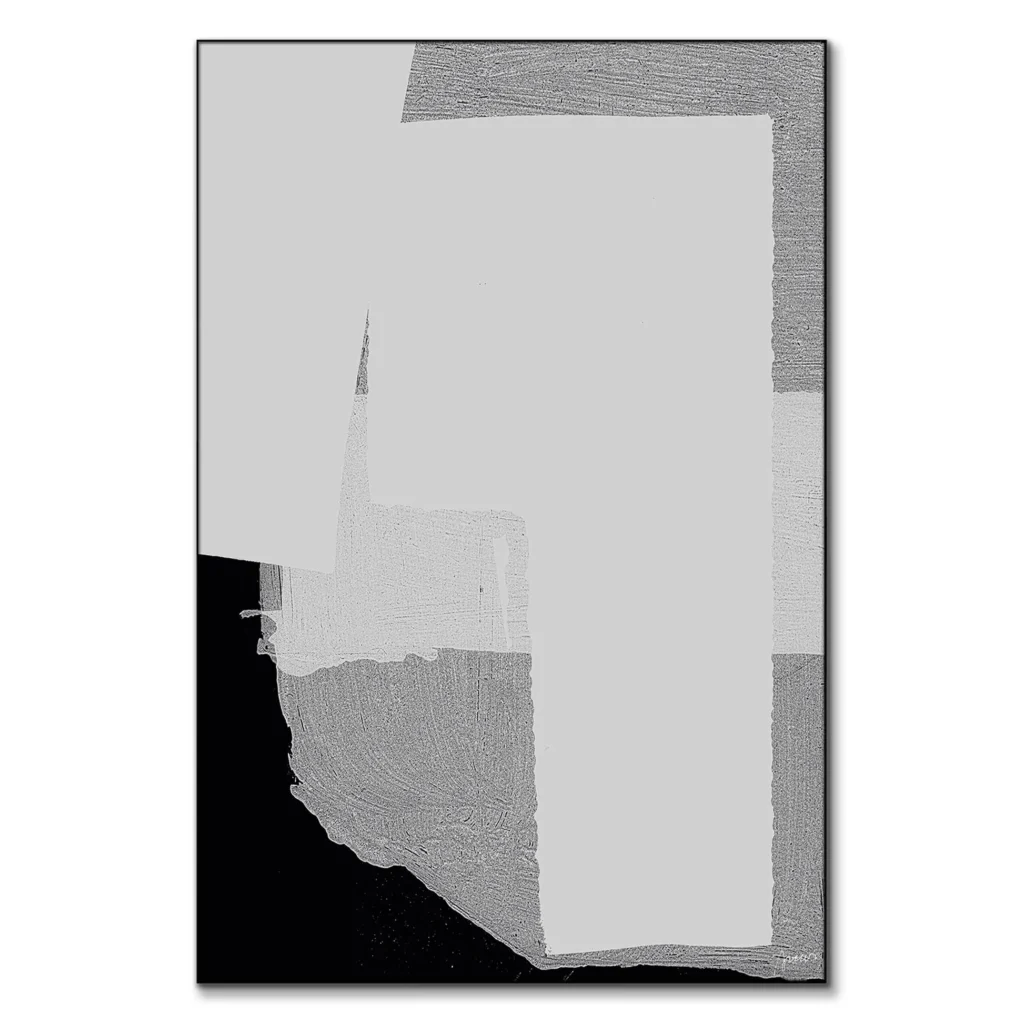
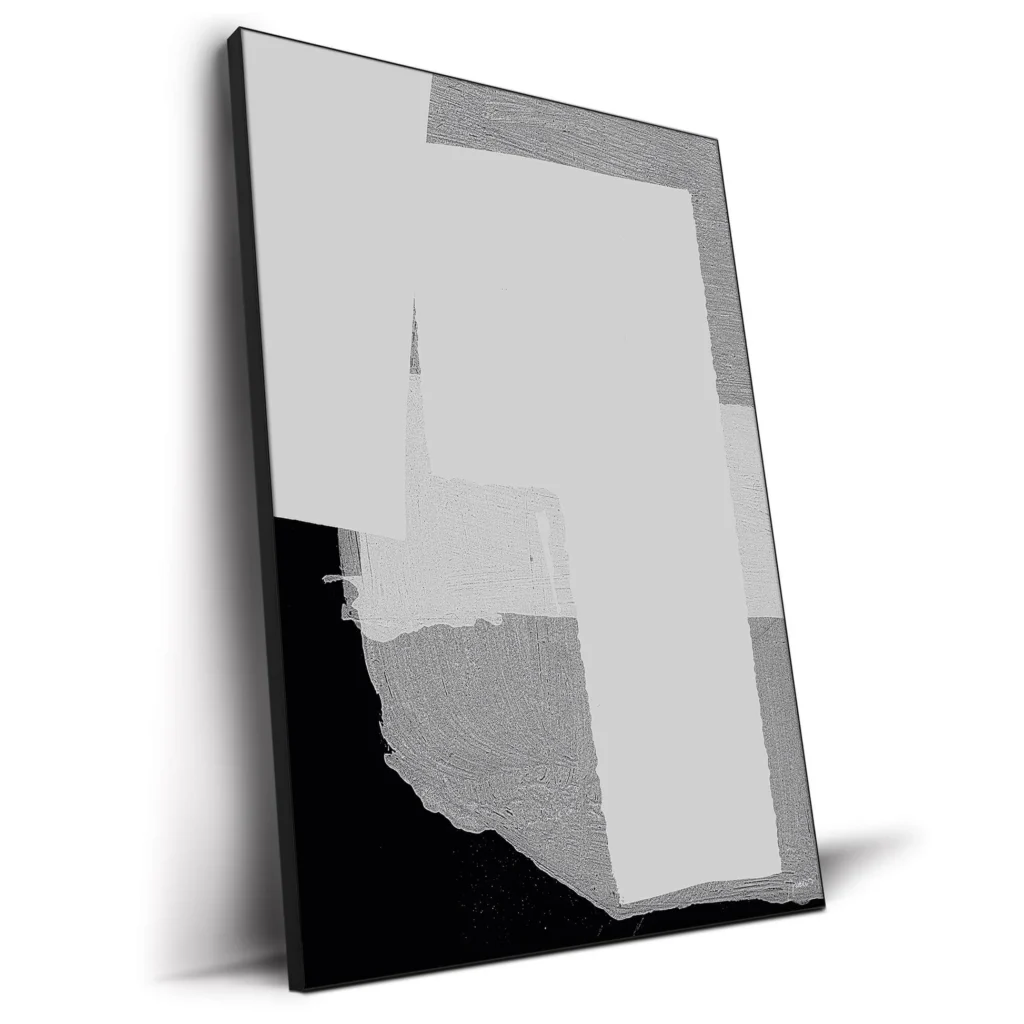
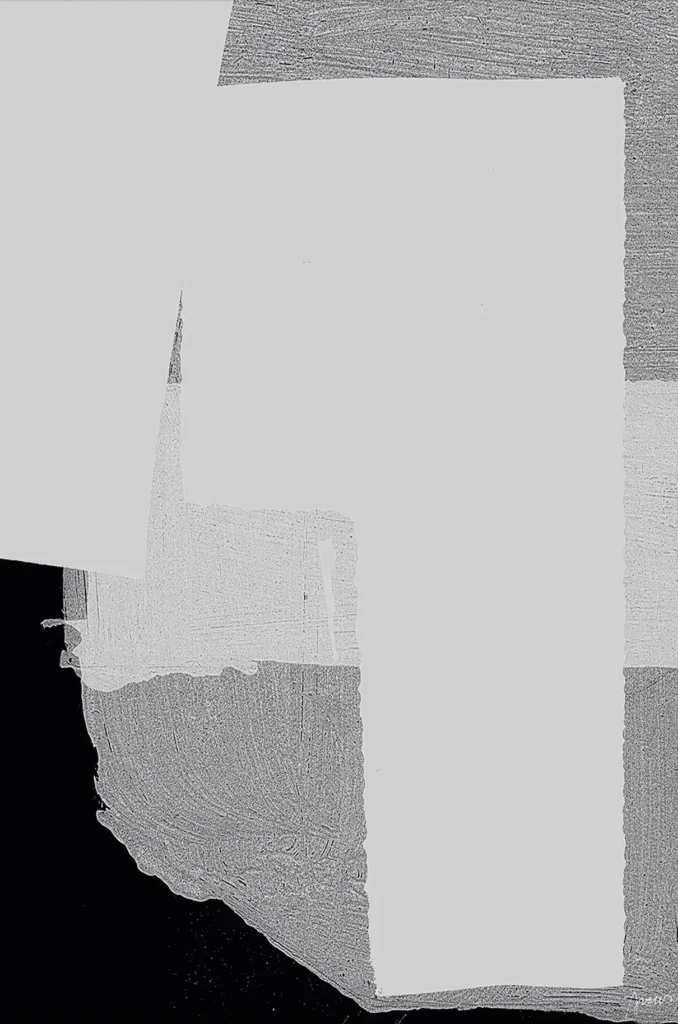
2. Try Minimalist Black and White Wall Art
Monochrome artwork is one of the easiest ways to add depth to a modern living room without introducing new colors. It works especially well in rooms with white walls, beige furniture, or grey sofas, where the contrast of black and white art gives the eye something to focus on without disrupting the palette.
In minimalist rooms, a black and white print can act almost like a piece of architecture — clean, structured, and quiet. It also pairs naturally with black-framed furniture, matte black light fixtures, or dark wood accents, tying smaller details together across the room.
3. Add Geometric Wall Art
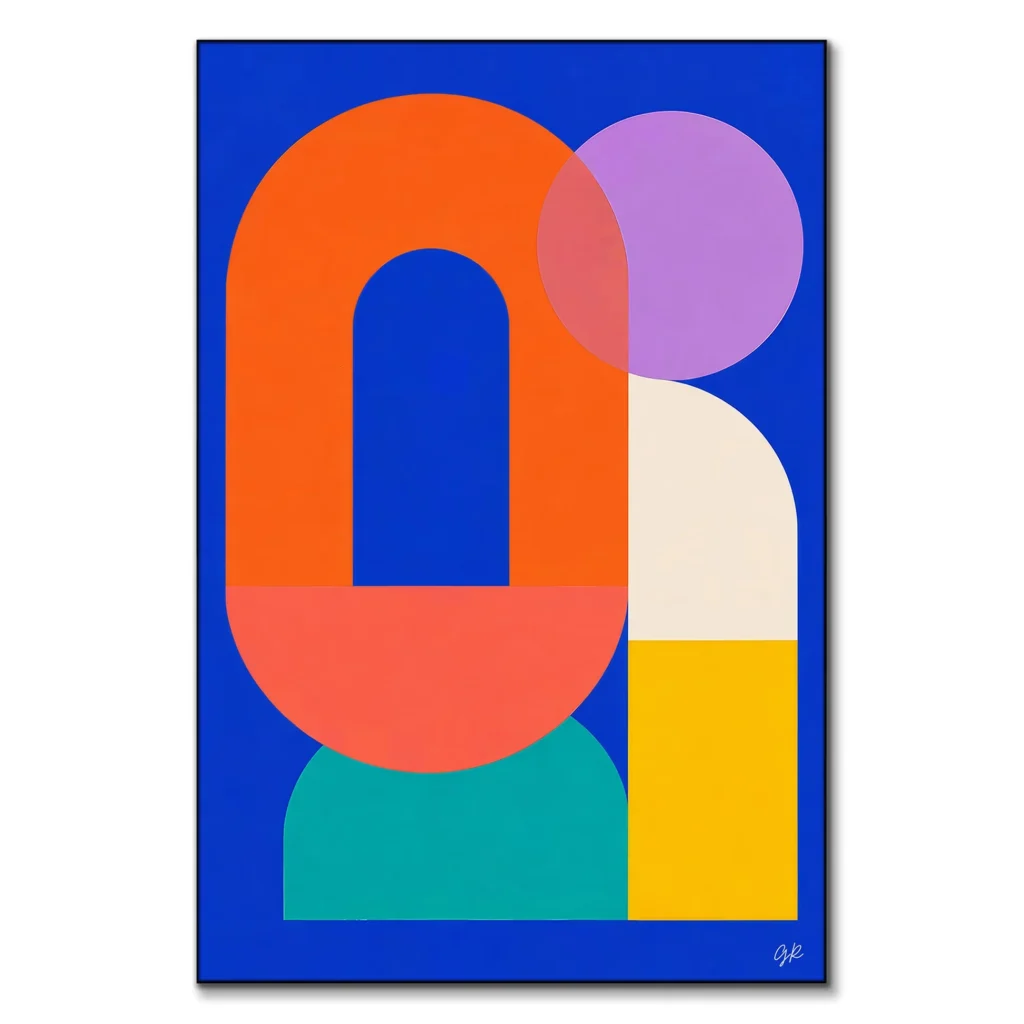
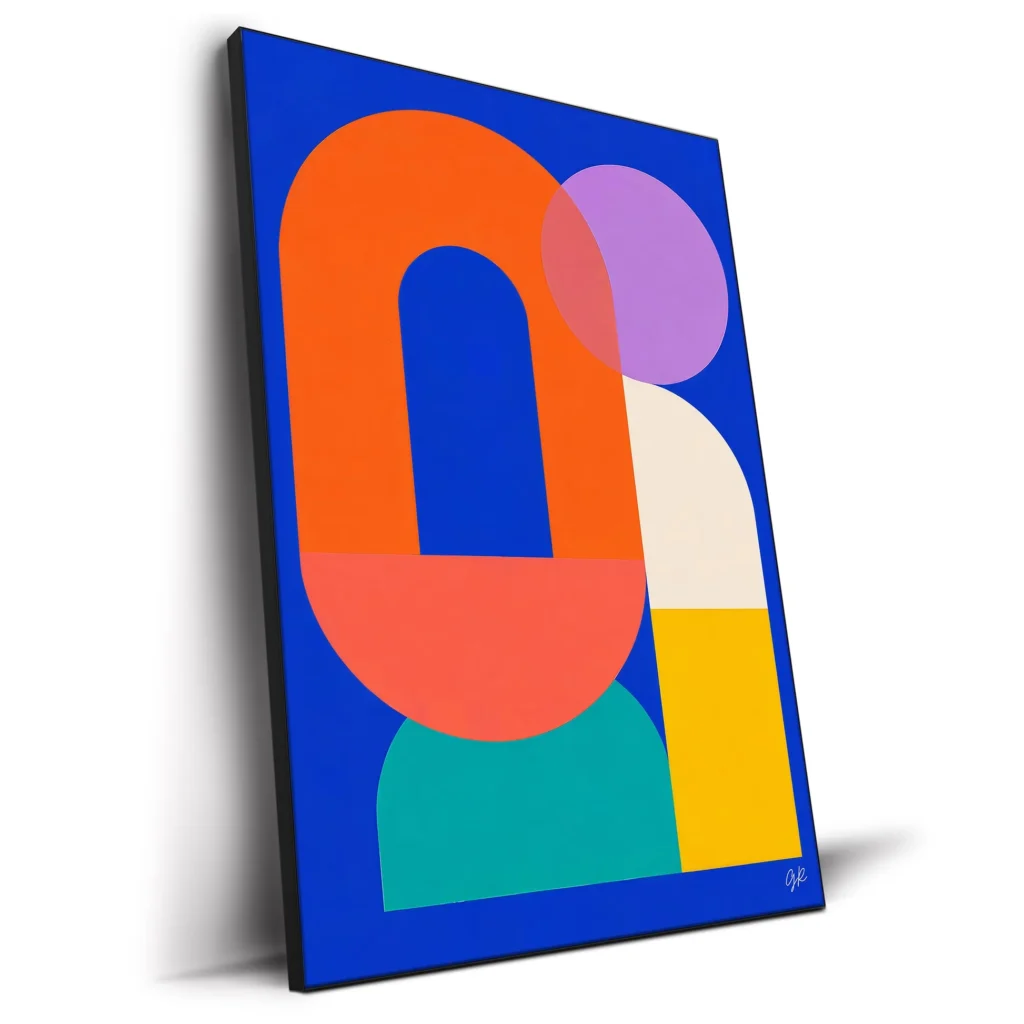
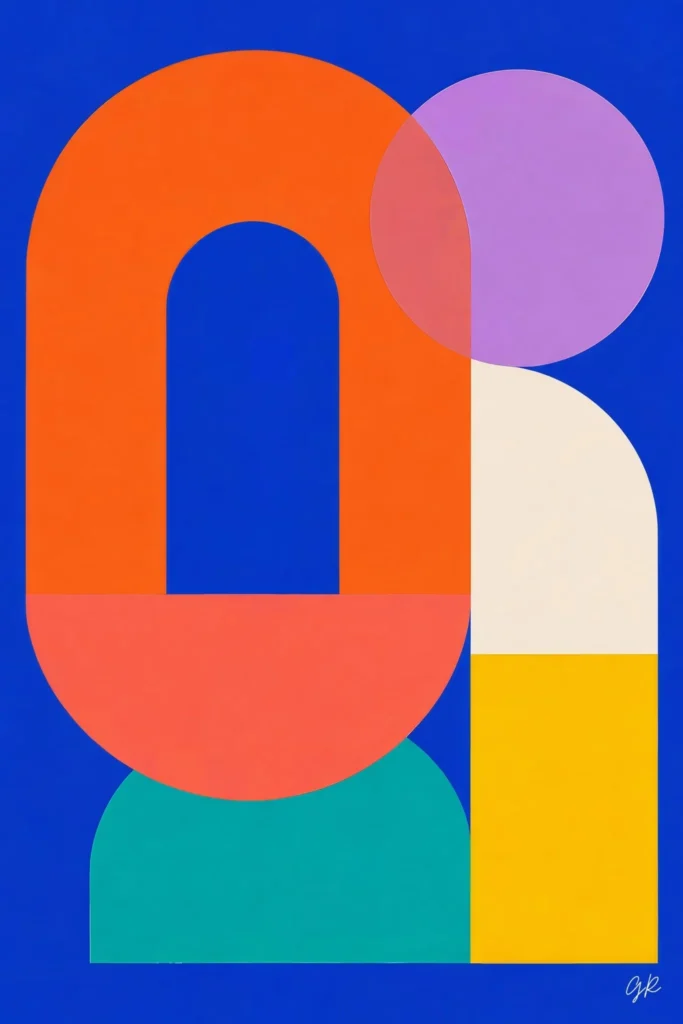
Geometric artwork — circles, arches, angular line work, repeating patterns — brings a sense of order to a room while still feeling contemporary. Clean shapes tend to complement modern furniture with straight lines and simple silhouettes, reinforcing the overall look rather than competing with it.
Arches in particular have become a signature of modern interior design, often appearing in artwork, mirrors, and furniture alike. A geometric print can be a subtle way to echo that shape on the wall without committing to it in furniture form.
4. Use Neutral-Toned Artwork
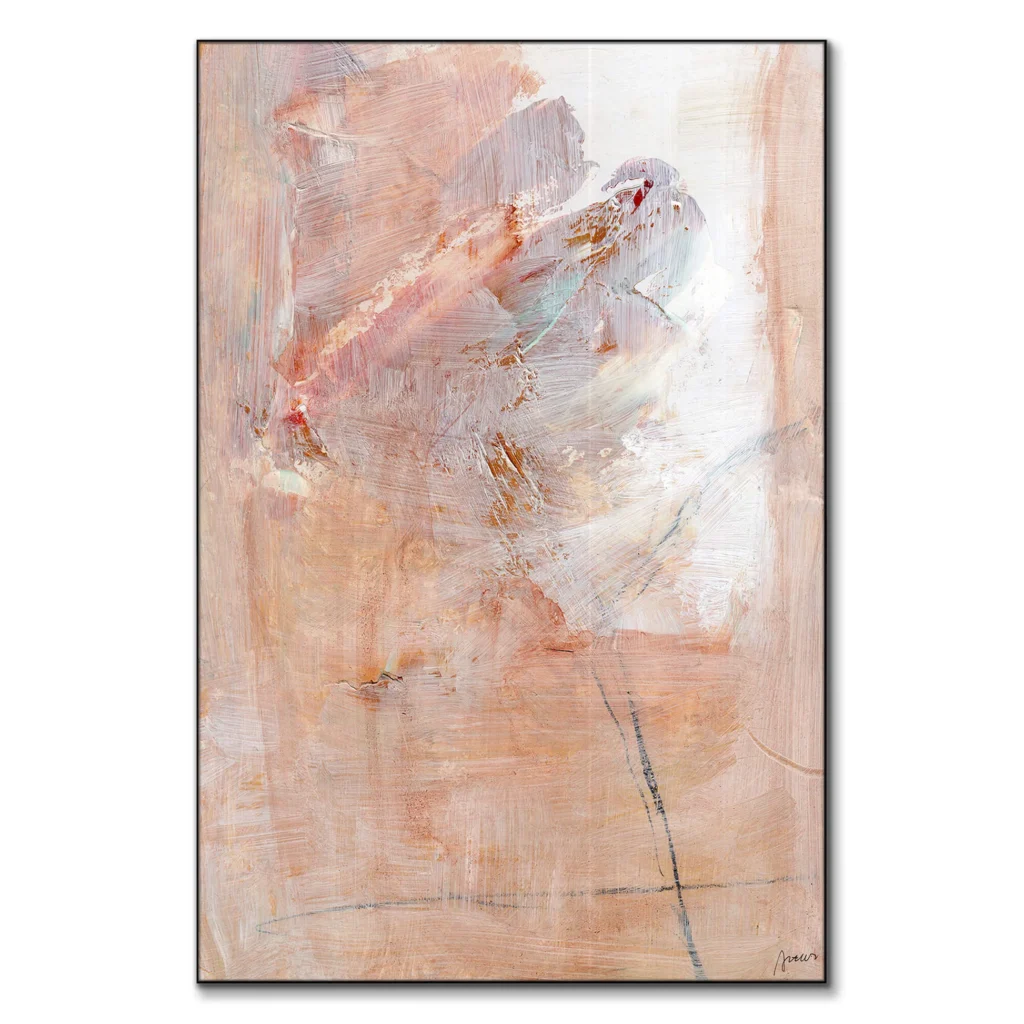
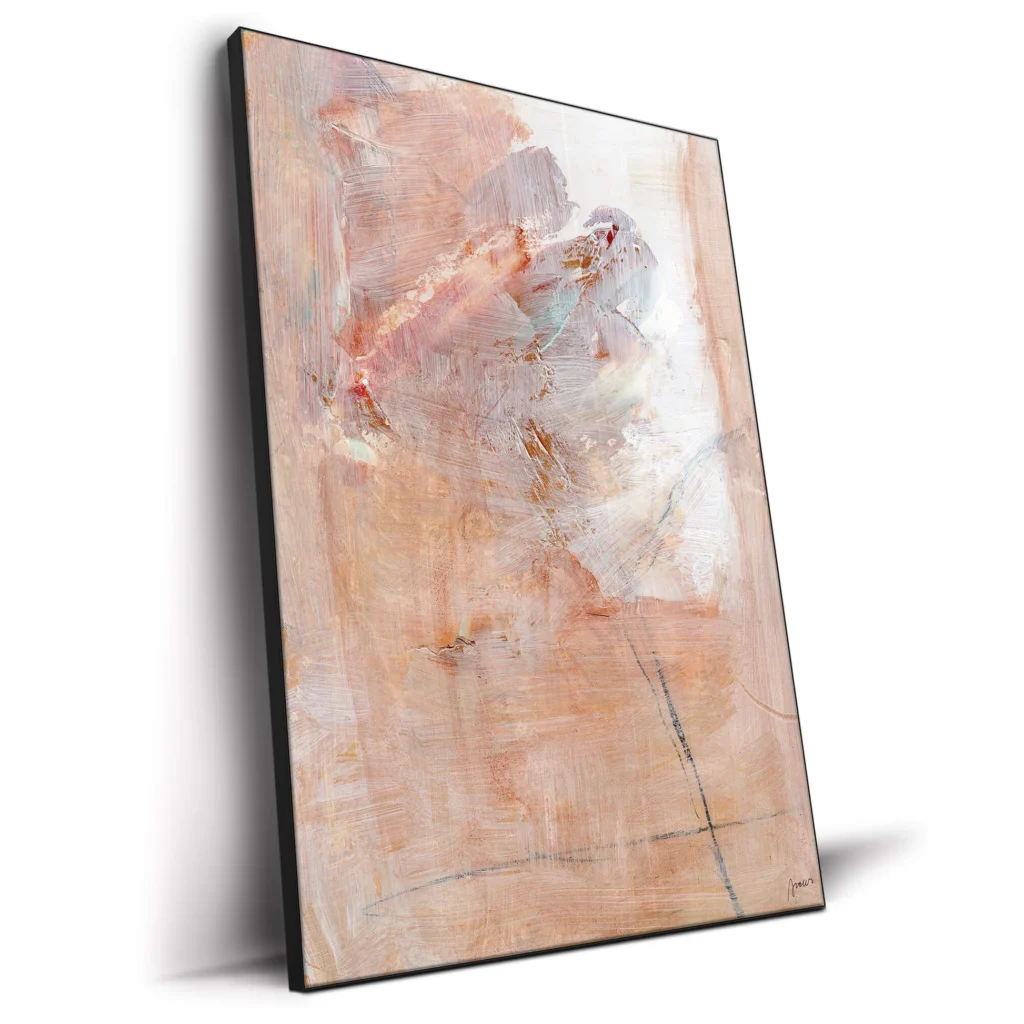
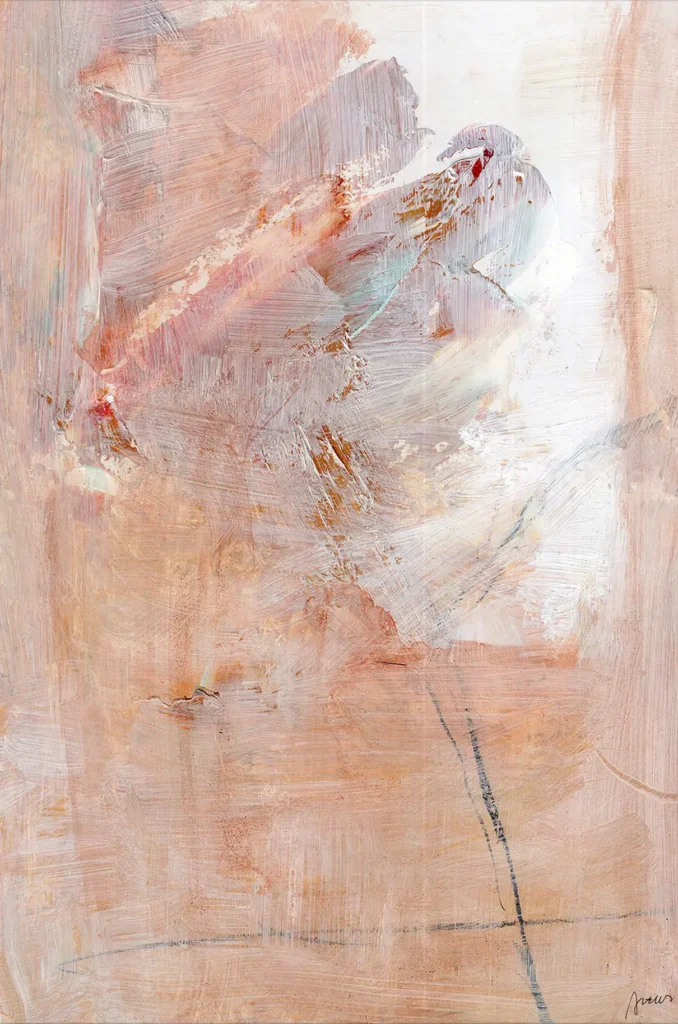
Neutral color palettes — beige, cream, taupe, warm grey, muted terracotta — have become a defining feature of modern living room design, and the artwork on the wall is often what pulls the whole scheme together. A neutral piece doesn’t fight for attention; instead, it adds texture and depth while keeping the room feeling calm and cohesive.
This approach works particularly well in rooms that already lean toward a soft, layered look, with linen upholstery, natural wood, and woven textures. Artwork in similar tones reinforces that warmth rather than introducing a jarring contrast.
5. Hang a Modern Gallery Wall
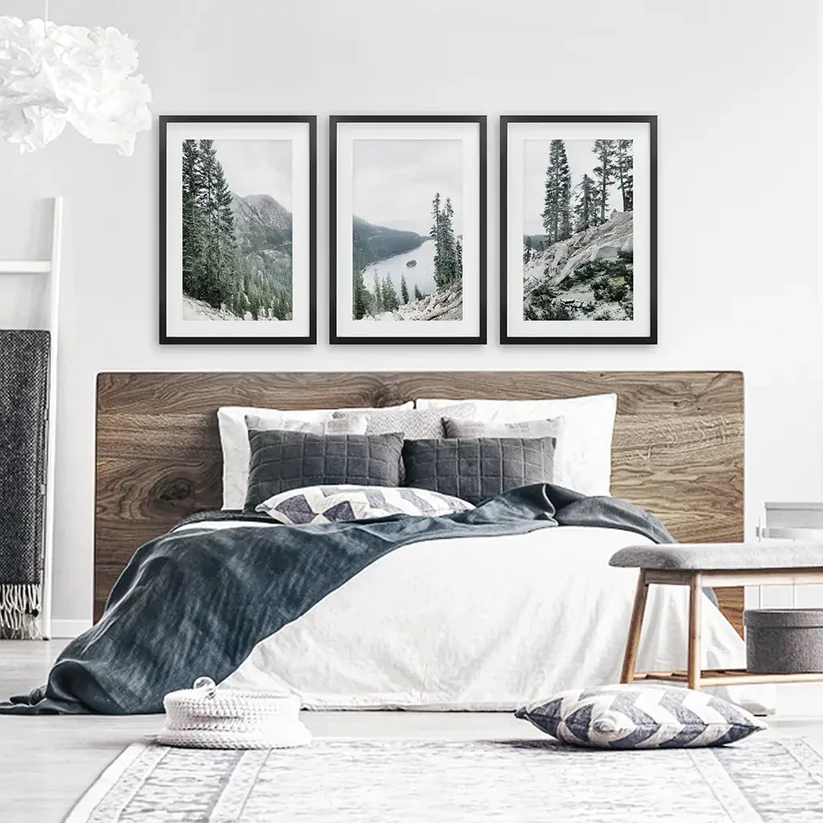
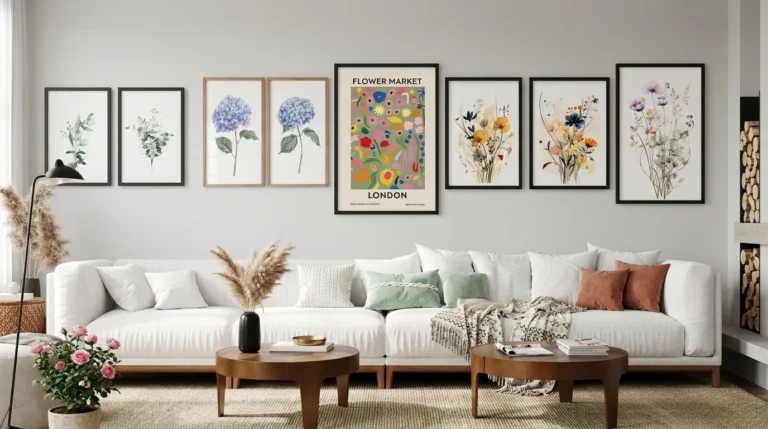
A gallery wall can look either curated or chaotic, and the difference usually comes down to planning. The most successful modern gallery walls tend to use three to seven pieces, consistent frame colors (all black, all wood, or all white), and a shared color palette across the artwork, even if the subject matter varies.
Spacing matters as much as the art itself. Leaving roughly 2–3 inches between frames keeps the arrangement feeling connected rather than scattered. Mixing a few different sizes — one larger anchor piece with smaller supporting prints — also gives the wall more visual rhythm than an evenly spaced grid.
6. Choose Oversized Canvas Wall Art
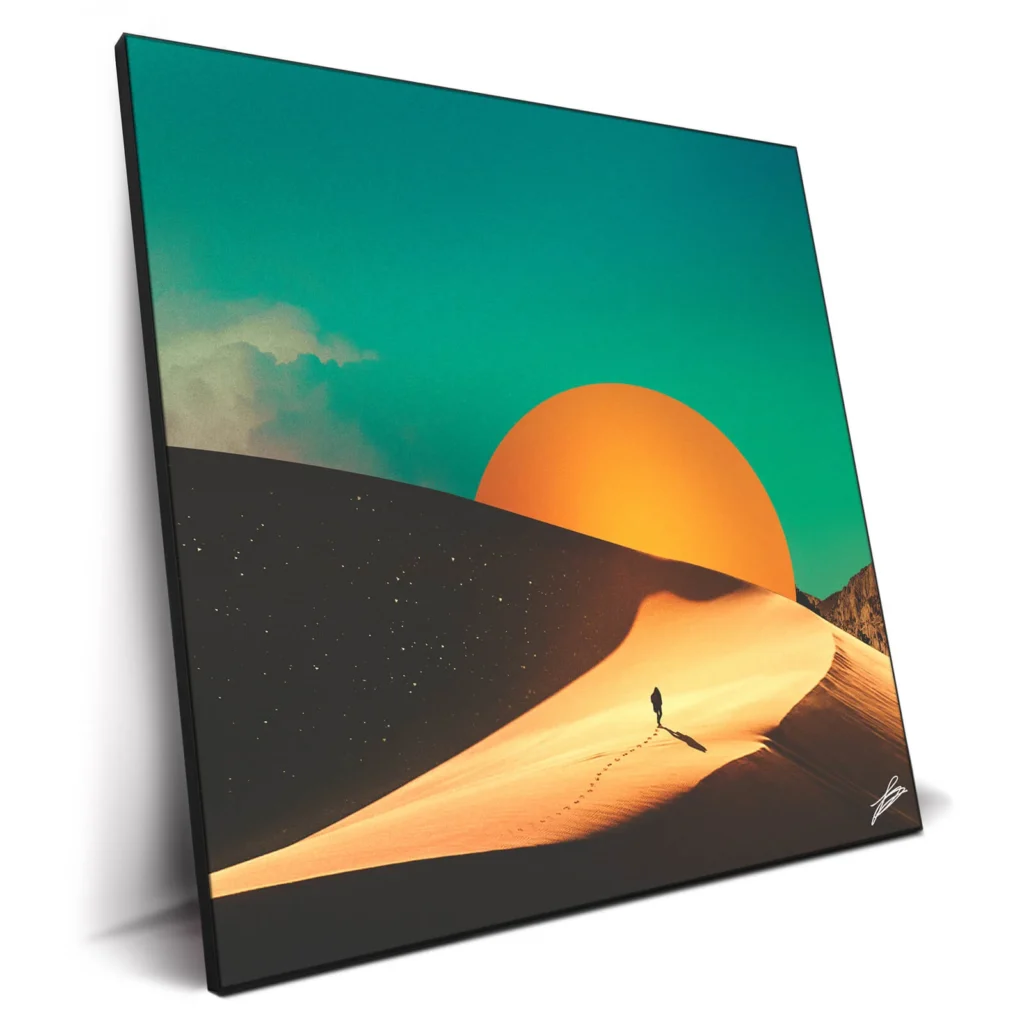
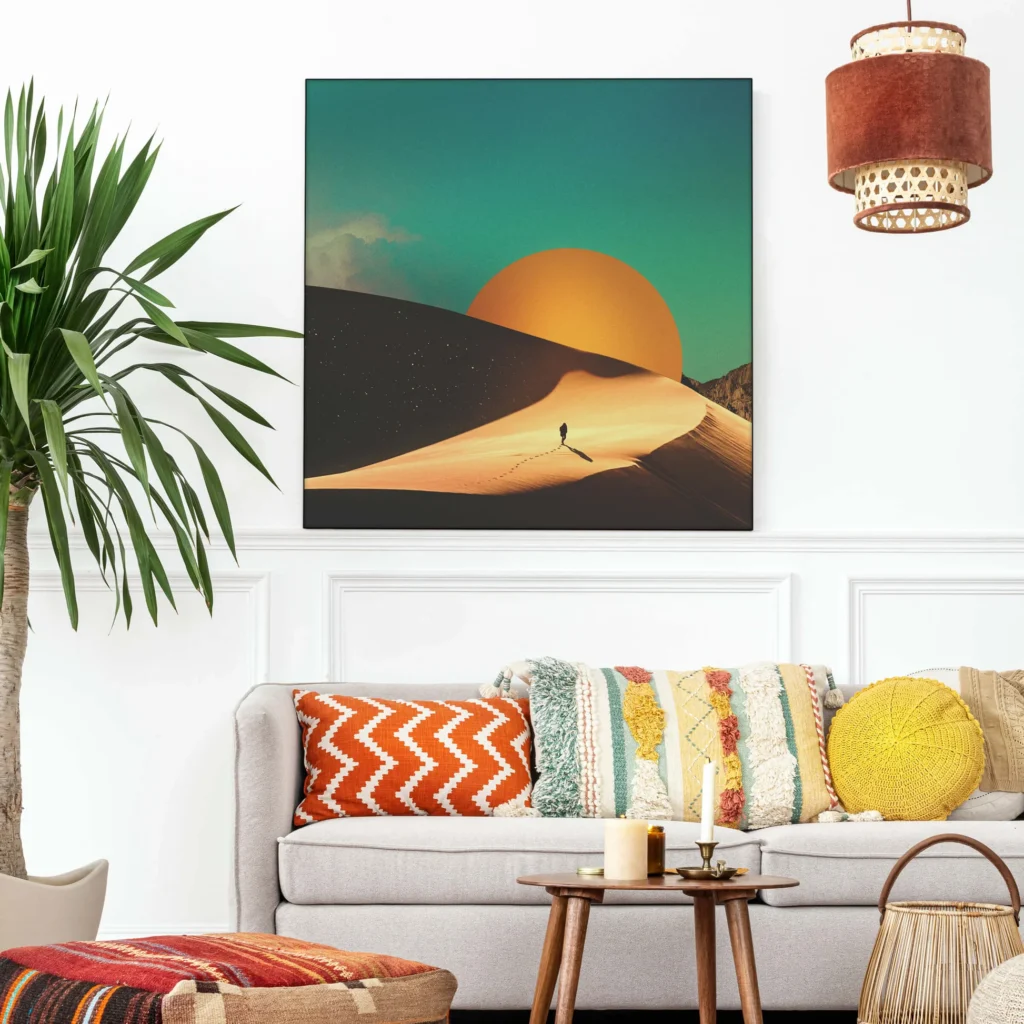
On a large, empty wall, a single oversized canvas often reads as more intentional and more modern than several smaller pieces. Oversized canvas art works especially well above sofas, sectionals, wide console tables, and dedicated accent walls where there’s enough real estate to let one piece breathe.
The key is proportion: the canvas should feel substantial in relation to the furniture beneath it, without overwhelming the ceiling height of the room. A general guideline is to keep the artwork within about 60–75% of the width of the sofa or wall section it sits above.

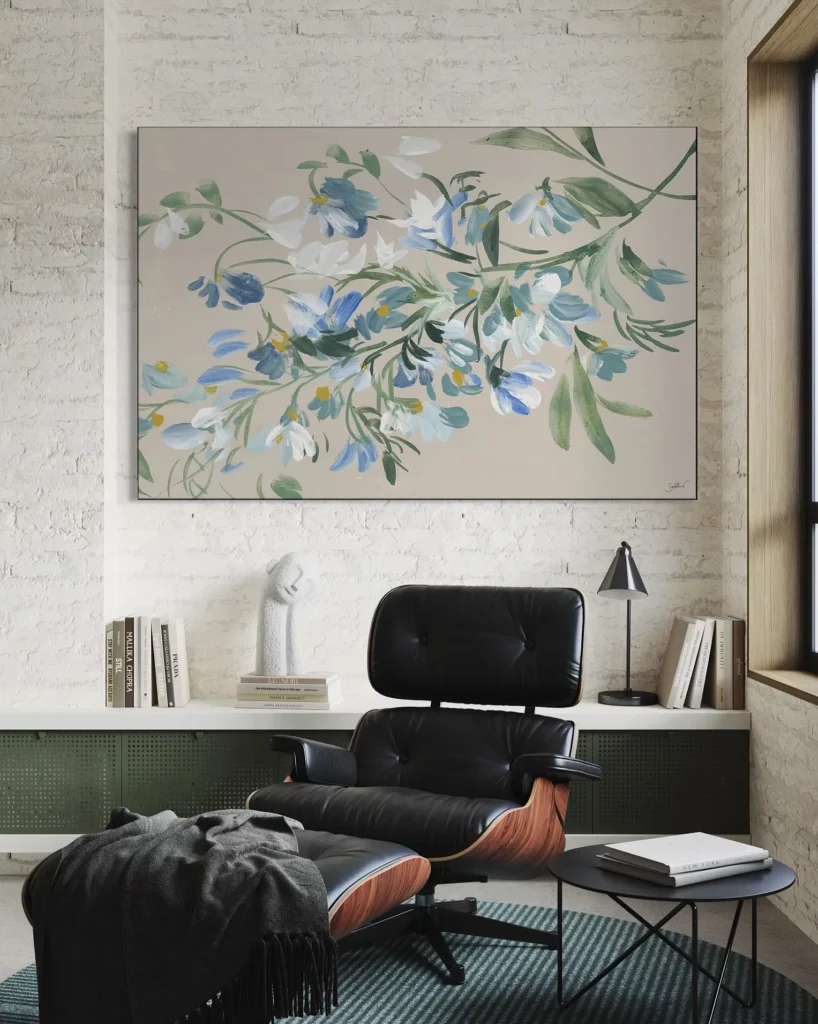
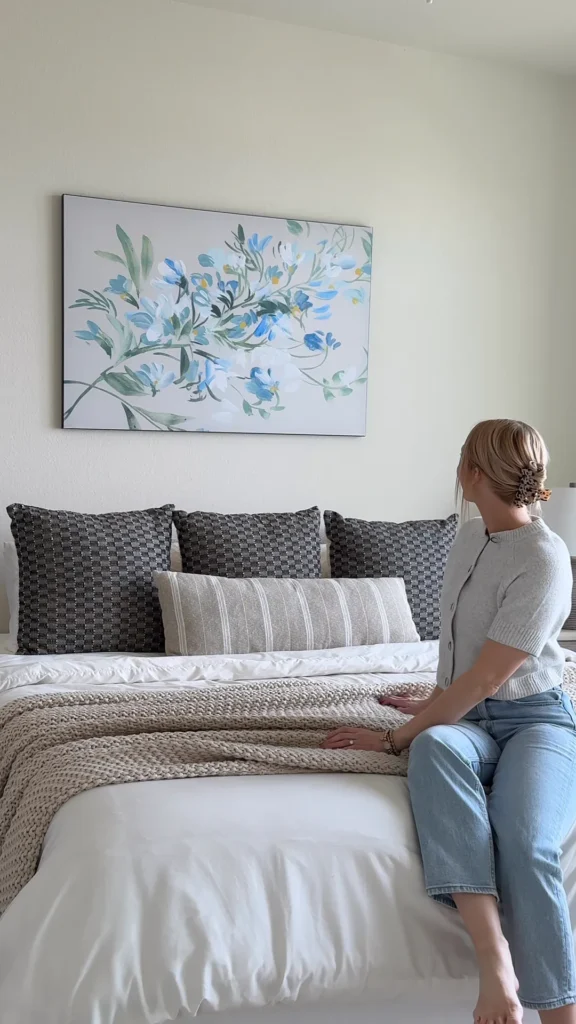
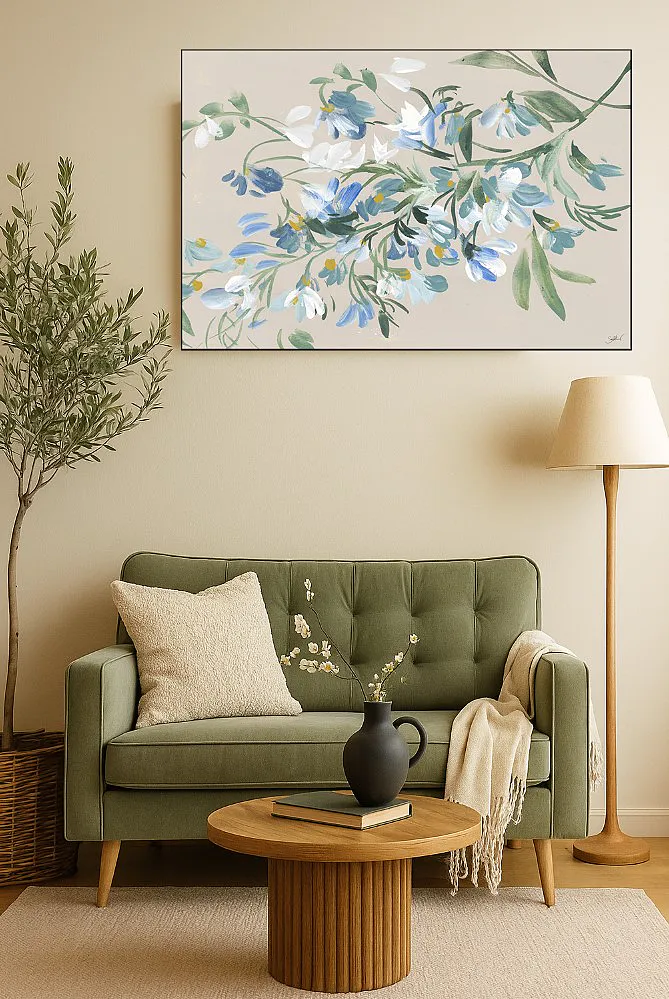
7. Bring Nature Indoors With Botanical Art
Botanical wall art — abstract leaves, minimalist plant illustrations, or nature photography — softens a modern living room without pulling it away from a contemporary look. It works well in rooms that already include real plants, natural wood, or woven textures, extending that organic feel onto the walls.
Botanical prints tend to sit best in muted or line-drawing styles for a modern space, rather than highly detailed, traditional botanical illustrations, which can feel more classic than contemporary.
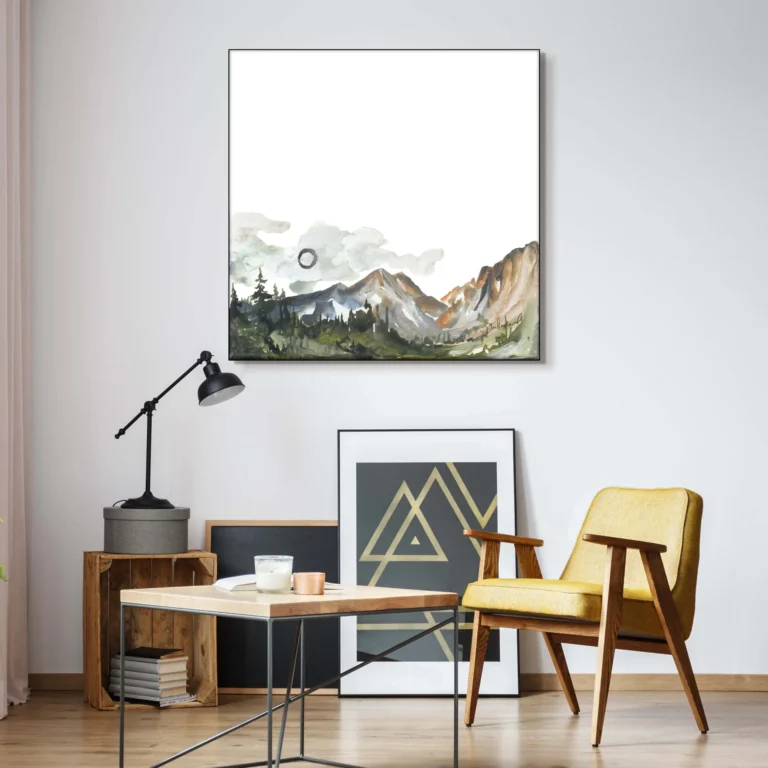
8. Add Contemporary Landscape Art
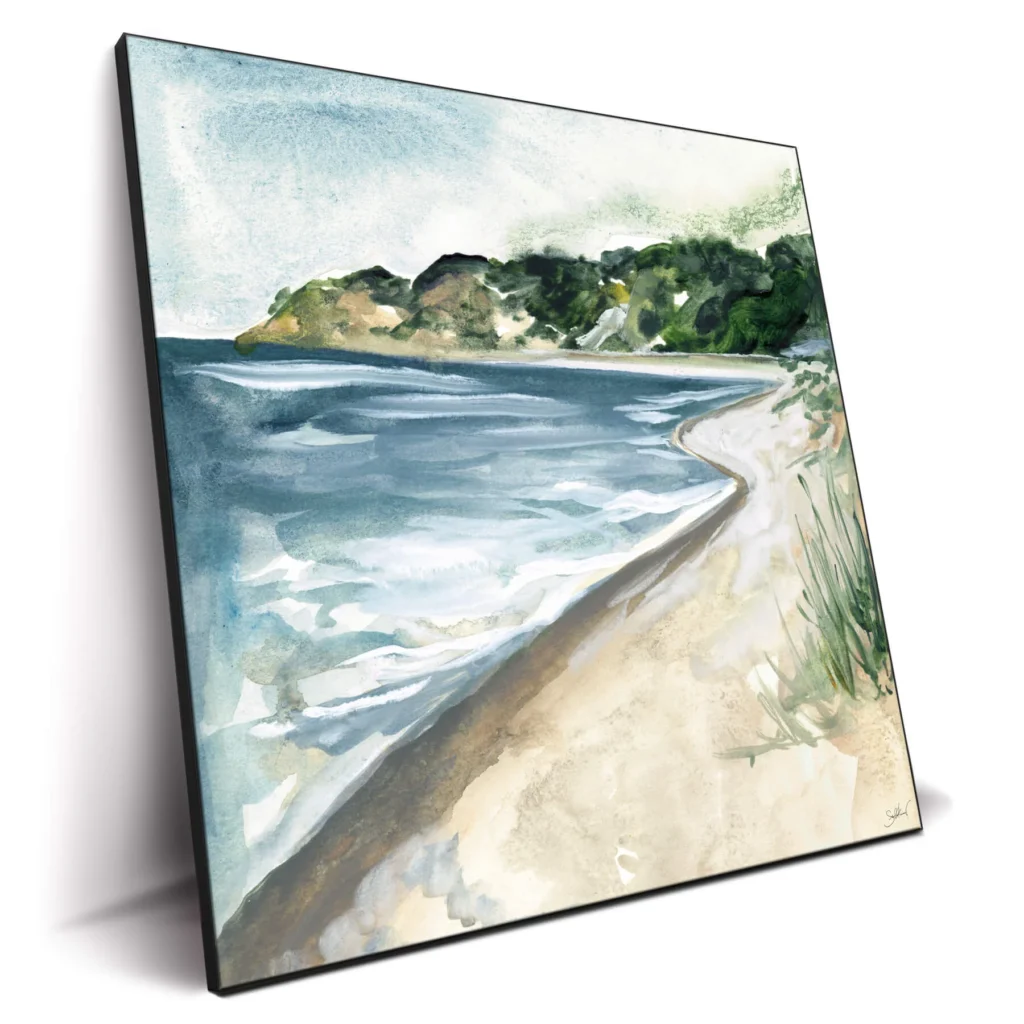
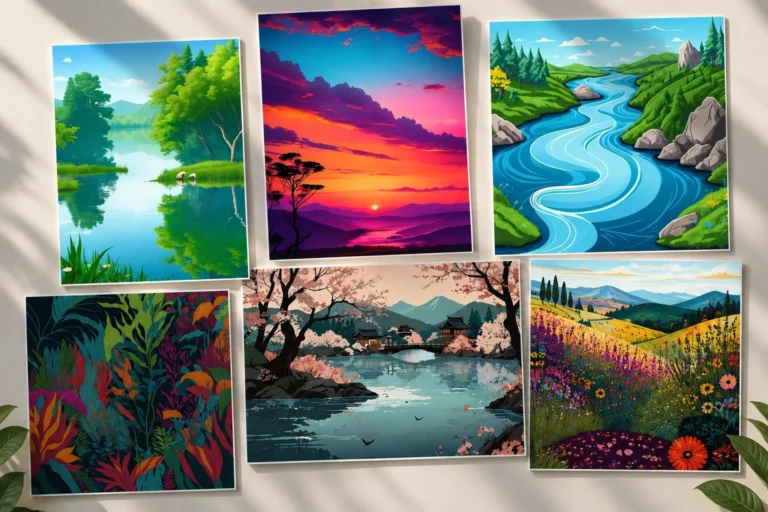
Landscape art — mountains, deserts, coastlines, forests, or city skylines rendered in a modern, muted style — brings a sense of scale and calm to a living room. Unlike traditional landscape paintings, contemporary versions tend to favor simplified shapes, soft color gradients, and limited detail.
This style works particularly well in living rooms designed for relaxation, where the goal is a soothing, uncluttered atmosphere rather than a bold focal point.
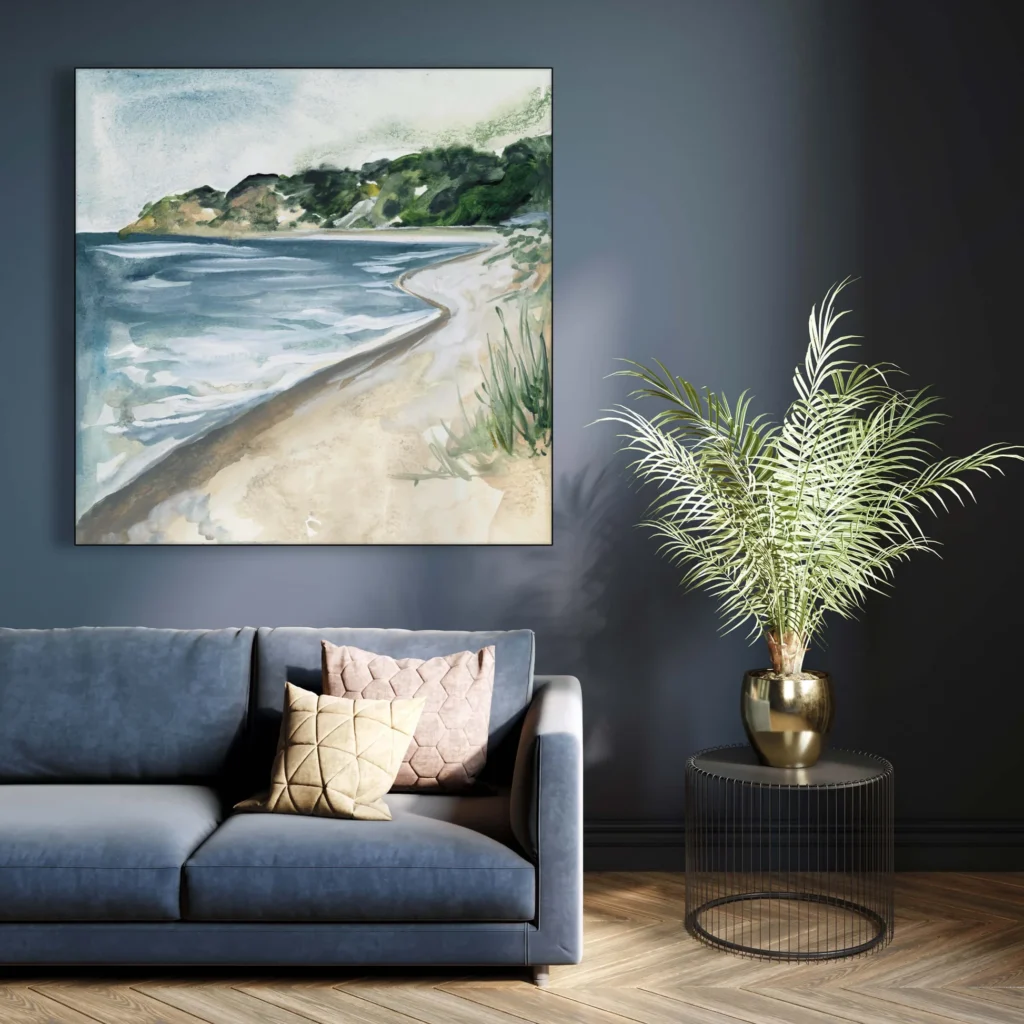
9. Use a Single Oversized Artwork
Not every wall needs a gallery arrangement. In some rooms, a single large piece is actually the stronger choice — particularly when the goal is simplicity or when the wall itself is an unusual shape or size that makes multiple frames tricky to arrange.
A single oversized artwork creates one clear focal point and tends to work best in rooms that already have a lot of visual interest elsewhere, such as patterned rugs, textured furniture, or a busy view through large windows.
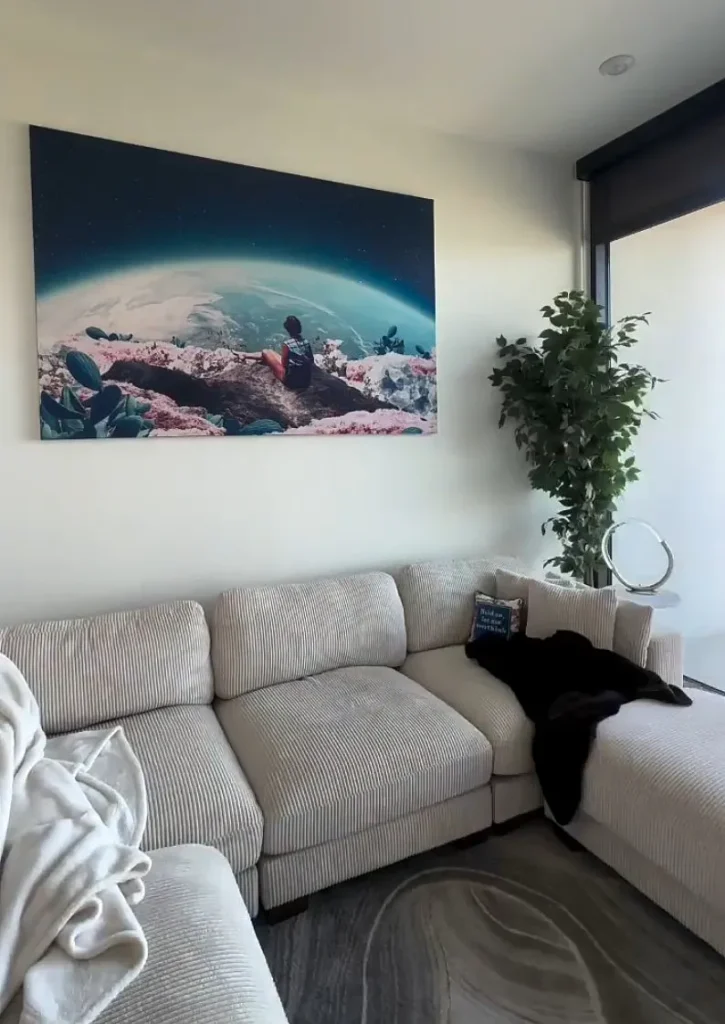
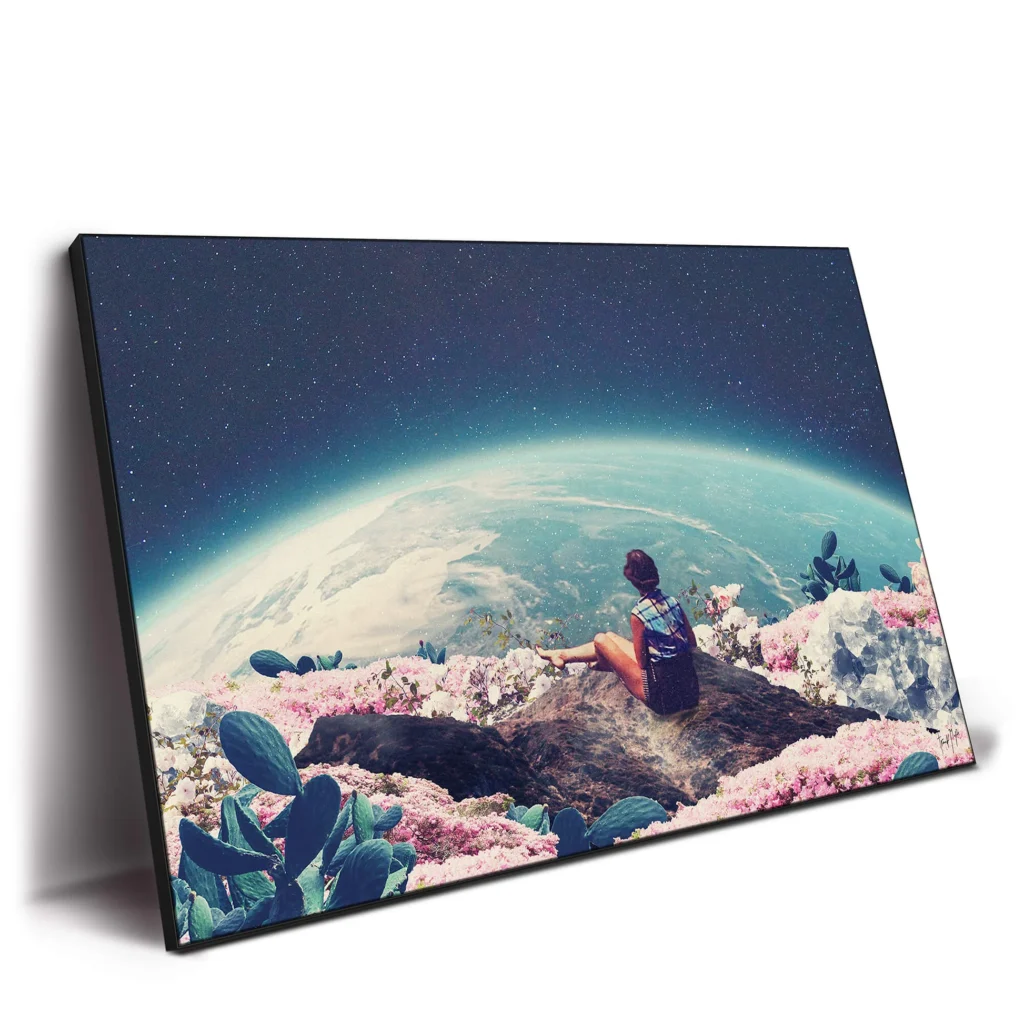
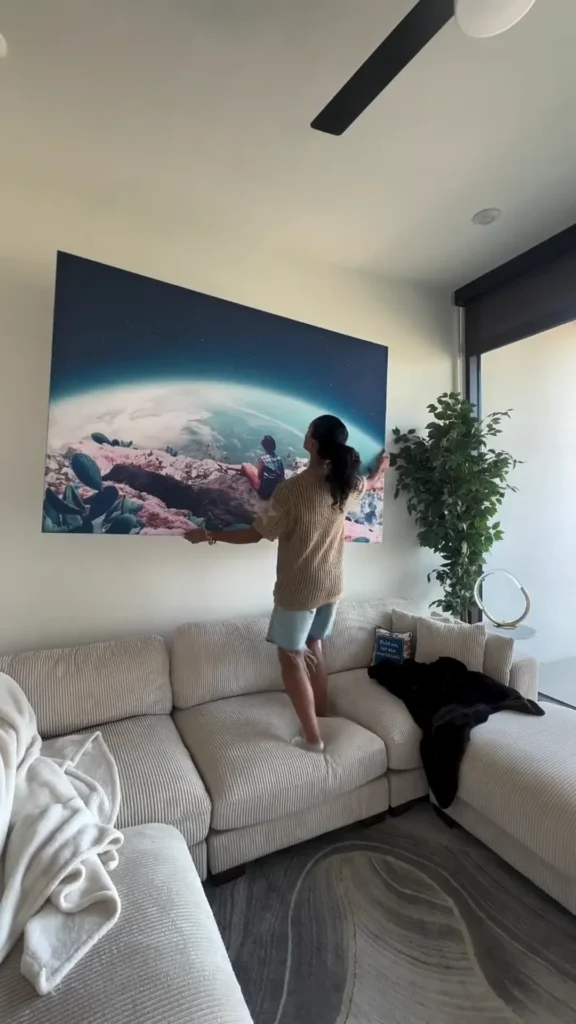
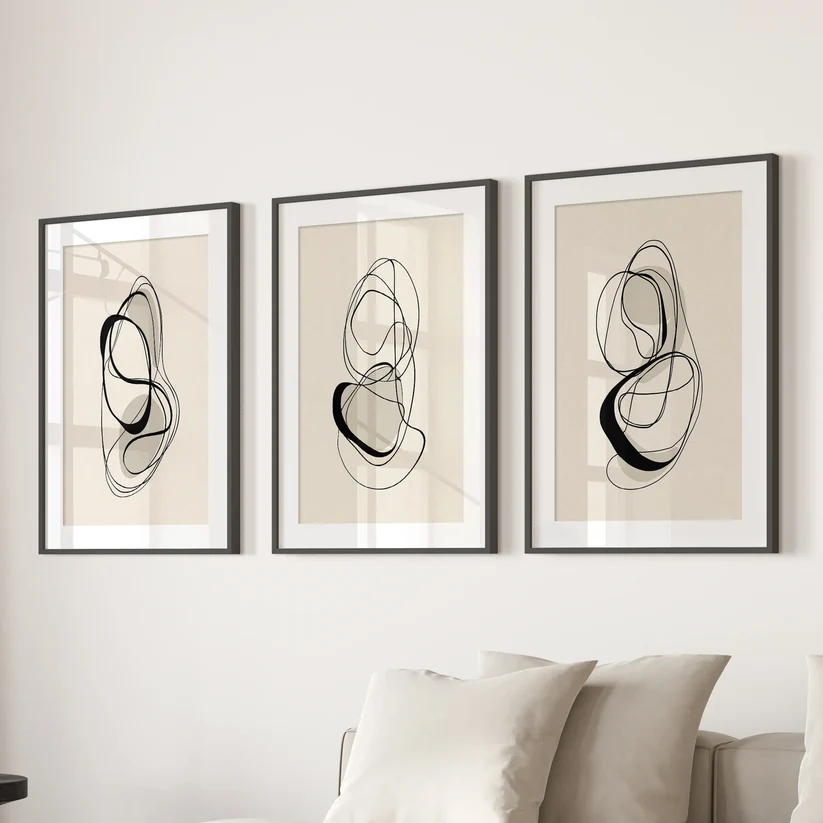
10. Create a Black, White and Beige Art Display
This color combination has become something of a signature in modern interior design because it’s flexible, timeless, and easy to build around. A practical example: black abstract artwork, paired with a beige sofa, white walls, and natural wood furniture, creates contrast without feeling busy.
The trick is balance — too much black can feel heavy, while too much beige can feel flat. Artwork is often the easiest way to introduce that black accent in a controlled way.
11. Add Color With Modern Abstract Art
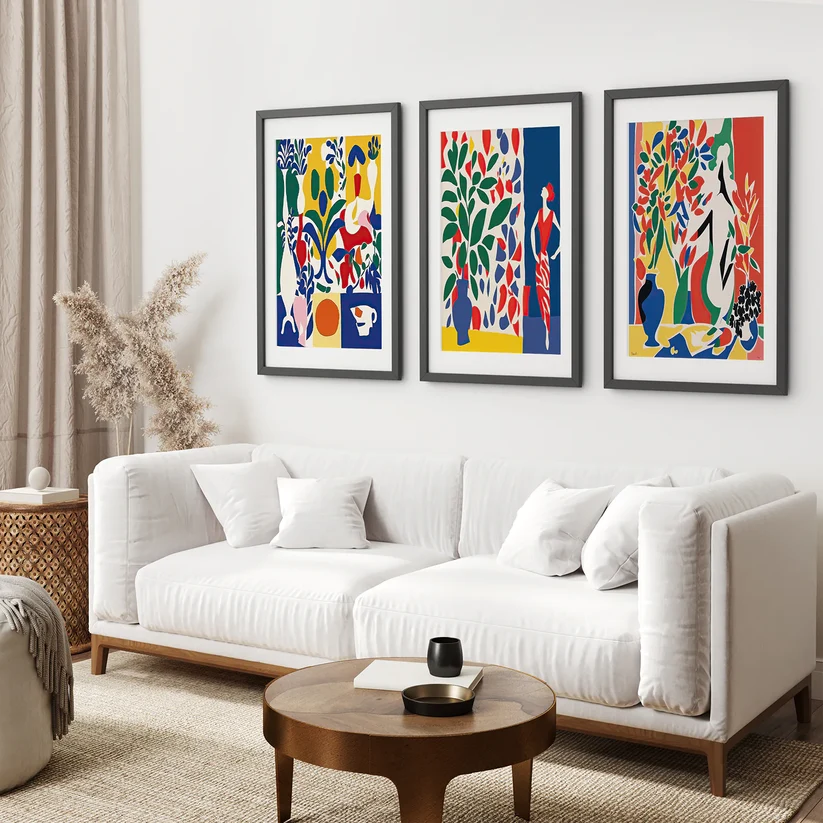
Not every modern living room needs to stay neutral. Artwork is one of the lowest-commitment ways to introduce color into a space — far easier to change than a sofa or a rug. Popular accent tones for modern rooms right now include terracotta, mustard, sage green, dusty blue, lavender, and rust.
Choosing one or two accent colors from the artwork and repeating them subtly elsewhere — a cushion, a vase, a throw — helps the piece feel like part of the room’s design rather than an afterthought.
12. Use a Pair of Matching Prints
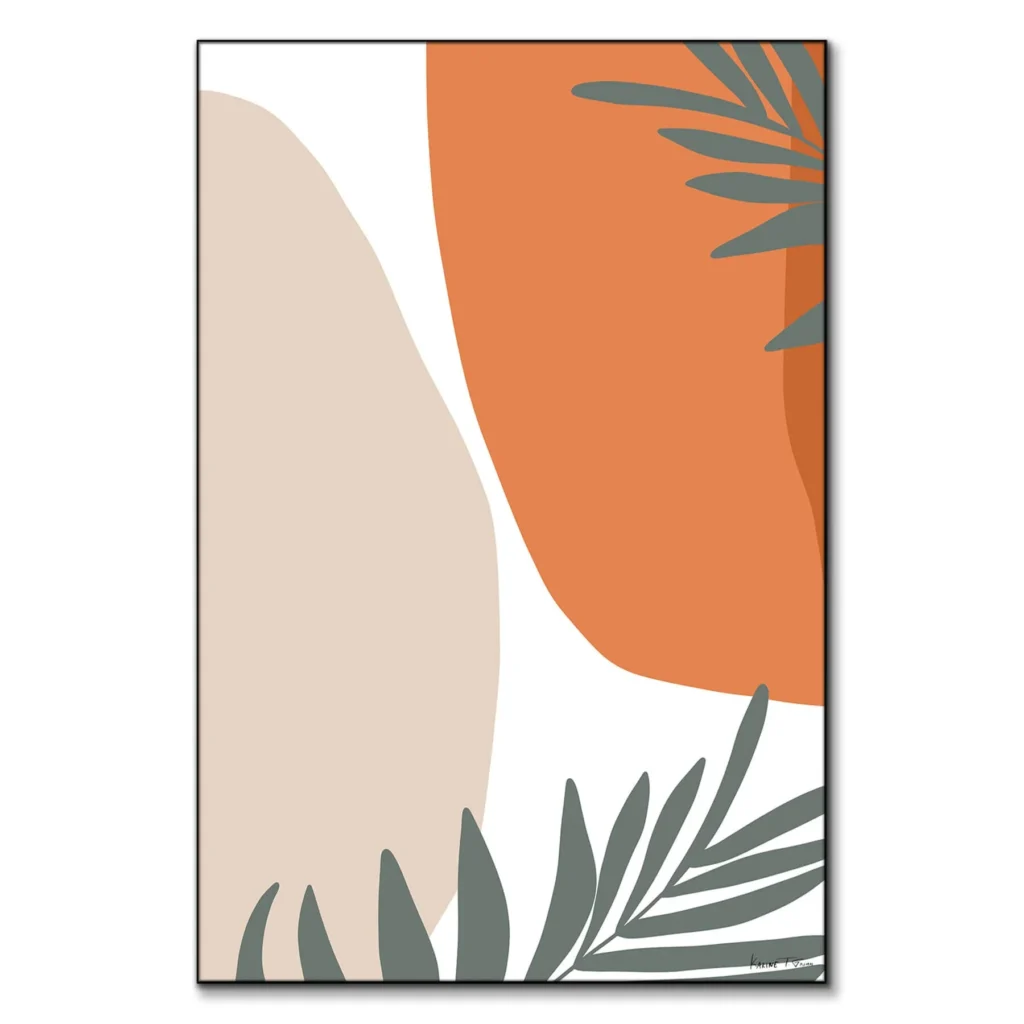
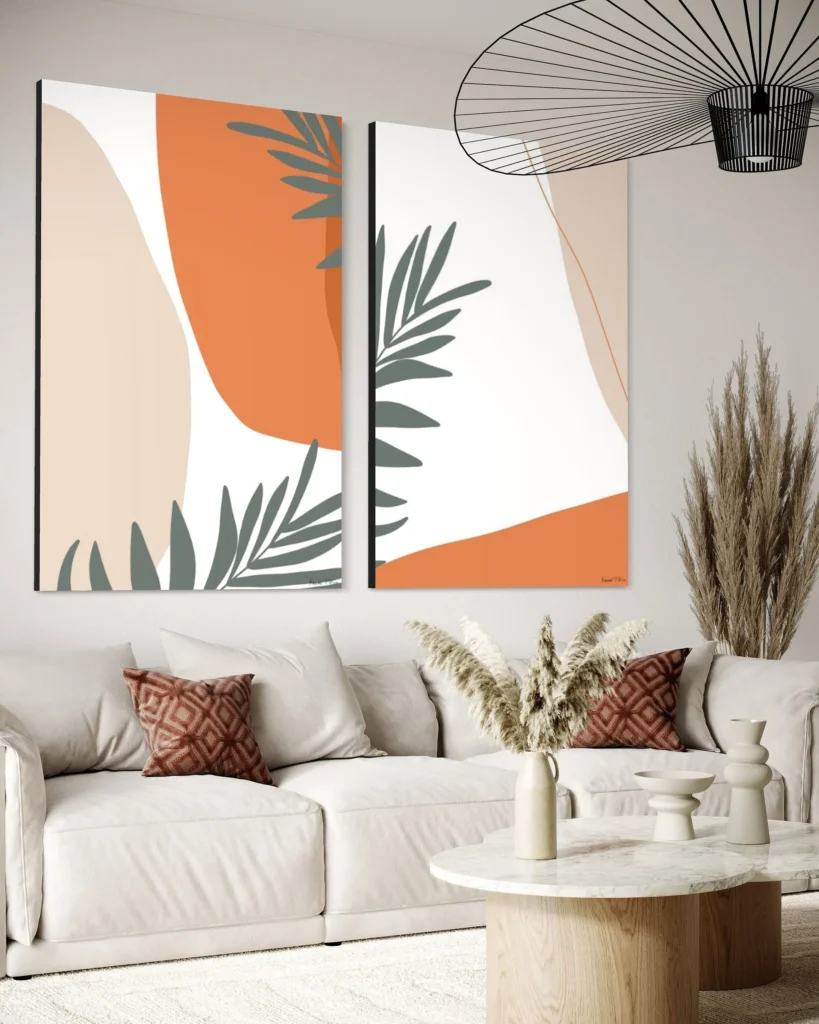
Two matching or complementary prints, hung symmetrically, can work just as well as a single large piece — particularly above a wide sofa, console, sideboard, or fireplace. Symmetry tends to read as calm and considered, which suits modern interiors well.
Even spacing is important here. As a starting point, leave roughly the same gap between the two frames as you would leave between the outer frame and the edge of the furniture beneath it.
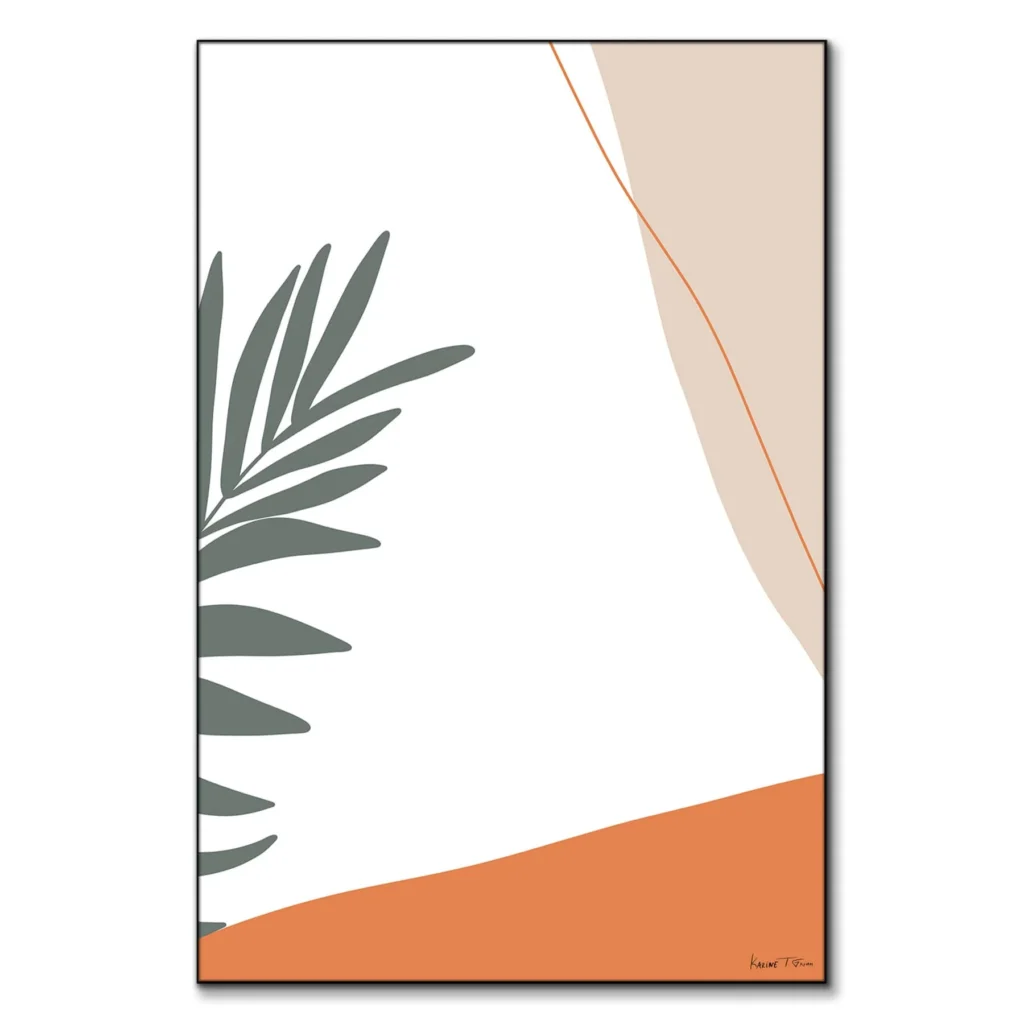
13. Try Triptych Wall Art
A triptych — a single artwork split across three separate canvases — is a distinctive option for wide walls that a single canvas can’t comfortably cover. Unlike three unrelated prints, a triptych reads as one continuous composition, which gives it a more polished, gallery-like feel.
Triptychs work particularly well above long sofas or on accent walls where the width is greater than a standard oversized canvas can accommodate on its own.
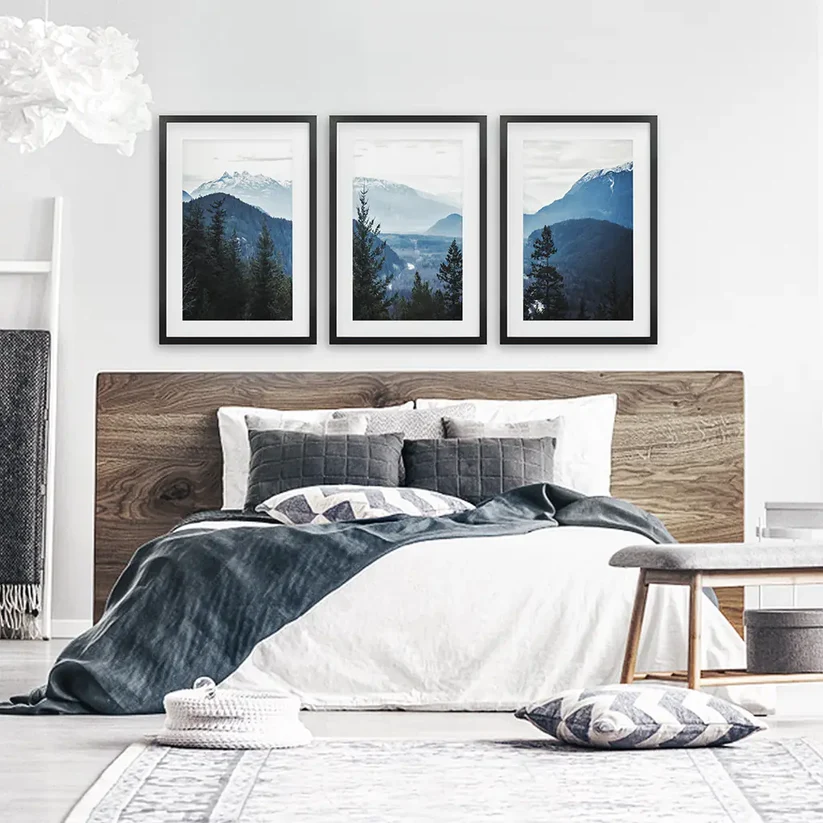
14. Display Modern Photography
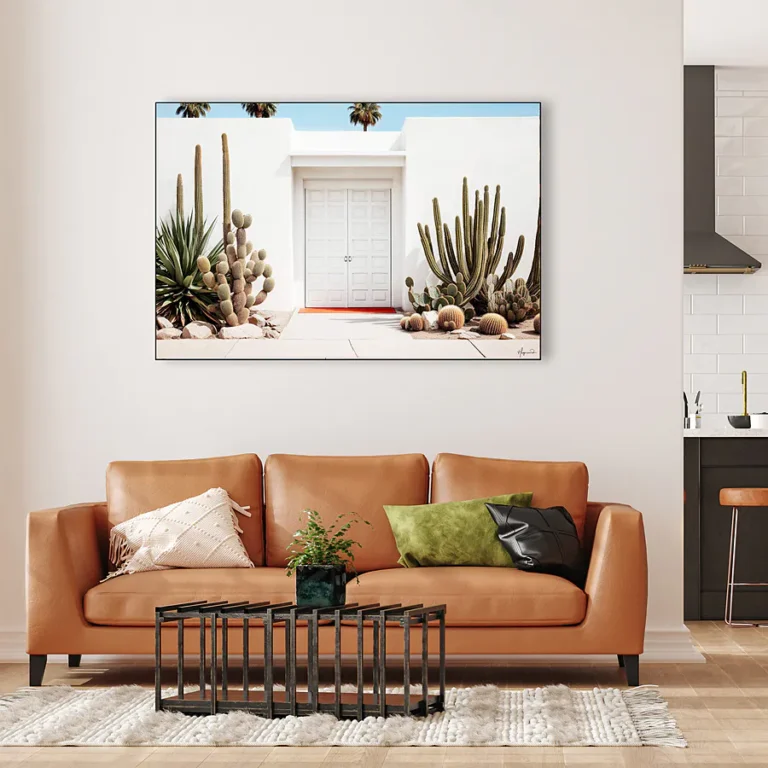
Photography brings a different texture to a living room than painted or illustrated artwork. Architectural photography, black-and-white street photography, city skylines, nature shots, and abstract close-up photography all suit modern interiors particularly well, especially when printed in larger formats.
Photography tends to work best with simple, thin frames that don’t distract from the image itself, keeping the focus on composition and tone rather than ornamentation.
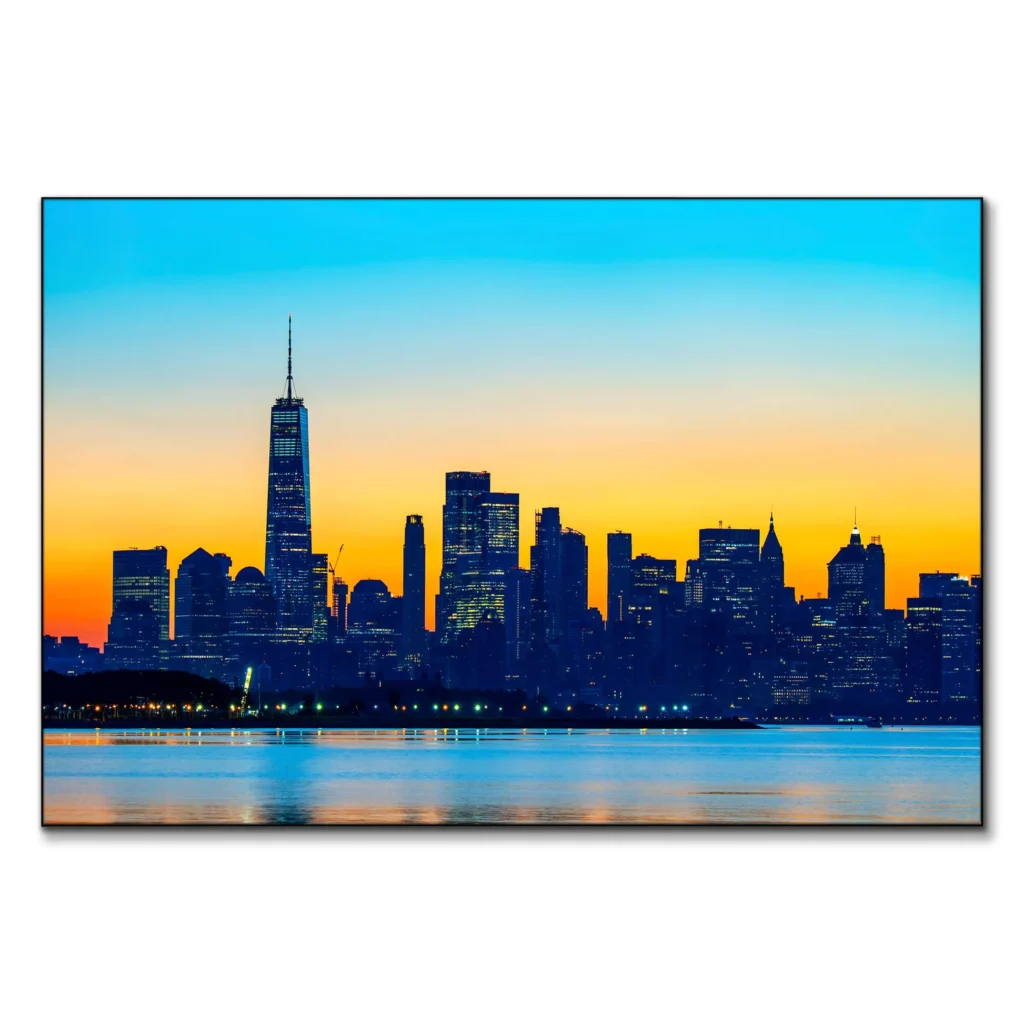
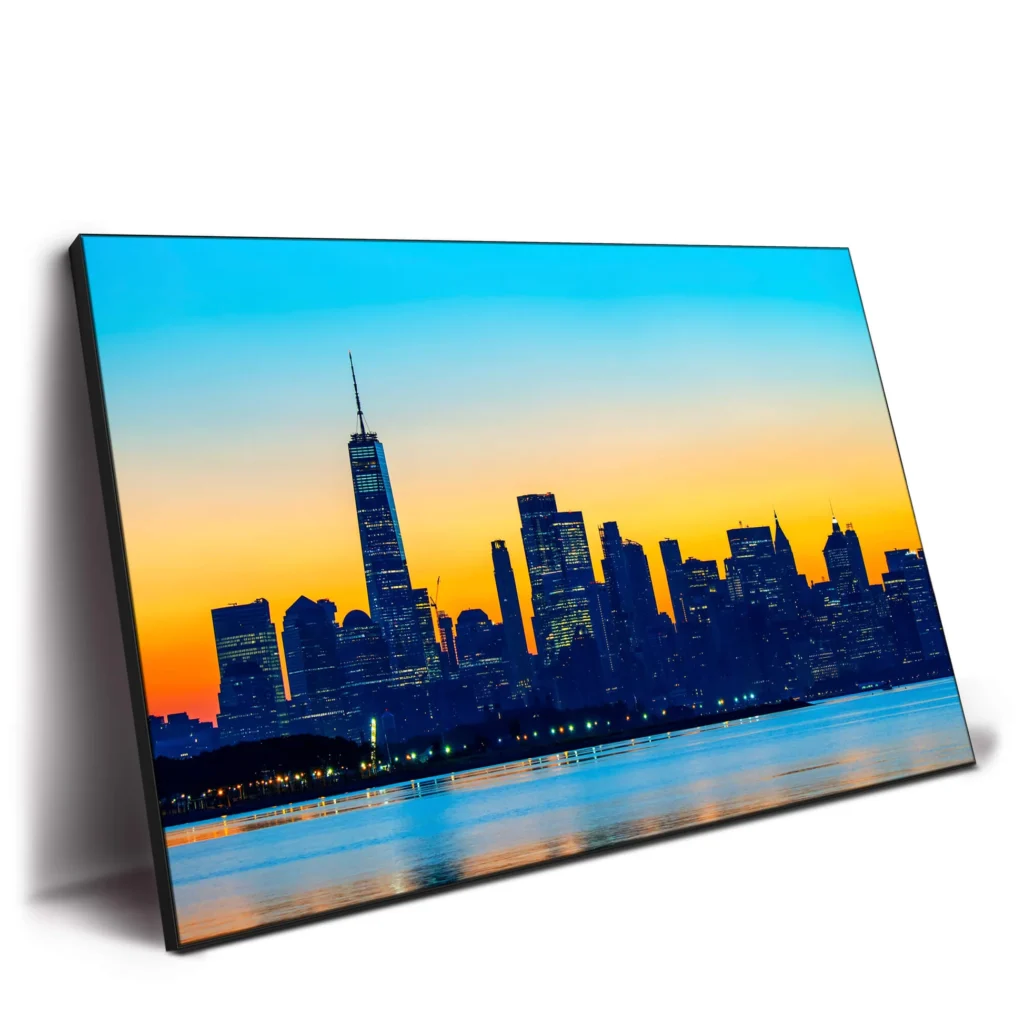

15. Decorate the Wall Behind the TV
The wall behind a television is often treated as off-limits for art, but a well-chosen piece can actually help the TV blend into the room rather than dominate it. Subtle abstract prints, neutral-toned artwork, or a symmetrical arrangement of smaller pieces around the screen can soften the visual weight of a large, dark rectangle on the wall.
The goal here is balance rather than distraction — artwork that complements the television without competing with it for attention when the screen is off.
16. Use Art Above a Console Table
A console table, its artwork, and the accessories placed on top form a small visual system of their own. The artwork should generally be wider than the table is deep but narrower than the table’s full length, leaving breathing room on either side.
Layering in a lamp, a vase, or a stack of books beneath the artwork helps ground the arrangement and prevents the wall from feeling like an afterthought.
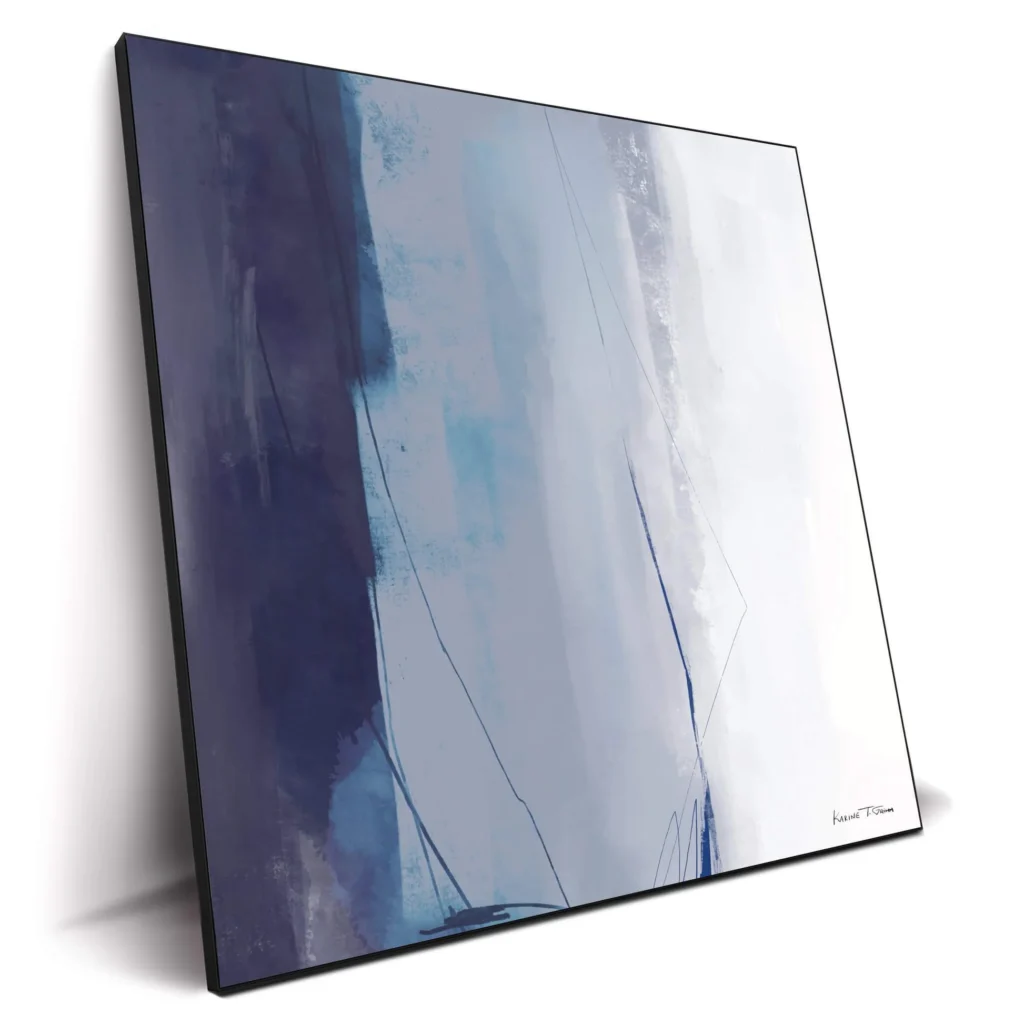

17. Mix Wall Art With Mirrors
Pairing a mirror with wall art — rather than choosing one or the other — adds both light and visual interest to a room. Mirrors bounce natural light around the space, which is particularly useful in smaller living rooms or rooms with limited windows.
A common approach is to hang a mirror on one side of a focal wall and a piece of art on the other, or to lean a large mirror against the wall next to a smaller framed print for a more relaxed, layered look.
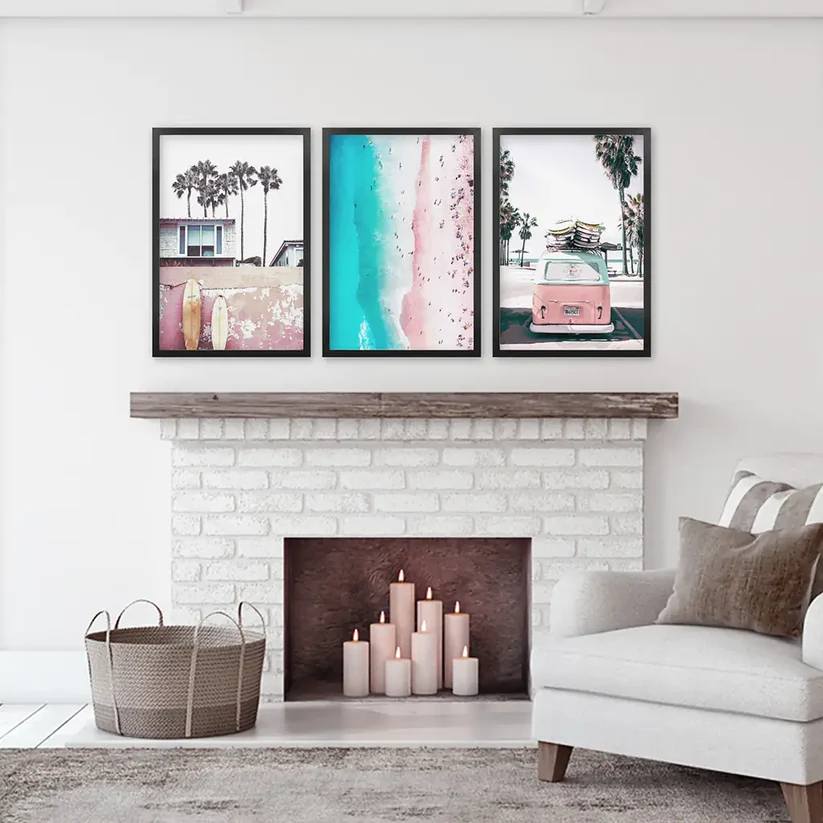
18. Try Modern Japandi Wall Art
Japandi design blends Japanese minimalism with Scandinavian warmth, and it has become one of the more popular directions in modern interiors. Artwork in this style tends to favor natural colors, organic shapes, muted landscapes, and simple compositions with plenty of negative space.
Beige and brown tones, natural textures, and quiet, understated subject matter all suit the Japandi aesthetic far better than bold color or busy patterns.
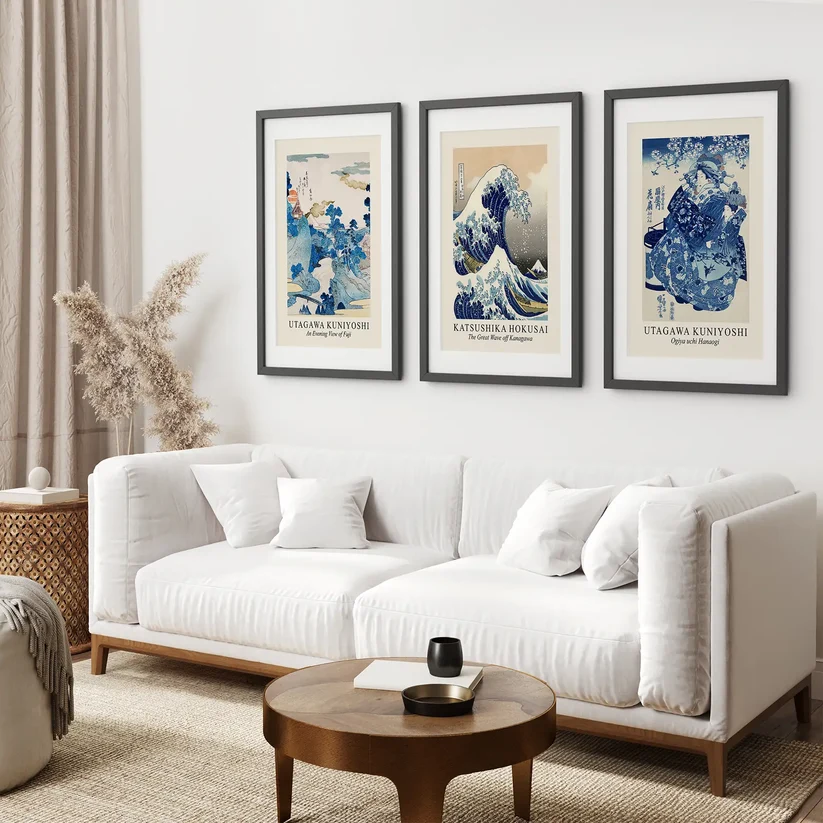
19. Choose Modern Boho Wall Art
Boho-modern wall art leans into abstract shapes, earthy colors, botanical designs, and organic patterns, usually set against a neutral background to keep the overall look from feeling too busy. It suits living rooms that already include natural materials like rattan, jute, or linen.
The modern take on boho tends to be more restrained than a traditional bohemian look — fewer patterns layered together, and a more curated color palette overall.

20. Match Wall Art to Your Living Room Color Scheme
Choosing artwork becomes much easier once you know which tones already work with your room’s existing palette. The table below offers a practical starting point.
| Living Room Colors | Recommended Art |
|---|---|
| Beige + White | Brown, cream, terracotta |
| Grey + White | Black, blue, charcoal |
| Brown + Beige | Earth tones, abstract art |
| Black + White | Monochrome artwork |
| Green + Beige | Botanical or nature art |
| Blue + White | Coastal or abstract art |
Use this table as a first filter when browsing artwork: identify your room’s base colors on the left, then look for pieces in the recommended tones on the right. From there, narrow down by style — abstract, photography, landscape — based on the overall mood you want the room to have.
21. Build a Personalized Modern Art Collection
Beyond color and composition, the most memorable living rooms tend to include artwork that means something to the people who live there. That might mean choosing pieces based on favorite colors, meaningful travel memories, personal interests, or simply the design styles you’re naturally drawn to.
A room filled with trend-driven choices can start to feel generic after a while. Mixing in even one or two personal pieces — alongside more universally appealing modern artwork — is often what makes a space feel like home rather than a showroom.
How to Choose the Right Modern Wall Art for Your Living Room
Consider the Wall Size
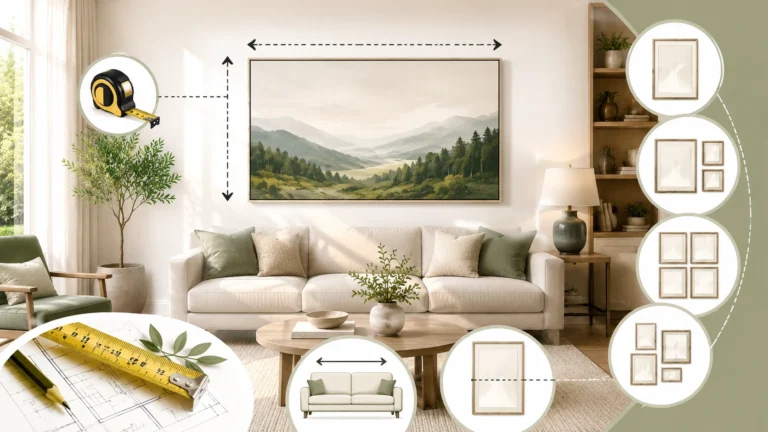
Measure the wall before choosing artwork, not after. A large, unbroken wall can comfortably support an oversized canvas or a gallery wall with several pieces, while a narrow wall segment usually calls for a single vertical print rather than a wide horizontal one.
Consider the Furniture
Artwork should generally relate to the piece of furniture beneath it in width, not overwhelm the entire wall on its own. Above a sofa, aim for art that’s roughly two-thirds to three-quarters of the sofa’s width; above a console table, keep the artwork narrower than the table itself.
Consider Your Color Palette
Also Read: How to Choose Wall Art Colors for Your Living Room: 9 Simple Rules
Rather than choosing artwork that matches every color in the room exactly, look for pieces that pick up one or two existing tones — a cushion color, a wood finish, a rug pattern. This creates cohesion without making the room feel overly coordinated.
Consider the Room’s Design Style
Minimalist rooms tend to suit clean abstract or monochrome art; Japandi and boho spaces lean toward natural tones and organic shapes; more eclectic rooms can support bolder color and mixed styles. Choosing artwork that matches the room’s existing design language keeps the space feeling intentional.
Consider Artwork Orientation
Horizontal pieces generally suit wide walls and sofas, while vertical pieces work well on narrower walls or in spaces with higher ceilings. When in doubt, measure the available wall space first and let that dictate orientation rather than choosing the artwork first.
How High Should You Hang Living Room Wall Art?
Wall art hung too high is one of the most common styling mistakes in modern living rooms. As a general rule, artwork above furniture — a sofa, console, or sideboard — should sit close enough to feel visually connected to that piece, rather than floating separately near the ceiling.
A practical starting guideline is to leave approximately 6–10 inches between the top of the furniture and the bottom of the artwork. In rooms with especially high ceilings or oversized furniture, this gap can be adjusted slightly, but the artwork and furniture should still read as a single grouping rather than two unrelated elements on the wall.
What Size Wall Art Is Best for a Living Room?
Sizing wall art correctly makes a bigger difference to how “finished” a room feels than almost any other decorating decision. The table below offers general starting points.
| Wall/Furniture | Suggested Artwork |
|---|---|
| Small wall | 12×16 to 18×24 inches |
| Medium wall | 20×24 to 24×36 inches |
| Large wall | 30×40 inches or larger |
| Above sofa | Large horizontal piece |
| Wide sofa | Oversized art or 2–3 pieces |
| Narrow wall | Vertical artwork |
These figures are starting points rather than fixed rules — always measure your actual wall and furniture before finalizing a size, since ceiling height and surrounding furniture can shift what looks proportionate.
Modern Living Room Wall Art Mistakes to Avoid
Even with the right style in mind, a few common missteps can undercut an otherwise well-planned room:
- Artwork that’s too small for the wall or furniture, leaving the piece looking lost rather than intentional
- Hanging artwork too high, disconnecting it visually from the furniture below
- Mixing too many unrelated colors across multiple pieces in the same space
- Combining too many design styles on one wall, which can make a room feel unplanned
- Poorly planned gallery walls, with inconsistent spacing or mismatched frames
- Choosing art purely because it’s trending, without considering whether it suits the room
- Filling every empty wall, which can leave a room feeling cluttered rather than curated
Final Thoughts
Modern living room wall art doesn’t have to mean stark or minimalist by default — it covers everything from bold abstract statements to soft botanical prints and personal photography collections. The pieces that work best are the ones chosen with the room’s proportions, color palette, and furniture in mind, rather than picked at random.
Start by measuring your wall and furniture, choose a color direction that complements what’s already in the room, and let your own style guide the final decision. The result is a living room that feels considered, current, and genuinely yours.
Frequently Asked Questions About Modern Living Room Wall Art
What type of wall art looks best in a modern living room?
Abstract art, minimalist prints, geometric designs, and contemporary photography tend to suit modern living rooms best, though the right choice ultimately depends on the room’s existing color palette and furniture style.
What size wall art should go above a sofa?
As a general guideline, artwork above a sofa should span roughly two-thirds to three-quarters of the sofa’s width, though wider sofas can also support two or three smaller pieces arranged together.
Should living room wall art match the furniture?
Artwork doesn’t need to match the furniture exactly — it works better when it complements the room by picking up one or two existing colors or tones rather than mirroring everything precisely.
How high should wall art be hung?
A practical starting point is 6–10 inches above the furniture beneath it, keeping the artwork visually connected to the piece it’s paired with rather than floating too close to the ceiling.
Is one large artwork better than a gallery wall?
Neither option is universally better — a single oversized piece suits rooms that want a clear focal point, while a gallery wall suits those wanting more visual variety and personality.
What colors work best for modern wall art?
Neutral tones like beige, cream, and warm grey are popular for a cohesive look, while accent colors like terracotta, sage green, and dusty blue can introduce personality without a full room redesign.
How do you choose wall art for a neutral living room?
Look for artwork that echoes existing neutral tones for a cohesive look, or use art as an opportunity to introduce one accent color that can be repeated in smaller decor details.
How many pieces should a modern gallery wall have?
Most modern gallery walls work well with three to seven pieces, using consistent frame colors and a shared color palette to keep the arrangement feeling curated rather than cluttered.

13 Comments