
How to Choose Wall Art for Above a Sofa: 11 Easy Rules That Make Your Living Room Look Better
The wall above your sofa might be the single most important spot in your entire living room.
It’s the first thing people see when they walk in. It’s the backdrop to every movie night, every conversation, every lazy Sunday scroll session.
Get the wall art above sofa placement right, and the whole room suddenly feels finished. Get it wrong, and something feels… off, even if you can’t quite say why.
The good news? Choosing the right wall art isn’t about having a design degree. It’s about following a handful of simple rules around size, height, color, and style.
This guide walks you through all of it — sizing, spacing, layouts, colors, frames, and the mistakes that trip up even people with genuinely good taste. By the end, you’ll know exactly what to look for before you buy anything.
1. Start With the Sofa: Measure Before You Buy
Before you fall in love with a print online, grab a tape measure.
Your sofa is the anchor of the room, so your artwork should be sized in relation to it — not to the wall, and not to whatever looked good in a magazine.
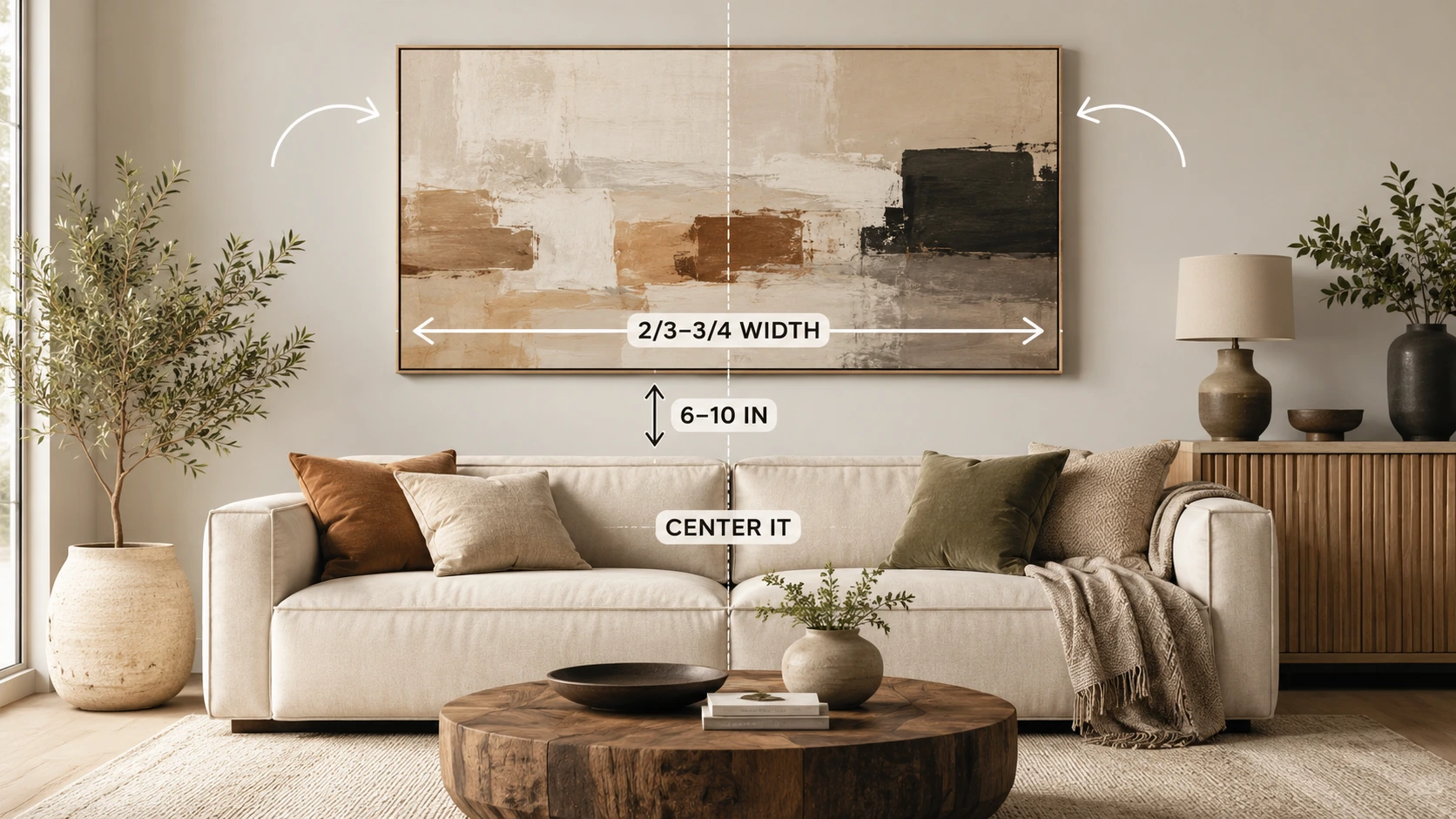
A solid starting point: your total artwork width should land somewhere between two-thirds and three-quarters of your sofa’s width.
That’s whether you’re hanging one large piece or a cluster of smaller ones.
| Sofa Width | Approximate Total Art Width |
|---|---|
| 60–72 inches | 40–54 inches |
| 72–84 inches | 48–63 inches |
| 84–96 inches | 56–72 inches |
| 96+ inches | 64+ inches |
Think of these as friendly guidelines, not laws carved in stone. A room with unusual proportions or an off-center sofa might call for some adjusting.
One tiny print above a huge sofa can look a little lost — like a postage stamp stuck on a billboard. Sizing up first solves most problems before they start.
Wanted Wall Art Sets for Every Room Visit –
2. Get the Height Right: Don’t Hang It Too High
This is the mistake almost everyone makes at least once: hanging artwork too high, so it floats somewhere near the ceiling instead of relating to the furniture below it.
Artwork that’s too high visually disconnects from the sofa. It stops feeling like part of the seating area and starts feeling like a random object stuck on the wall.
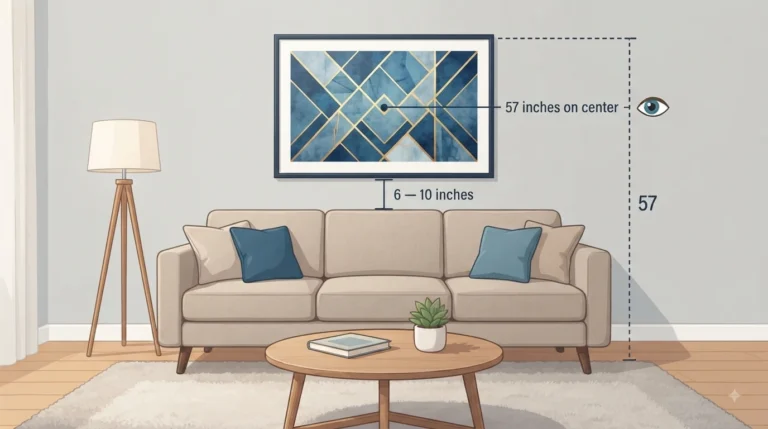
A good starting rule: leave about 6–10 inches between the top of the sofa back and the bottom of the artwork.
That number can shift depending on your sofa’s height, the piece’s size, your ceilings, and the room’s overall proportions — but it’s a reliable place to start.
Quick tips before you commit to nail holes:
- Keep the artwork visually connected to the sofa, not floating above it
- Avoid leaving a big empty gap between the two
- Step back and look at the full wall after hanging, not just up close
- Check how it looks from where you actually sit, not just standing in the doorway
3. Decide: One Large Piece or Several Smaller Pieces?
This is the fork in the road for most people. Both directions can look great — it depends on your space and your style.
One Large Artwork
A single oversized piece makes an instant, confident statement. It works especially well for:
- Minimalist rooms
- Modern interiors
- Large sofas
- Spaces that want one clear focal point
- Simple, uncluttered decorating schemes
Two Matching Prints
A pair of matching or complementary prints creates natural symmetry, which tends to feel calm and balanced — especially above sofas with a centered coffee table or symmetrical layout.
Three-Piece Artwork
A triptych (three coordinated panels) is a great option for wide walls that would otherwise need one very large, hard-to-find piece. It fills the space while keeping each panel manageable in size.
Gallery Wall
A gallery wall is the right call when you want personality over polish. It’s less “one perfect piece,” more “a collected, lived-in feel.”
- Great for adding personality
- Works well with mixed artwork styles
- A natural fit for eclectic interiors
- Can combine different frame styles
- Just try to keep a consistent color story so it doesn’t feel chaotic
4. Match the Artwork to Your Sofa Color
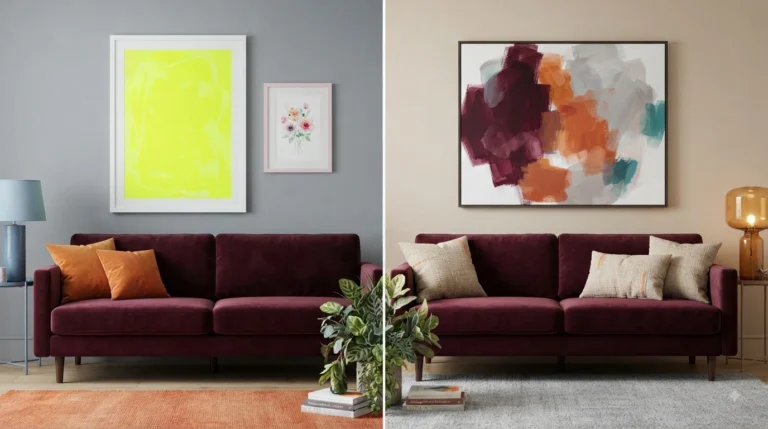
Here’s some reassuring news: your artwork does not need to match your sofa exactly. In fact, a little contrast is often more interesting than a perfect match.
The goal is to complement your sofa color, not replicate it.
Beige or Cream Sofa
- Terracotta
- Brown
- Black and white
- Soft green
- Warm neutrals
- Muted blue
Grey Sofa
- Blue
- Black
- White
- Charcoal
- Sage green
- Abstract neutrals
White Sofa
A white sofa is one of the easiest backdrops to work with. It reads as a blank canvas, so almost any artwork color or style will sit comfortably above it.
Brown or Tan Sofa
- Cream
- Black
- Terracotta
- Olive green
- Earth tones
- Landscape artwork
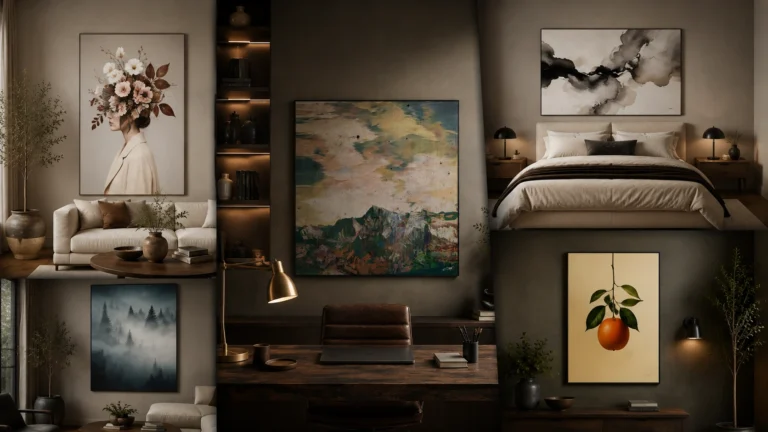
5. Choose a Style That Matches Your Room
Good wall art above sofa placement doesn’t just fill space — it should feel like it belongs to the room, not like it was grabbed off a shelf at random.
Modern
Abstract art, geometric shapes, clean, confident compositions.
Minimalist
Monochrome artwork, simple lines, a restrained color palette.
Scandinavian
Soft neutrals, nature-inspired imagery, clean and airy designs.
Japandi
Organic shapes, earthy tones, minimalist landscapes, natural textures.
Boho
Botanical prints, earthy colors, organic patterns, and eclectic combinations that feel collected over time.
6. Pick the Right Artwork Orientation
Orientation matters more than people expect — it can make the same piece feel completely different depending on the wall.
Horizontal Art
Best for:
- Wide sofas
- Long walls
- Low-profile furniture
- Large living rooms
Vertical Art
Best for:
- Narrow walls
- Tall ceilings
- Smaller furniture arrangements
Square Art
Square pieces create a strong, centered, symmetrical focal point — a solid choice when you want something bold but not busy.
7. Think About the Frame Too
The frame isn’t just a border — it changes the entire personality of the piece.
Black frames — modern and dramatic.
Natural wood frames — warm and organic.
White frames — light and understated.
Frameless canvas — clean and contemporary.
8. Consider the Size of Your Living Room
The room itself — not just the sofa — should factor into your decision.
Small Living Rooms
- One medium-sized artwork
- Simple compositions
- Lighter colors
- Less visual clutter
Large Living Rooms
- Oversized canvas
- Triptych arrangements
- A large gallery wall
- Multiple coordinated pieces
Small artwork tends to disappear on a big wall, making the whole room feel unfinished and empty. When in doubt in a large space, size up.
9. Use the Room’s Existing Colors as Your Guide
You don’t need to buy a whole new palette of decor. Look at what you already have:
- Cushions
- Rugs
- Curtains
- Accent chairs
- Coffee tables
- Decorative accessories
Repeating one or two accent colors from these pieces in your artwork makes the whole room feel intentional, like it was put together with a plan.
That said, contrast can be just as effective as matching — sometimes more so. A pop of unexpected color can make a room feel more alive than a perfectly coordinated one.
10. Avoid These Common Wall Art Mistakes
A few small missteps show up again and again. Here’s what to watch for:
- ❌ Artwork that’s too small — it reads as an afterthought rather than a focal point
- ❌ Hanging artwork too high — it disconnects visually from the sofa
- ❌ Ignoring proportions — going wider than the sofa without considering balance
- ❌ Too many unrelated colors — creates visual noise instead of harmony
- ❌ Mixing too many design styles — the room starts to feel unplanned
- ❌ Lots of tiny frames on a huge wall — they get lost instead of standing out
- ❌ Matching every color too literally — can feel flat rather than curated
- ❌ Filling every inch of wall space — a room needs room to breathe
- ❌ Buying before measuring — the most avoidable mistake of all
11. Use This Simple Formula Before You Buy
Here’s a simple seven-step checklist to run through before you click “buy”:
- Measure your sofa’s total width.
- Measure the available wall space above it.
- Choose your total artwork width (aim for two-thirds to three-quarters of the sofa width).
- Decide between one piece, a pair, a triptych, or a gallery wall.
- Select a color palette that complements your sofa and existing decor.
- Choose the right frame style and orientation for your wall.
- Check the final proportions and height before you commit to hanging.
Wall Art Above Sofa: Quick Size Guide
| Sofa Size | Recommended Total Artwork Width | Good Options |
|---|---|---|
| Small sofa | 40–50 inches | One medium print or two small prints |
| Medium sofa | 48–60 inches | Large canvas or pair of prints |
| Large sofa | 56–72 inches | Oversized art or triptych |
| Large sectional | 64+ inches | Large canvas or gallery wall |
Keep in mind that when you’re using multiple pieces, it’s the total visual width — including the gaps between frames — that counts, not just the size of each piece.
How to Choose Wall Art for a Sectional Sofa
Sectionals come with their own layout challenges, since they don’t always have one clear “center.”
A few things to keep in mind:
- Center the artwork over the main seating area, not the whole sectional footprint
- Oversized artwork tends to work better than small pieces on a large sectional
- Avoid placing art awkwardly over just one section — it can look unbalanced
- A wide gallery wall can help fill a long stretch of wall behind an L-shaped sectional
- For corner sectionals, consider anchoring the art to the longer straight run of wall rather than the corner itself
What Type of Wall Art Works Best Above a Sofa?
| Wall Art Type | Best For | Look |
|---|---|---|
| Large Canvas | Modern living rooms | Bold |
| Abstract Art | Contemporary spaces | Artistic |
| Botanical Prints | Natural interiors | Calm |
| Photography | Modern homes | Sophisticated |
| Gallery Wall | Eclectic interiors | Personal |
| Triptych | Wide walls | Balanced |
| Minimalist Prints | Simple rooms | Clean |
There’s no single “correct” type of wall art above sofa placement — the best choice is the one that fits your room’s proportions, your existing colors, and your personal style.
Frequently Asked Questions About Wall Art Above a Sofa
How big should wall art be above a sofa?
As a general guideline, aim for your total artwork width to be about two-thirds to three-quarters of your sofa’s width.
How high should wall art be above a sofa?
Leave roughly 6–10 inches between the top of the sofa back and the bottom of the artwork, adjusting for ceiling height and piece size.
Should wall art be centered over the sofa?
In most cases, yes — centering the artwork over the sofa (rather than the wall) creates the most visually balanced look.
Can wall art be wider than the sofa?
Yes, slightly wider can work well, especially with a gallery wall or a wide triptych, as long as the proportions still feel intentional.
Should wall art match the sofa?
No — it should complement the sofa’s color rather than match it exactly. A little contrast often looks more interesting than a perfect match.
Is one large artwork better than several small pieces?
Neither is “better” — it depends on your style. One large piece tends to feel bold and modern, while multiple pieces can add personality and warmth.
How many pictures should go above a sofa?
Anywhere from one to a full gallery wall works, as long as the total width and spacing feel proportional to the sofa.
What wall art looks best above a sectional sofa?
Oversized canvases, triptychs, or wide gallery walls tend to work best, since they can fill the larger wall space a sectional often creates.
Final Thoughts
Choosing wall art above sofa spaces really comes down to one simple formula:
Size + Proportion + Placement + Color + Style = Better Wall Art
Measure first, keep the height connected to your sofa, pick colors that complement rather than copy, and choose a layout that matches your room’s personality. Get those pieces right, and the rest tends to fall into place.




11 Comments