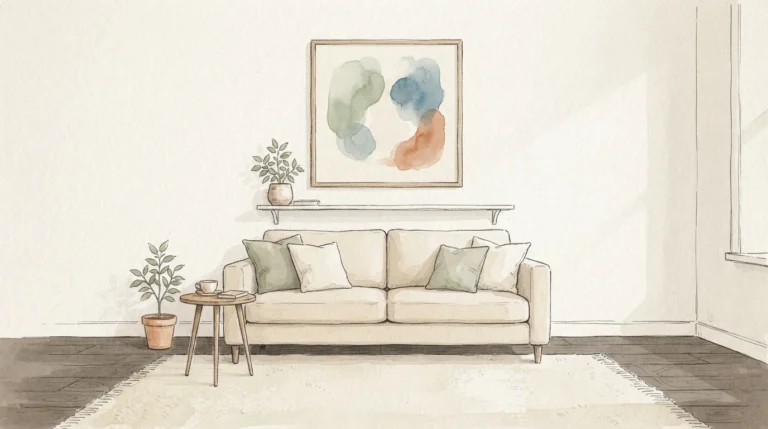
Large Wall Art for Living Room: Size Guide, Placement Rules & 16 Best Picks (2026)
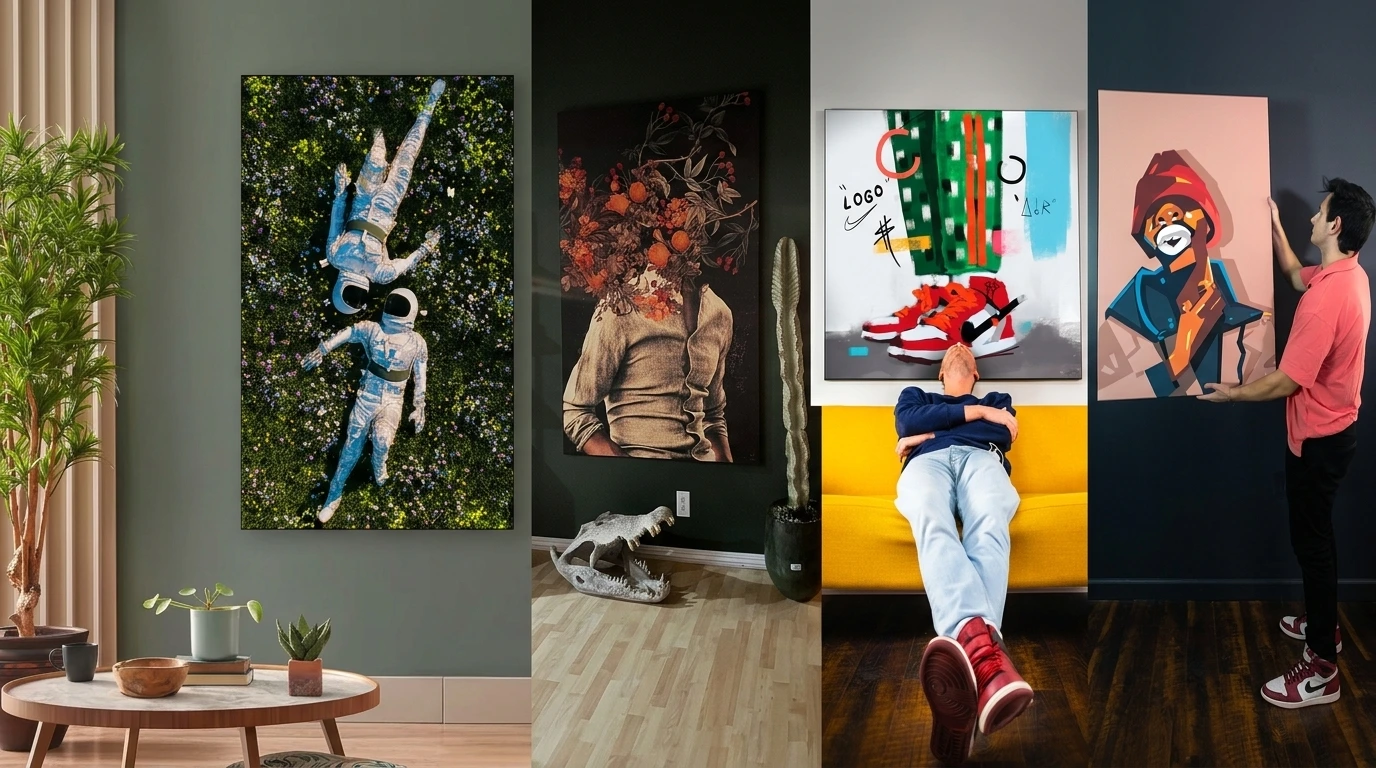
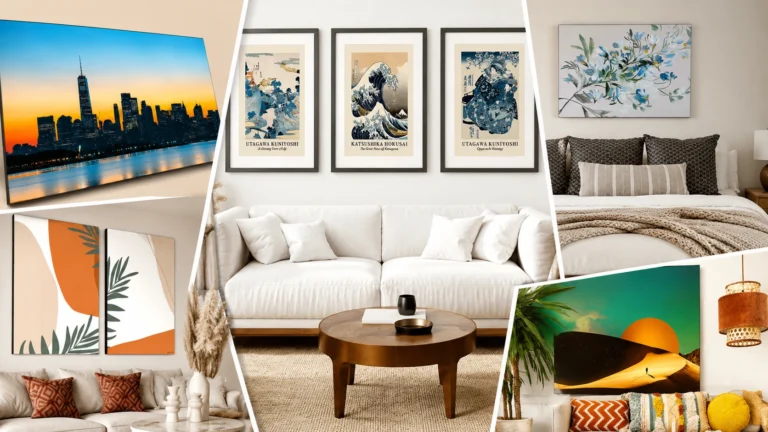
The right large wall art for a living room covers about 60–75% of the width of the furniture below it, and hangs with its center roughly 57–60 inches (145–152 cm) from the floor. Get those two numbers right and almost any piece looks intentional. Get them wrong and even expensive art looks lost on the wall.
This guide gives you the exact size chart, the hanging-height rules, and 12 hand-picked large wall art options sorted by style, so you can choose with confidence instead of guessing.
Disclosure: This page contains affiliate links. If you buy through them, we may earn a commission at no extra cost to you. We only recommend pieces we would hang ourselves.
Quick answer: how to choose large wall art for your living room
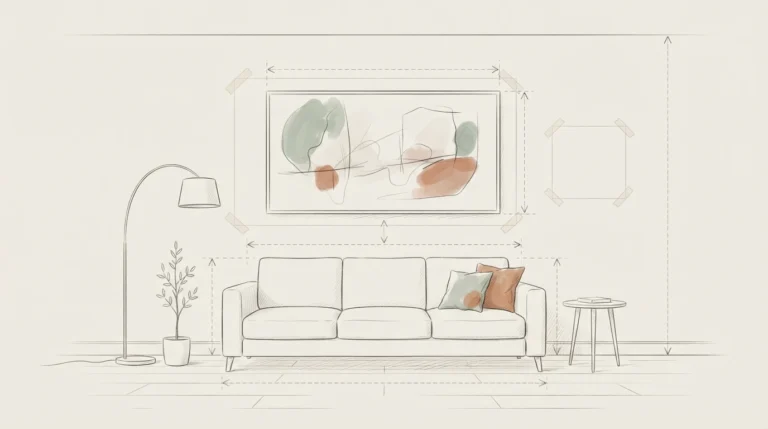
Width: Aim for 60–75% of your sofa or console width. For an 84-inch (213 cm) sofa, that is 50–63 inches (127–160 cm) of art.
Height: Center the art about 57–60 inches (145–152 cm) from the floor, with the bottom edge 6–10 inches (15–25 cm) above the sofa.
Format: Use one oversized piece, or a set of 2–3 matching panels spaced 2–3 inches (5–8 cm) apart.
Orientation: Horizontal over a sofa or sideboard, vertical on narrow walls and in rooms with high ceilings.
Colour: Pull one or two tones from your sofa, rug or curtains, or go deliberately neutral.
Jump to the size chart or straight to the best picks by style.
Want exact numbers for your own wall? Use our wall art size calculator or the Wall Art Finder to narrow down your options.
Prefer to skip the math? Try our free wall art size calculator to check your numbers.
What counts as large wall art?
Large wall art starts at about 30 × 40 inches (76 × 102 cm). Anything under 24 × 36 inches (60 × 90 cm) reads as medium, and works best when grouped. Retailers label sizes differently (“XL”, “3XL,” and so on), so always check the actual dimensions, not the name.
| Tier | Size (inches) | Size (cm) | Best for |
|---|---|---|---|
| Medium | 16 × 20 to 24 × 36 | 40 × 50 to 60 × 90 | Sets of 2–3, small walls, hallways |
| Large | 30 × 40 to 36 × 48 | 76 × 102 to 91 × 122 | Sofas up to about 72 in (183 cm) |
| Extra large | 40 × 60 to 48 × 72 | 102 × 152 to 122 × 183 | Sofas and sectionals 84 in (213 cm) and wider |
| Oversized statement | 60 in (152 cm) wide or more, or multi-panel sets | 152 cm wide or more | Feature walls, open-plan rooms, high ceilings |
If you are between two sizes, go up. Art that is too small is the most common wall art mistake, and it is far more noticeable than art that is slightly too big.
For a room-by-room breakdown of when art becomes too big, see our oversized wall art sizing guide.
For a deeper look at very big pieces, read our room-by-room guide to oversized wall art and how big is too big.
Size guide for large wall art by sofa width
Multiply your furniture width by 0.6 and by 0.75. The two results are the minimum and maximum width your art (or your whole set of panels) should have.
| Sofa or console width | Ideal art width (60–75%) | Example setups |
|---|---|---|
| 60 in / 152 cm (loveseat) | 36–45 in / 91–114 cm | One 40 × 30 in piece |
| 72 in / 183 cm | 43–54 in / 110–137 cm | One 48 × 32 in piece, or two 24 × 36 in panels |
| 84 in / 213 cm | 50–63 in / 127–160 cm | One 60 × 40 in piece, or three 18 × 36 in panels |
| 96 in / 244 cm (long sofa, sectional) | 58–72 in / 147–183 cm | One 72 × 36 in piece, or three 20 × 40 in panels |
| 108 in+ / 274 cm+ | 65–81 in / 165–206 cm | Three 24 × 48 in panels, or one oversized statement piece |
For multi-panel sets, count the gaps in your total width. Three 18-inch panels with two 3-inch gaps measure 60 inches across.
How to measure in 4 steps
- Measure the width of the sofa, console or bed the art will sit above.
- Multiply by 0.6 and 0.75 to get your target width range.
- Measure the free wall height from the top of the furniture to the ceiling, and keep at least 6 inches (15 cm) of breathing room at the top.
- Cut kraft paper to the planned size and stick it on the wall with painter’s tape for a day. If it still feels right after living with it, order.
The tape test costs nothing and prevents most returns on large pieces.
Measuring a bare wall instead of a sofa? Our 6–12 ft wall size guide gives art-width ranges for 6, 8, 10 and 12 foot walls.
Working with a long bare wall instead of a sofa? Our guide on what size wall art to buy for a large wall gives target widths for 6, 8, 10 and 12 ft walls.
Where and how high to hang large wall art
Hang large art so it relates to the furniture below it, not to the ceiling. Art that floats too high is the second most common mistake after choosing a piece that is too small.
- Eye-level rule: center the piece 57–60 inches (145–152 cm) from the floor. This is the standard gallery height.
- Above a sofa: leave 6–10 inches (15–25 cm) between the sofa back and the bottom of the frame.
- Above a console or sideboard: leave 5–8 inches (13–20 cm).
- Off-center walls: center the art on the furniture, not on the wall. A sofa pushed to one side still anchors the piece.
- High ceilings (10 ft / 3 m or more): choose a vertical piece or stack two panels, and keep the bottom edge close to the furniture instead of lifting the whole piece.
- Next to a window or door: align to the furniture below, and keep at least 4–6 inches (10–15 cm) from trim so the piece does not look squeezed.
- Behind a TV wall: place large art on the wall opposite or beside the TV, not stacked above it, so the two do not compete.
For exact measurements and a quick-reference cheat sheet, see how high to hang wall art above a sofa and our 11 rules for choosing wall art above a sofa.
Horizontal or vertical?
Horizontal art stretches a wall and suits sofas, sideboards and wide walls. Vertical art adds height and suits narrow walls, entryways and rooms with tall ceilings. When the wall is square, a square or near-square canvas keeps things balanced.
For exact measurements and a quick-reference cheat sheet, read our full guide on how high to hang wall art above a sofa. Hanging art in a narrow hallway? See these entryway wall art prints.
Decorating a narrow hallway or entry? See our 13 best entryway wall art prints for ideas that suit narrow walls.
One oversized piece or a set of panels?
Choose one oversized piece for a calm, modern look, and a 2–3 panel set when the wall is wide or the art has to travel up stairs and through doors. Both work if you respect the size rules above.
| Option | Best for | Watch out for |
|---|---|---|
| Single oversized piece | Minimal, modern rooms; a clear focal point | Harder to ship and carry; costs more to replace if you change style |
| Diptych (2 panels) | Walls 60–80 in (152–203 cm) wide; vertical panels on narrow walls | Panels must be hung level and evenly spaced |
| Triptych (3 panels) | Long sofas, sectionals, wide feature walls | A 2–3 in (5–8 cm) gap looks intentional; wider gaps look scattered |
| Gallery wall of mixed sizes | Eclectic, collected-over-time rooms | Takes planning, and total width must still follow the 60–75% rule |
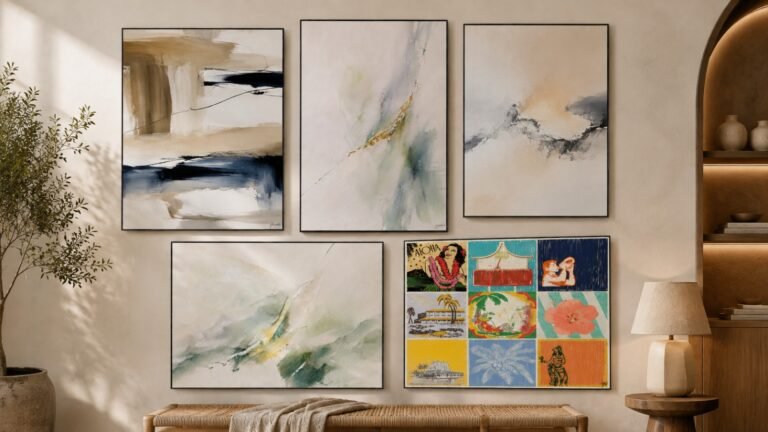
For panel sets, keep the gap identical between every panel and stay at 2–3 inches (5–8 cm) so the group reads as one artwork.
Planning a mixed-size layout instead? See our living room gallery wall ideas for 11 layouts that work.
For single-canvas statement ideas, see our 7 oversized large canvas wall art pieces.
Best large wall art for living room by style
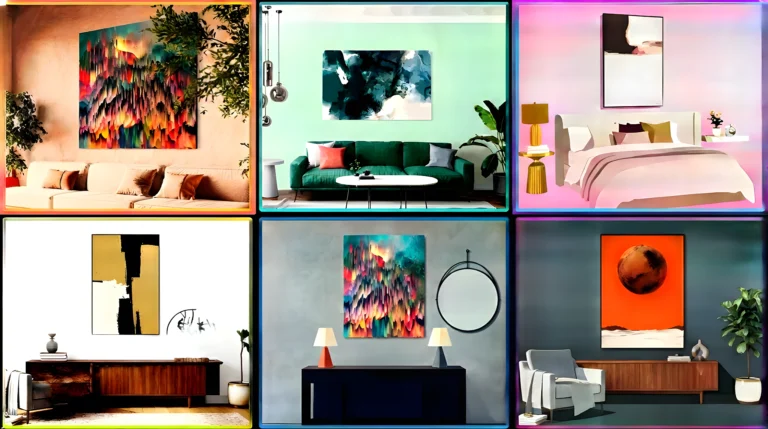
These 12 picks are grouped into four styles: pop art, surreal art, neutral art and nature art. Jump to the look that fits your room, then open the link to see the available sizes and choose one within your 60–75% width range.
Shopping on a budget or want a different format? See our large wall art for above the sofa under $250 and our oversized large canvas wall art picks.
Want even more inspiration? Browse our 12 best living room wall art ideas for modern homes and 21 modern living room wall art ideas.
1. Pop art: bold colour for a statement wall
Pop art brings bright colour, graphic shapes and a sense of humour. It works best on a plain wall with simple furniture, where it becomes the one lively element in the room. Repeat one colour from the artwork in a cushion or throw to tie it in.
Want more bold, graphic options? Browse our wall art posters.
Pop Art Pick 1
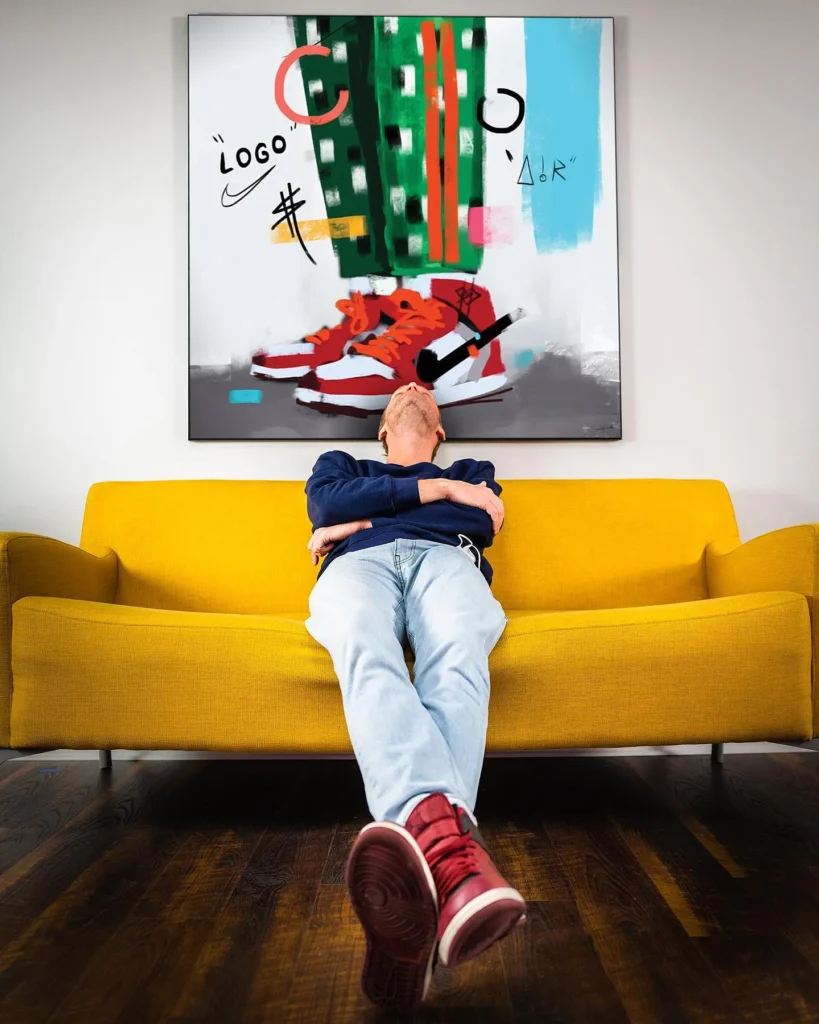
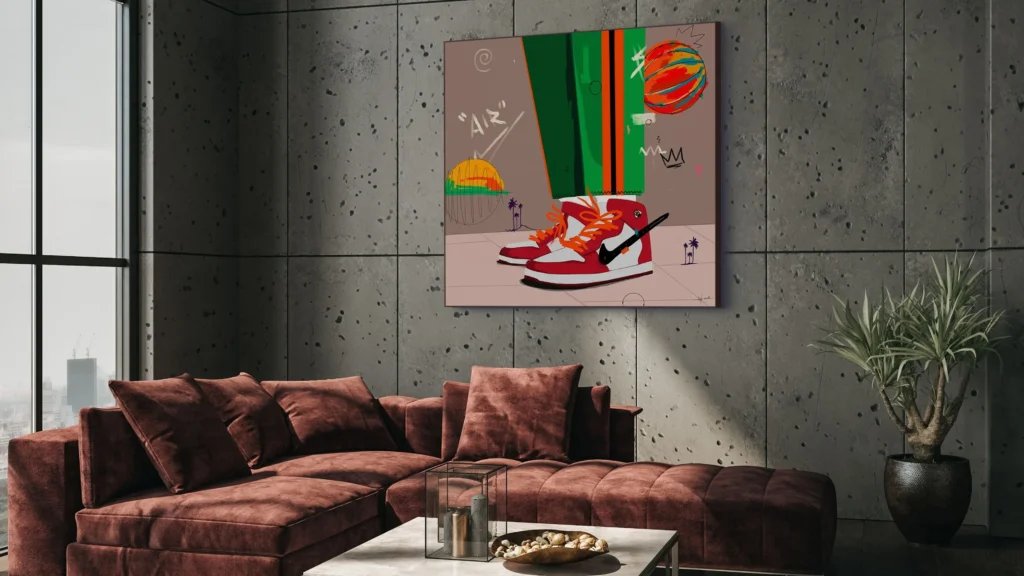

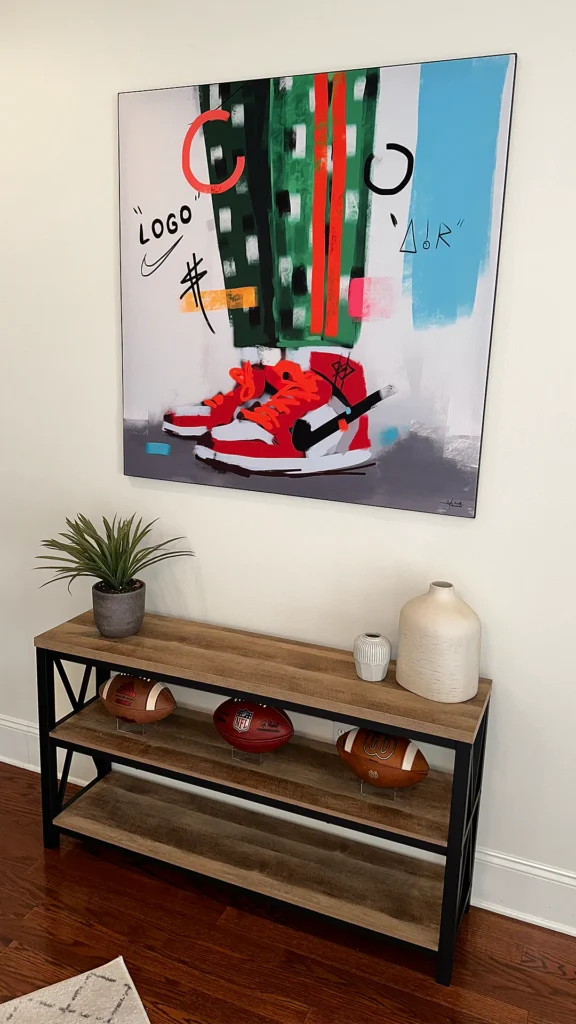
A bold focal piece for the wall above your sofa. Check that its width falls within the range in the size chart above.
Pop Art Pick 2
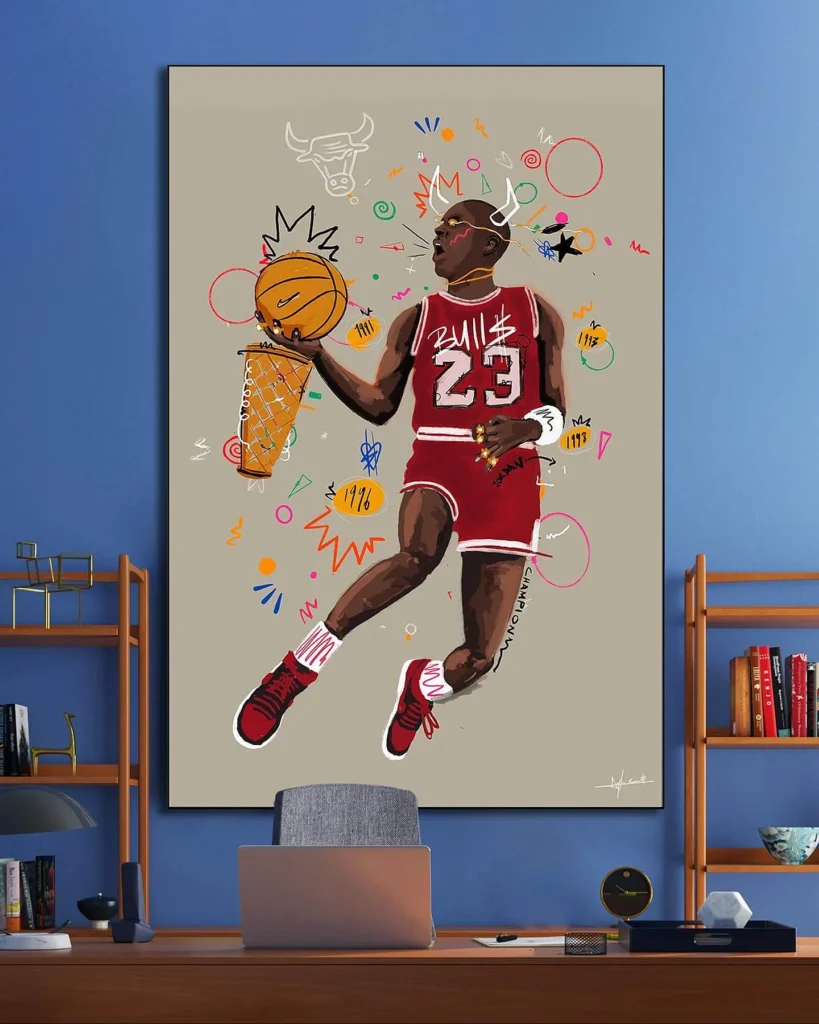

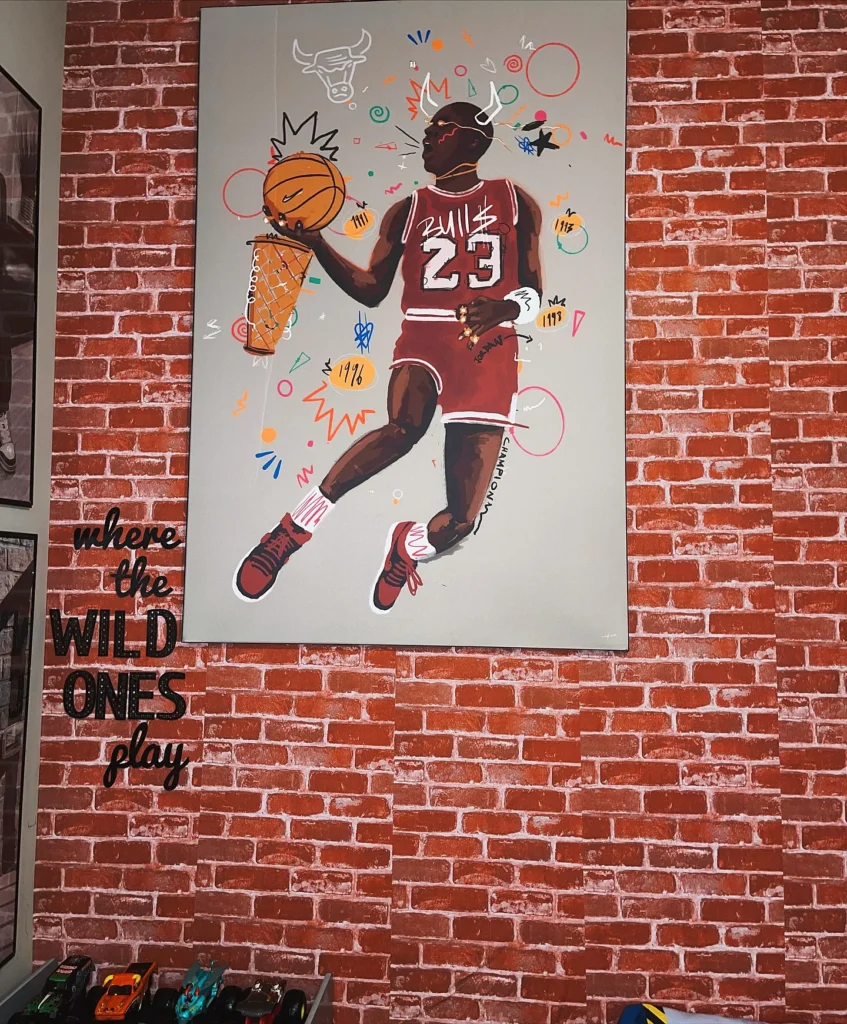

A good colour accent for a mostly neutral room. Pull one of its colours into a nearby cushion or vase.
Pop Art Pick 3
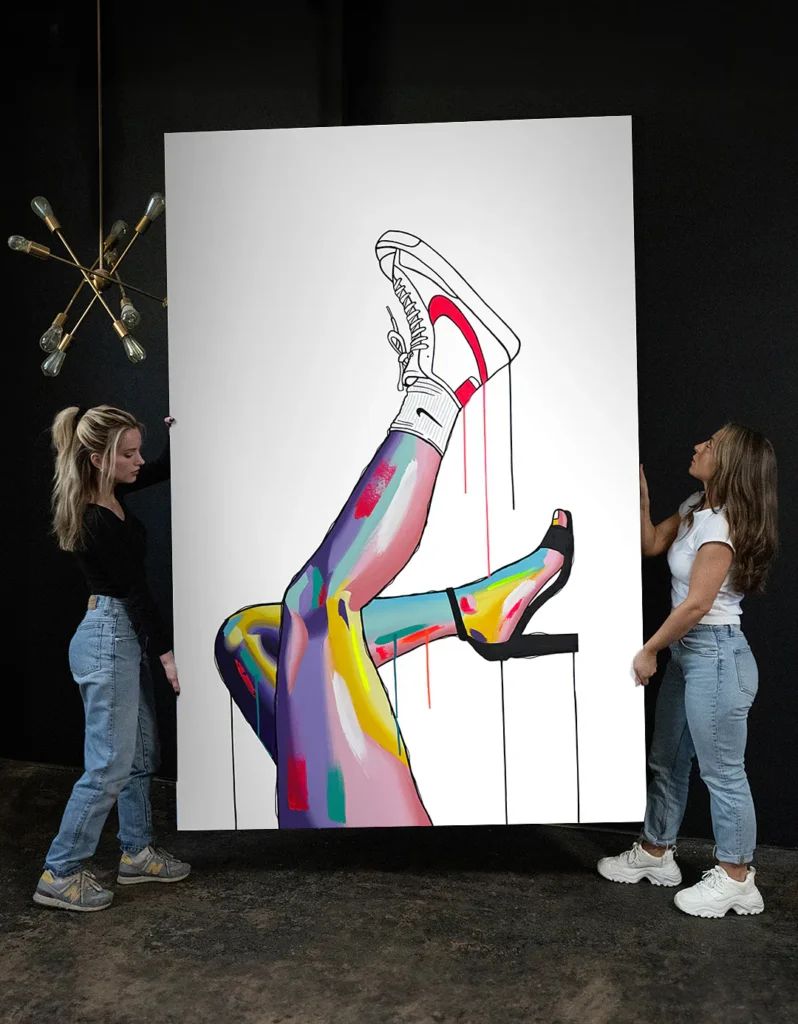

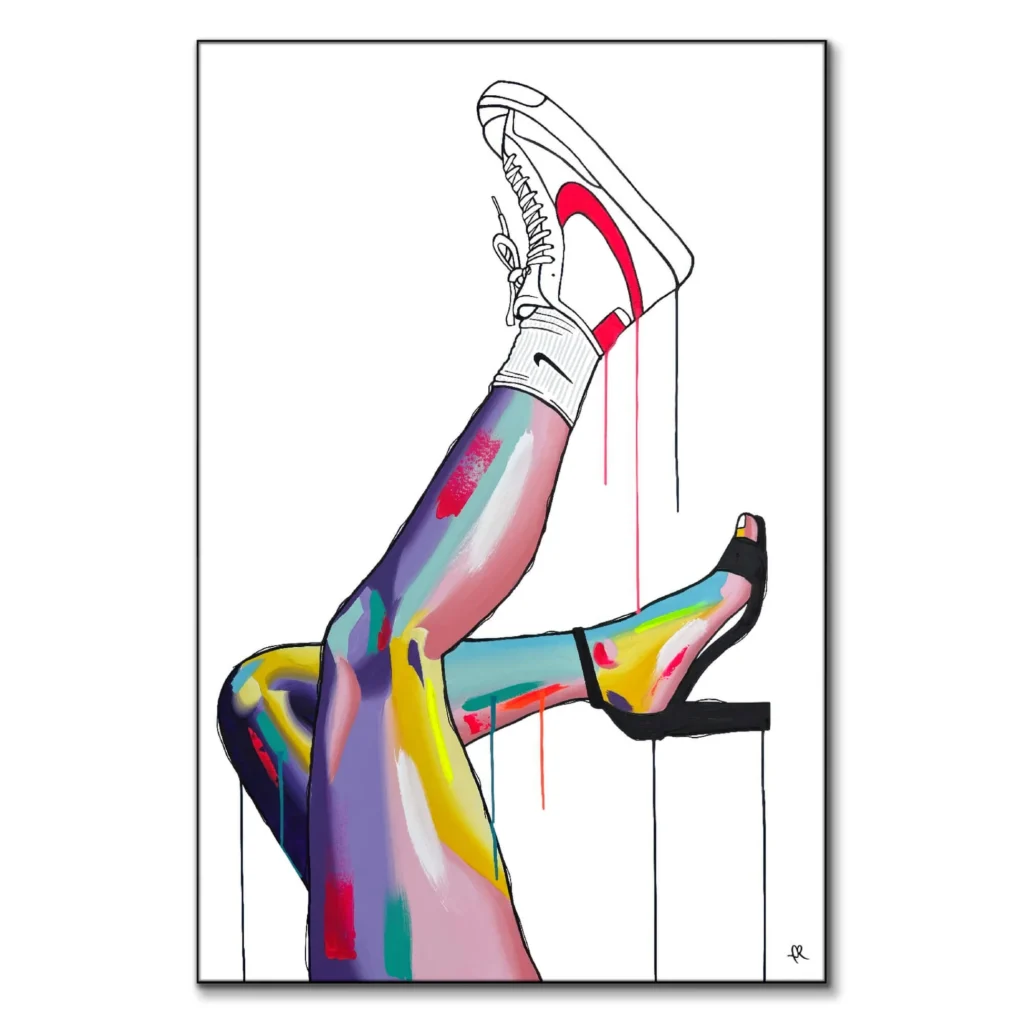
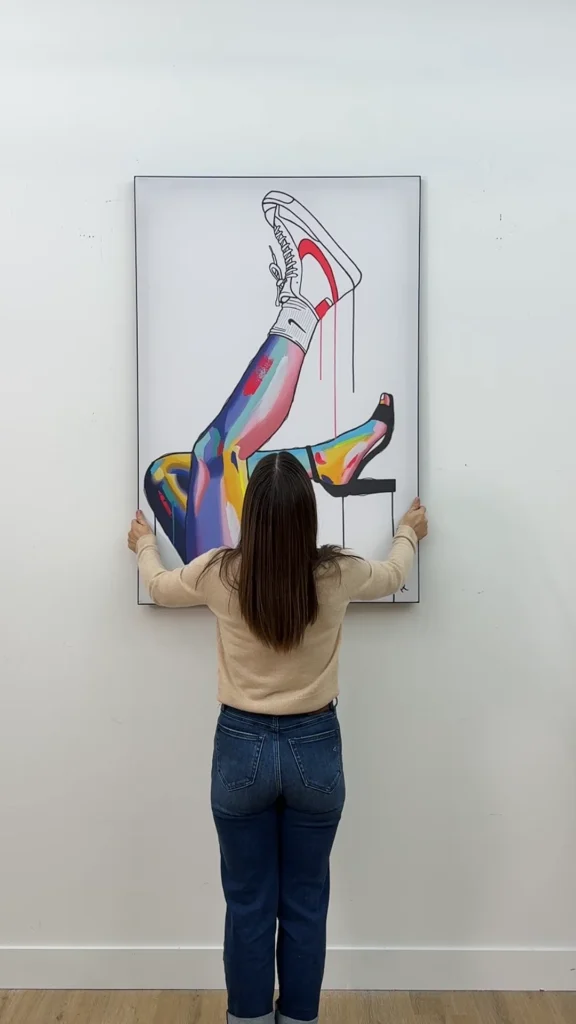
A strong fit for open-plan living areas, where the art needs to be seen clearly from across the room.
Pop Art Pick 4
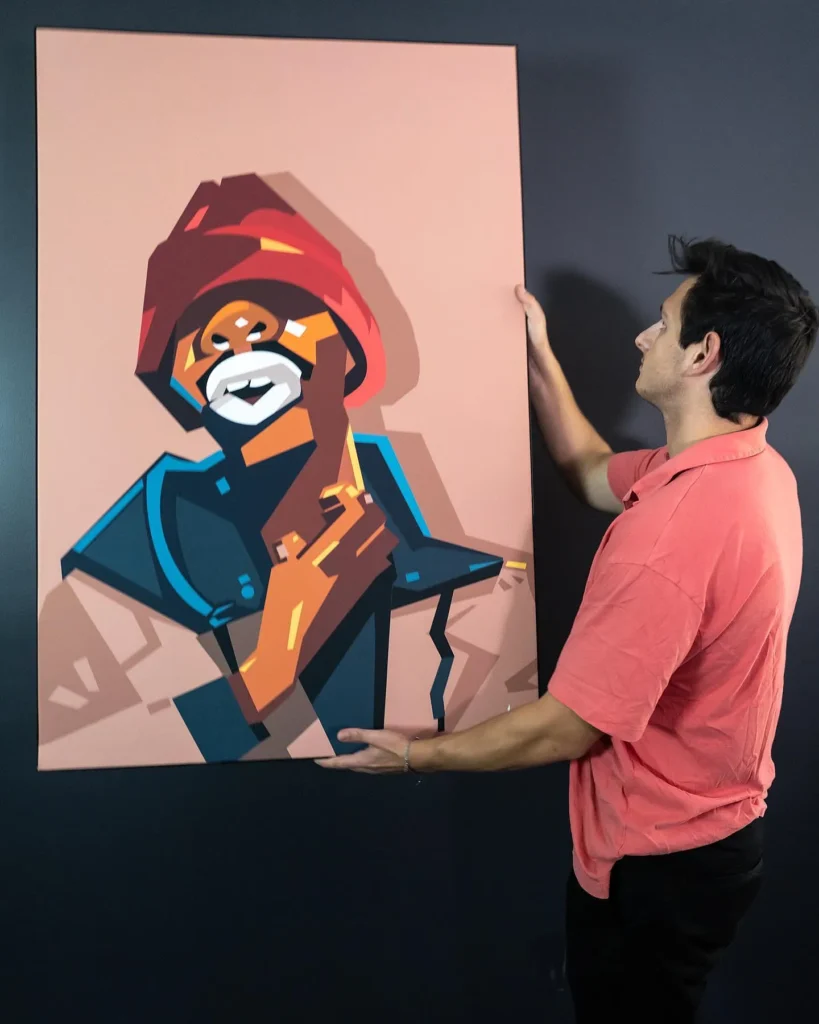
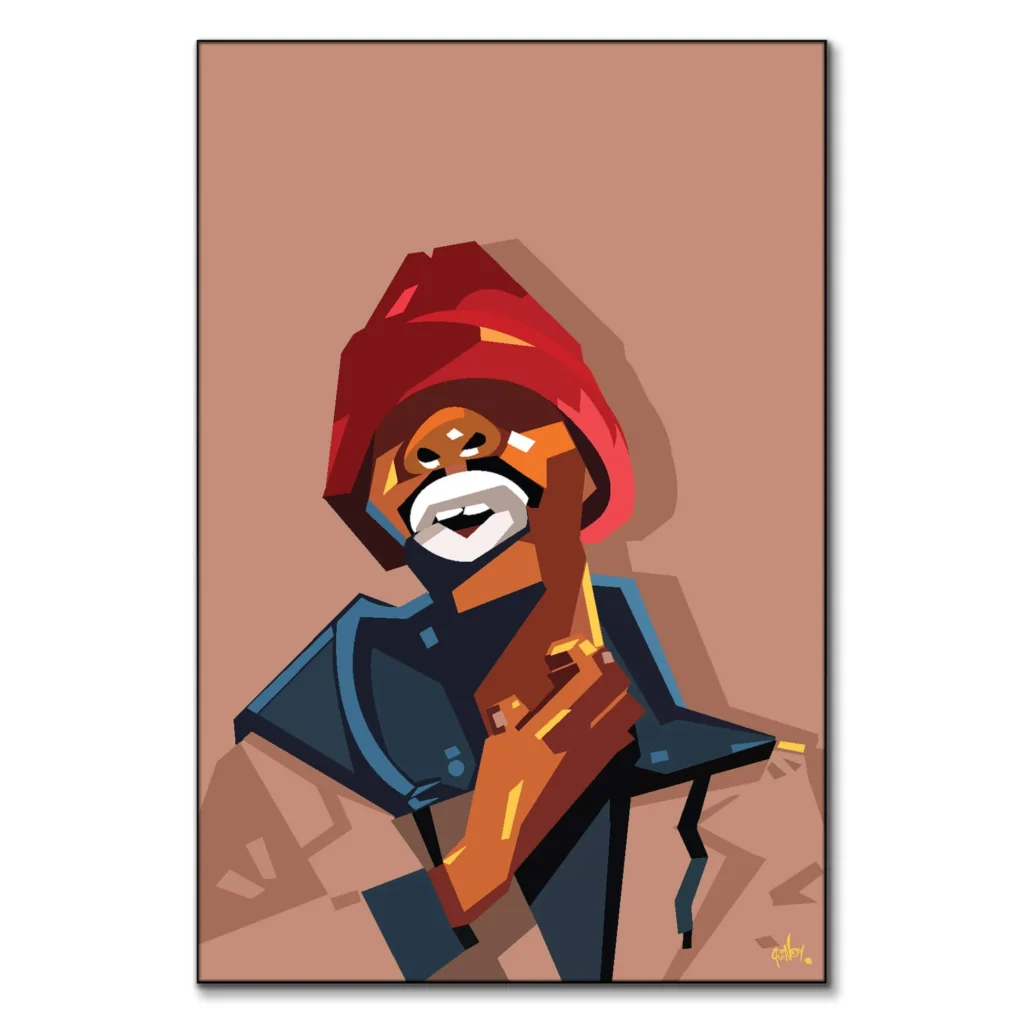
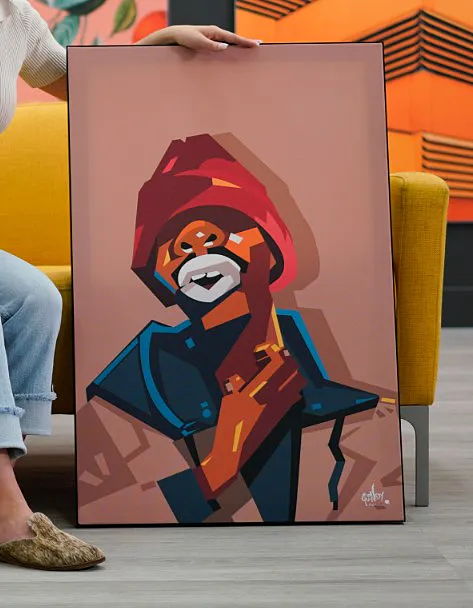
A playful option for a second wall, such as beside a window or above a sideboard.
2. Surreal art: dreamlike pieces that start conversations
Surreal art mixes everyday scenes with unexpected elements, so people stop and look. It suits modern, eclectic, and moody rooms. Use one surreal piece per wall and keep the decor around it simple, so the artwork stays the focus.
Surreal Art Pick 1
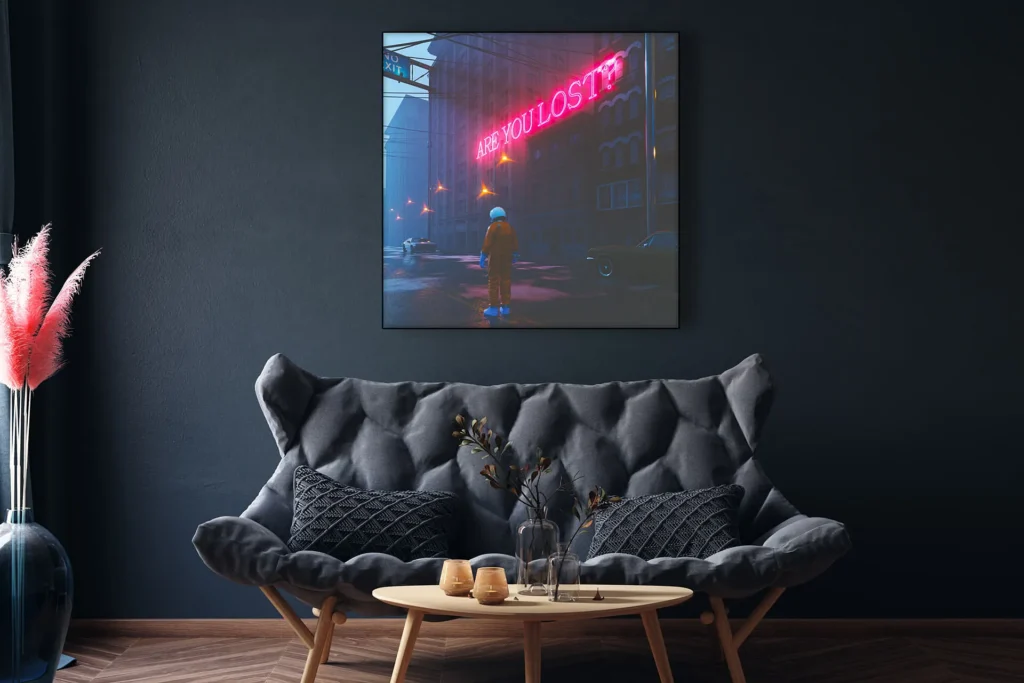
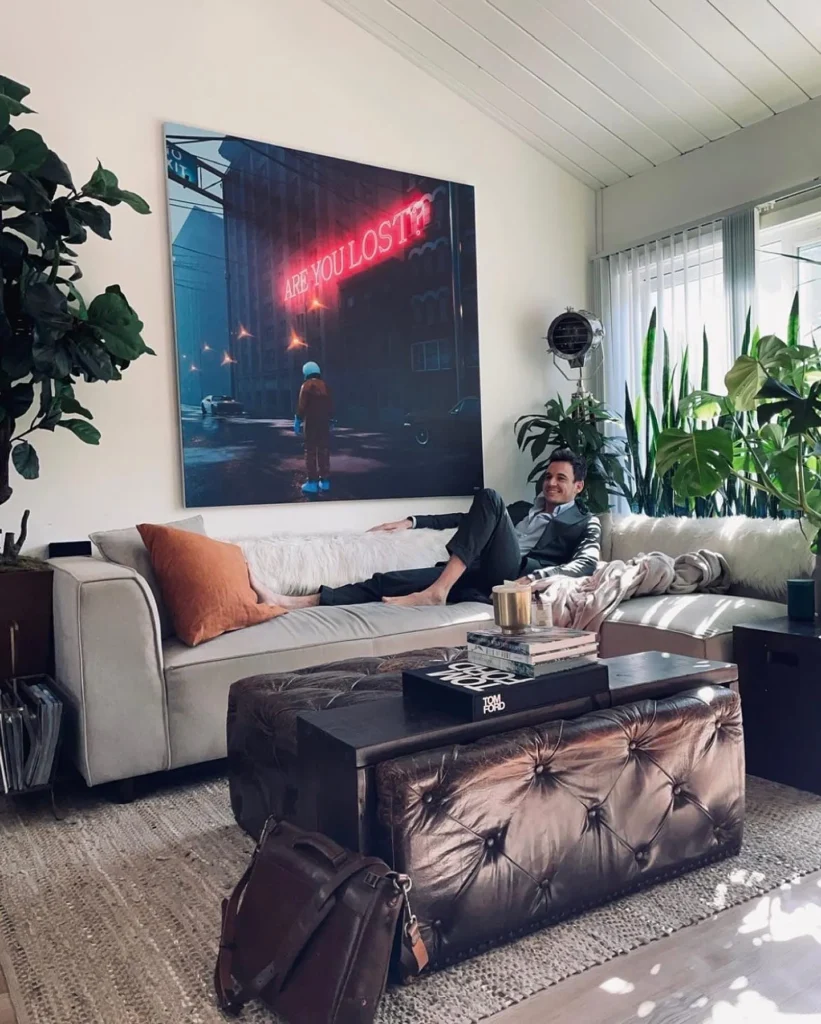

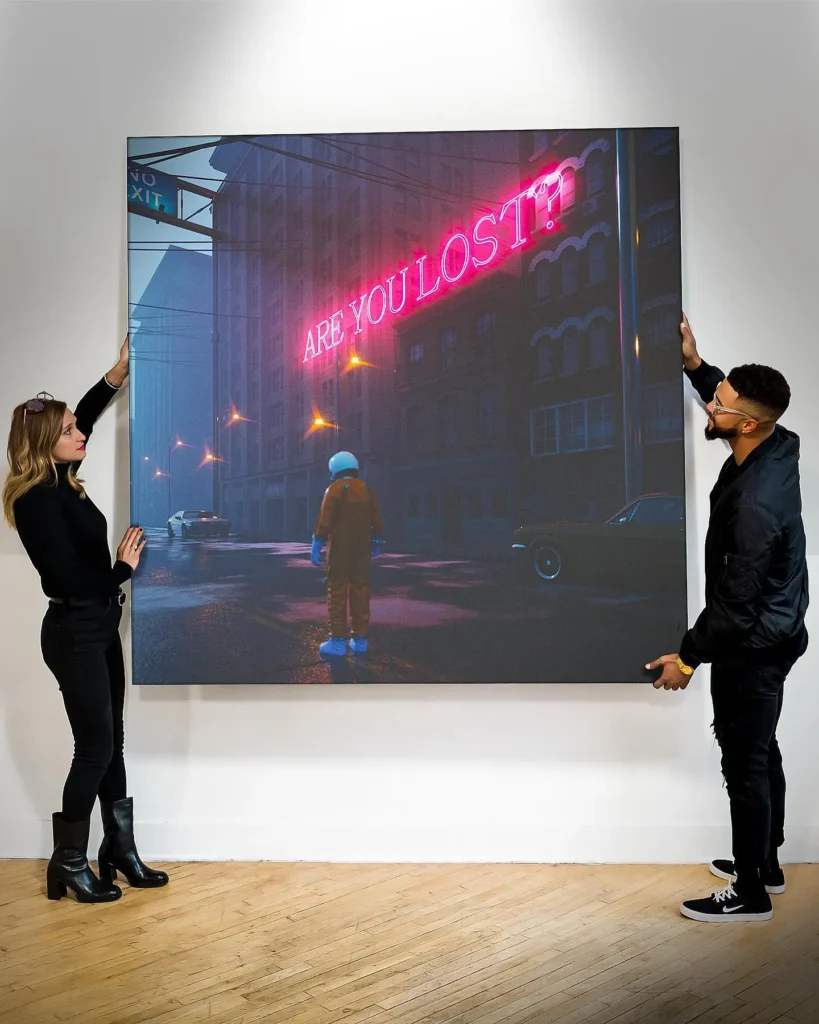
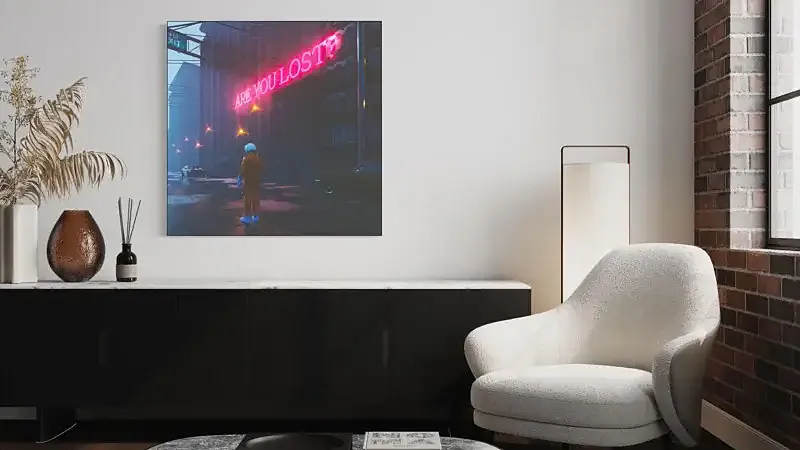
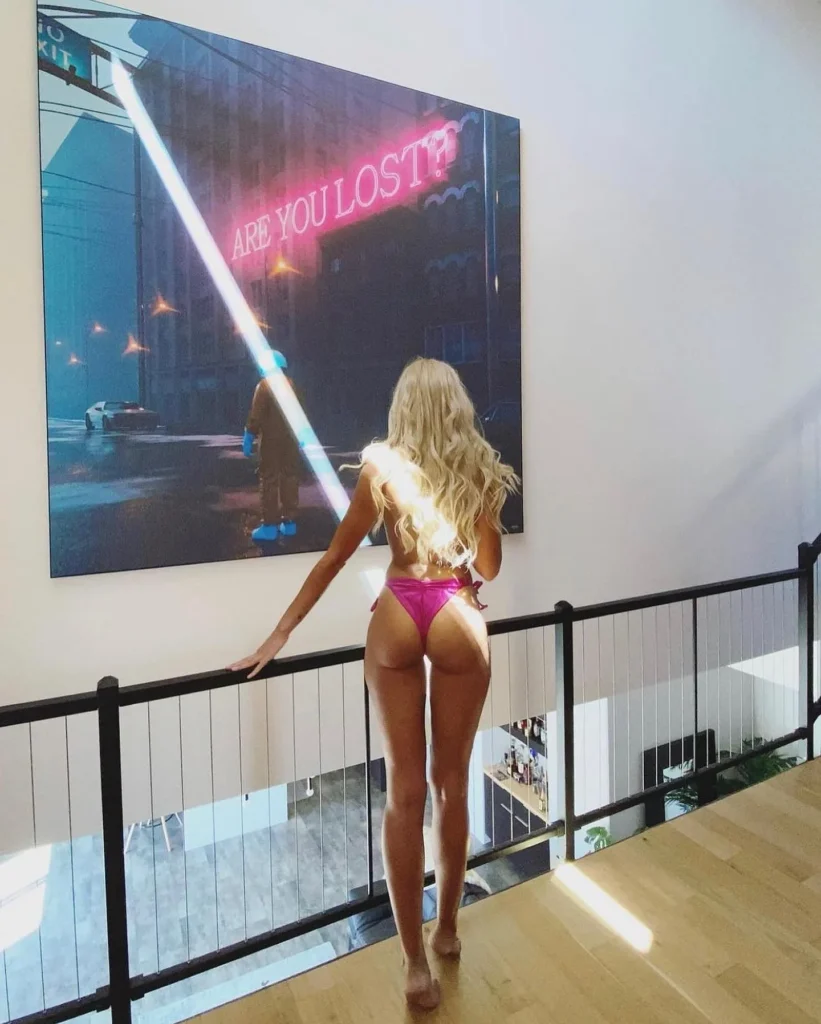
A conversation starter for the main sofa wall. Give it space, with plain walls and little decor around it.
Surreal Art Pick 2
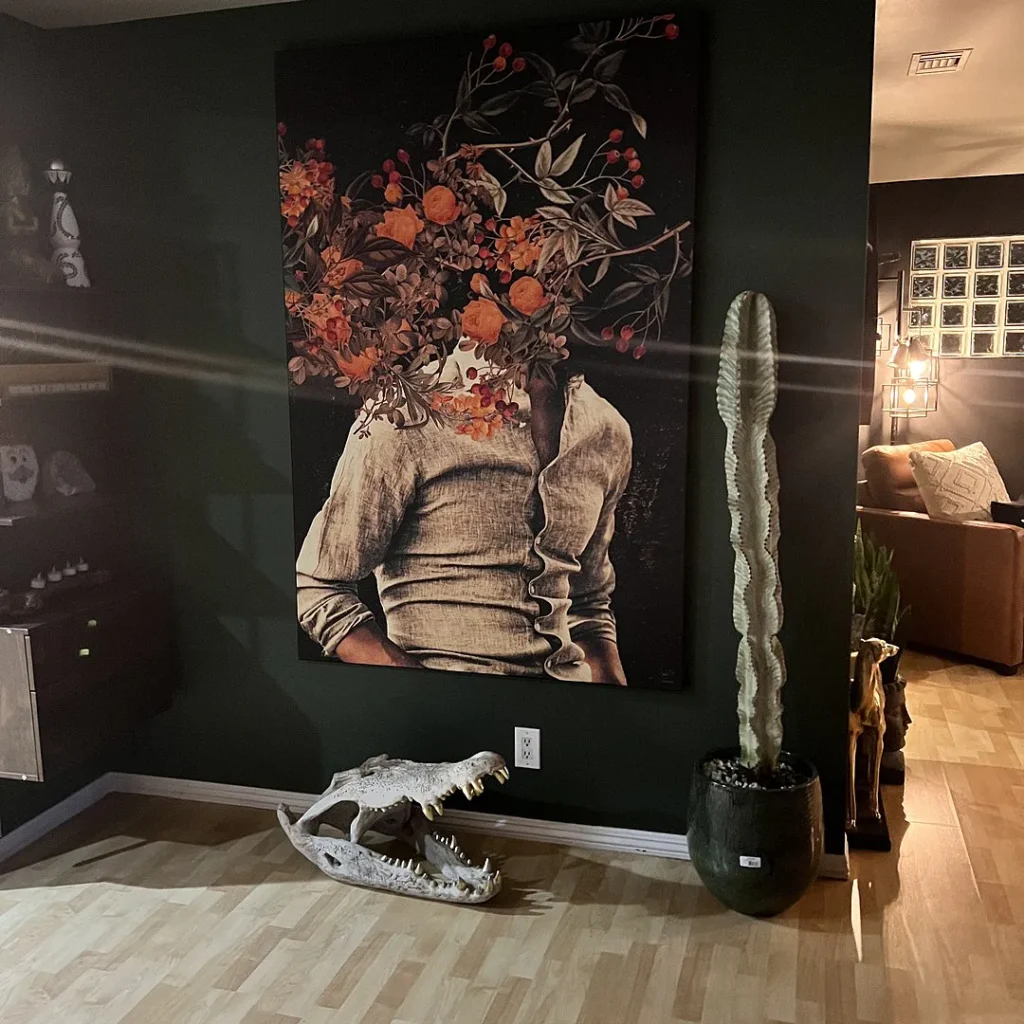
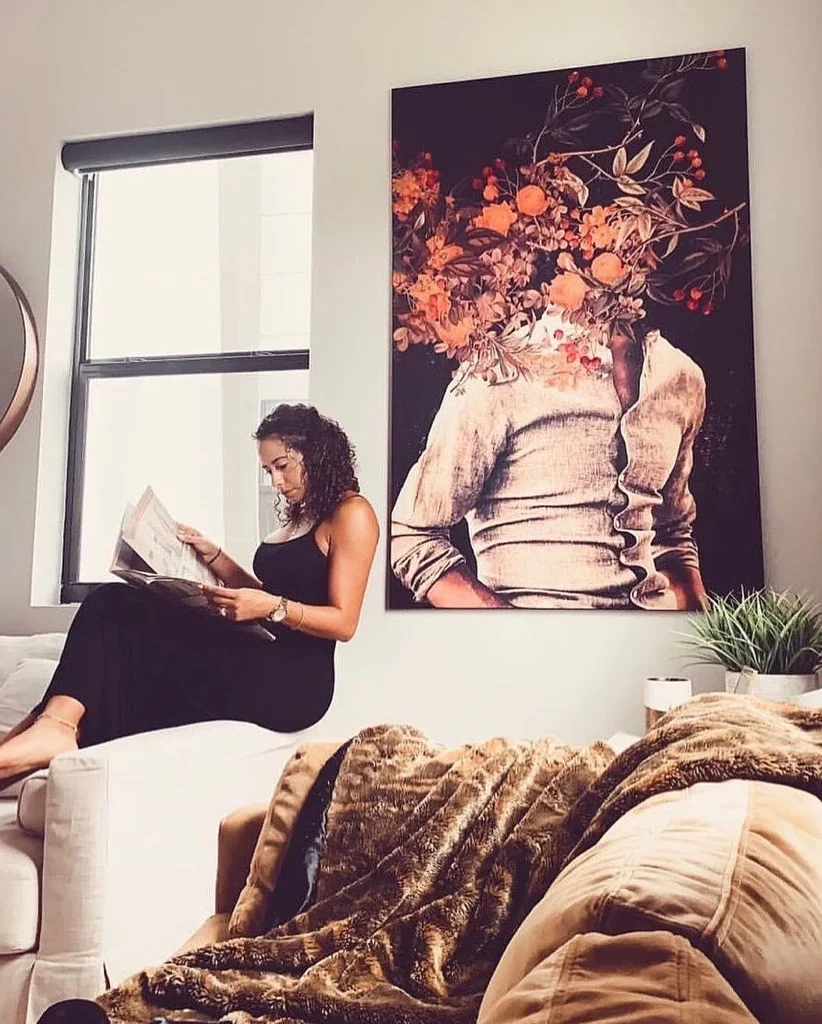
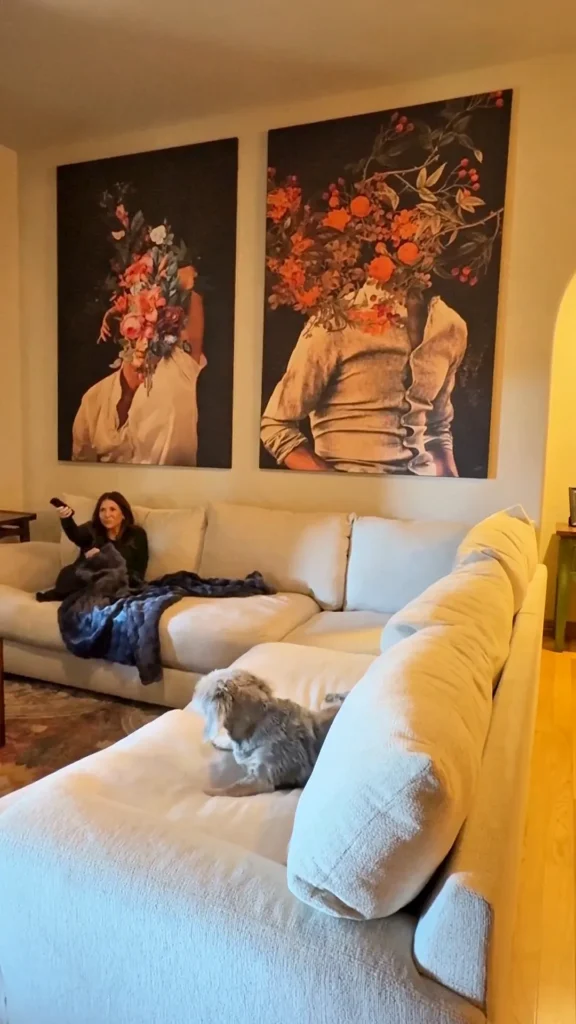
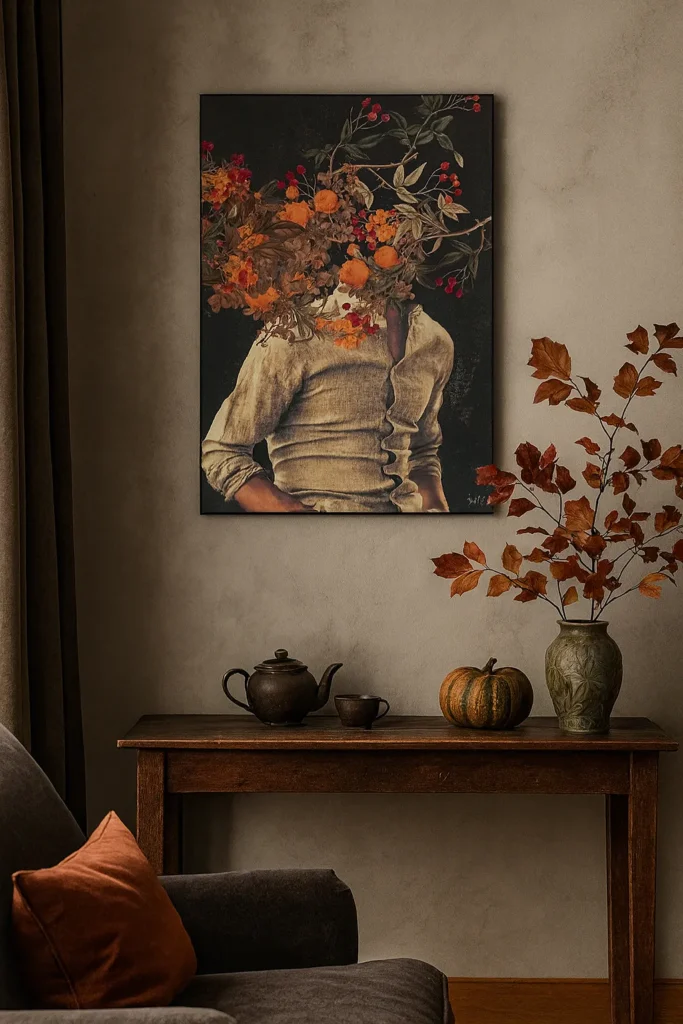
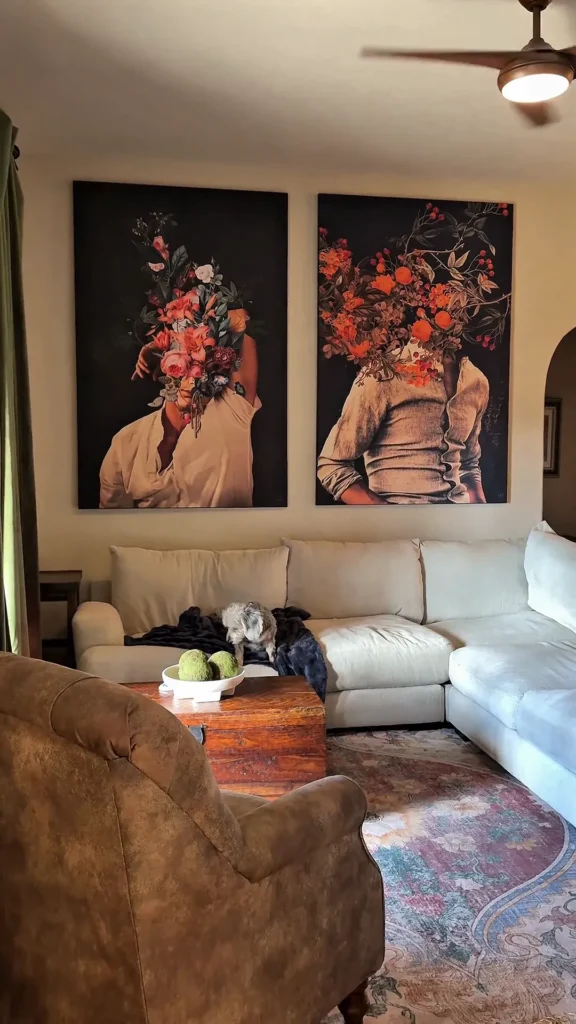
Suits an eclectic or modern room. Pair it with clean-lined furniture so the artwork leads.
Surreal Art Pick 3
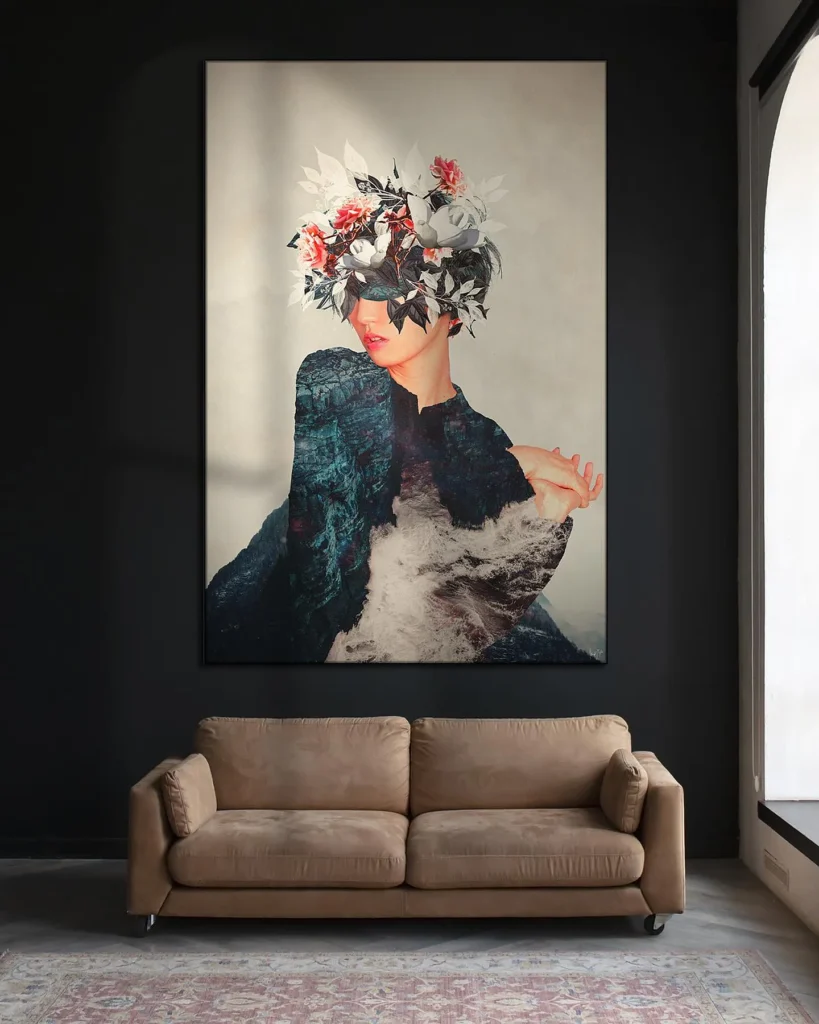
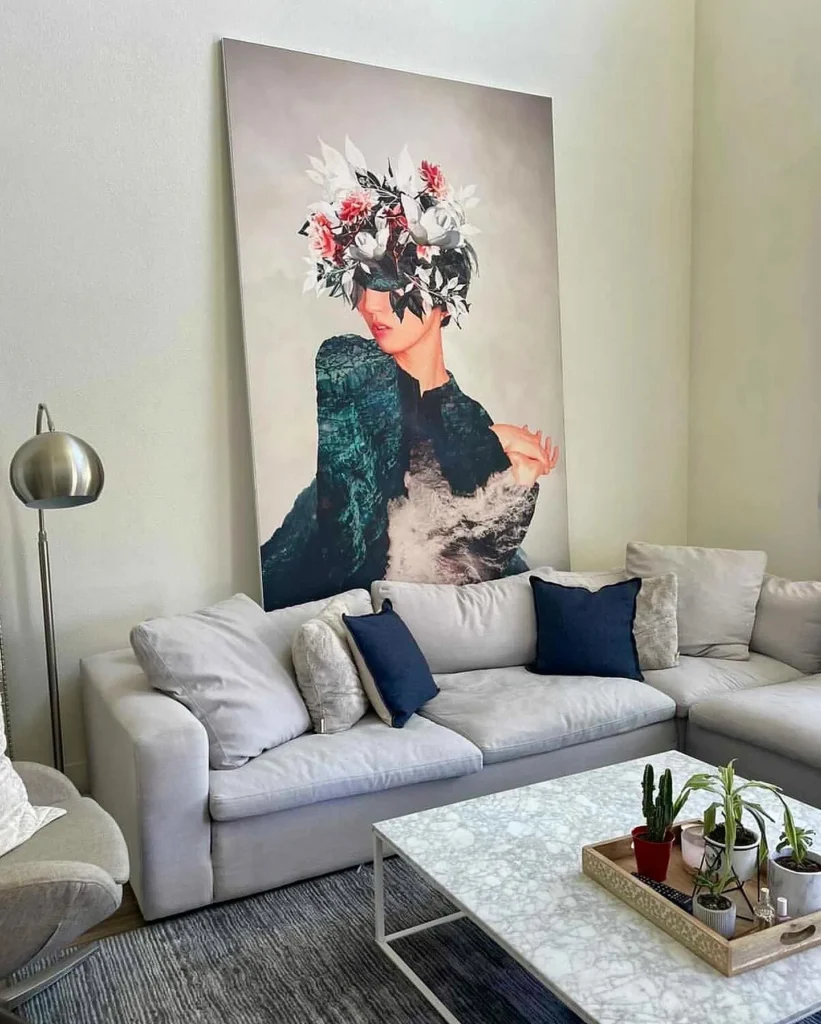
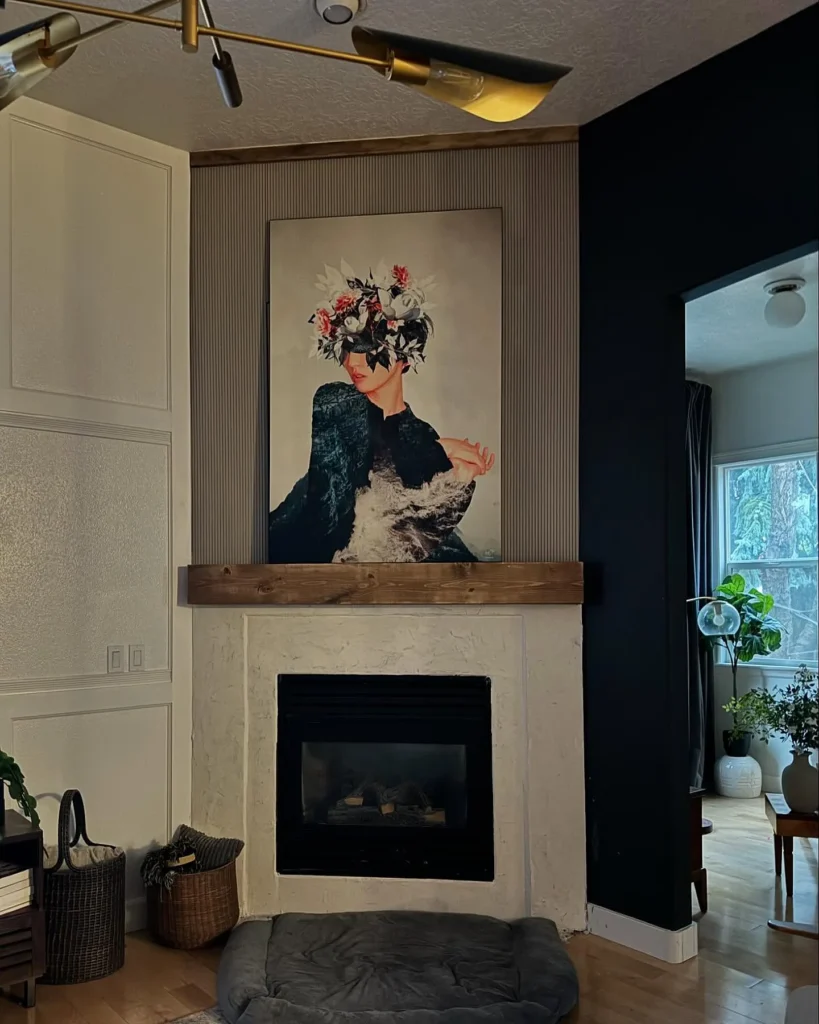
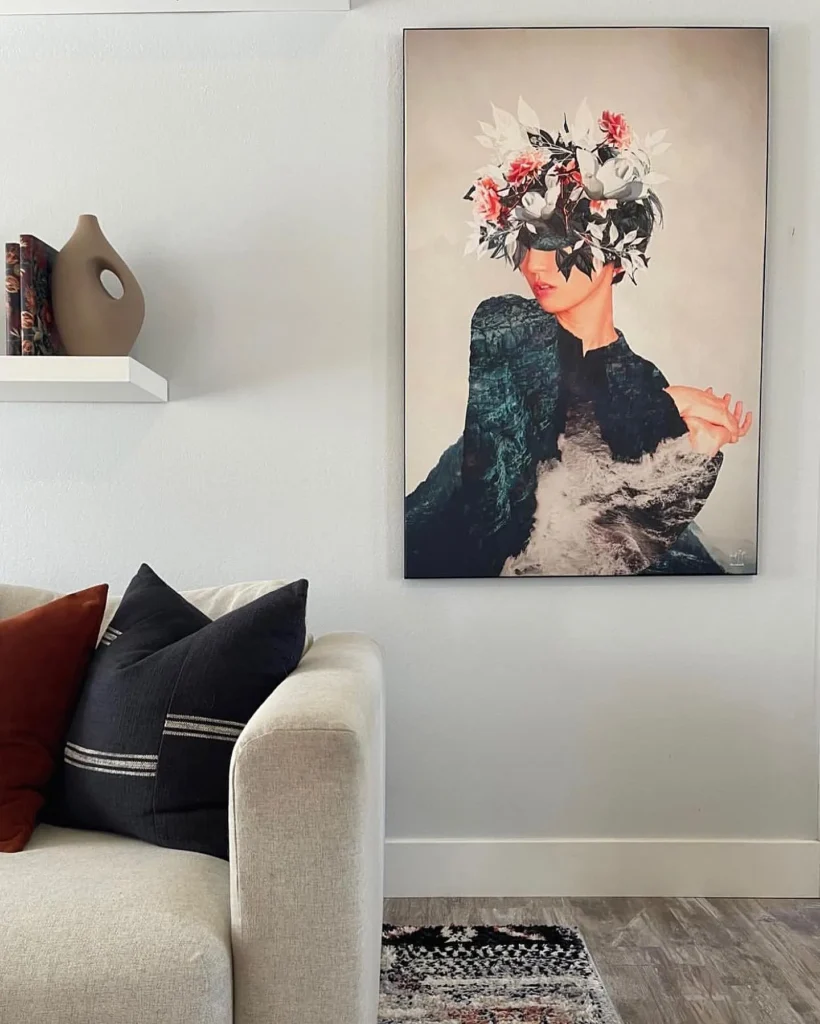
A good choice for a dark or moody wall, where dreamlike scenes stand out.
Surreal Art Pick 4
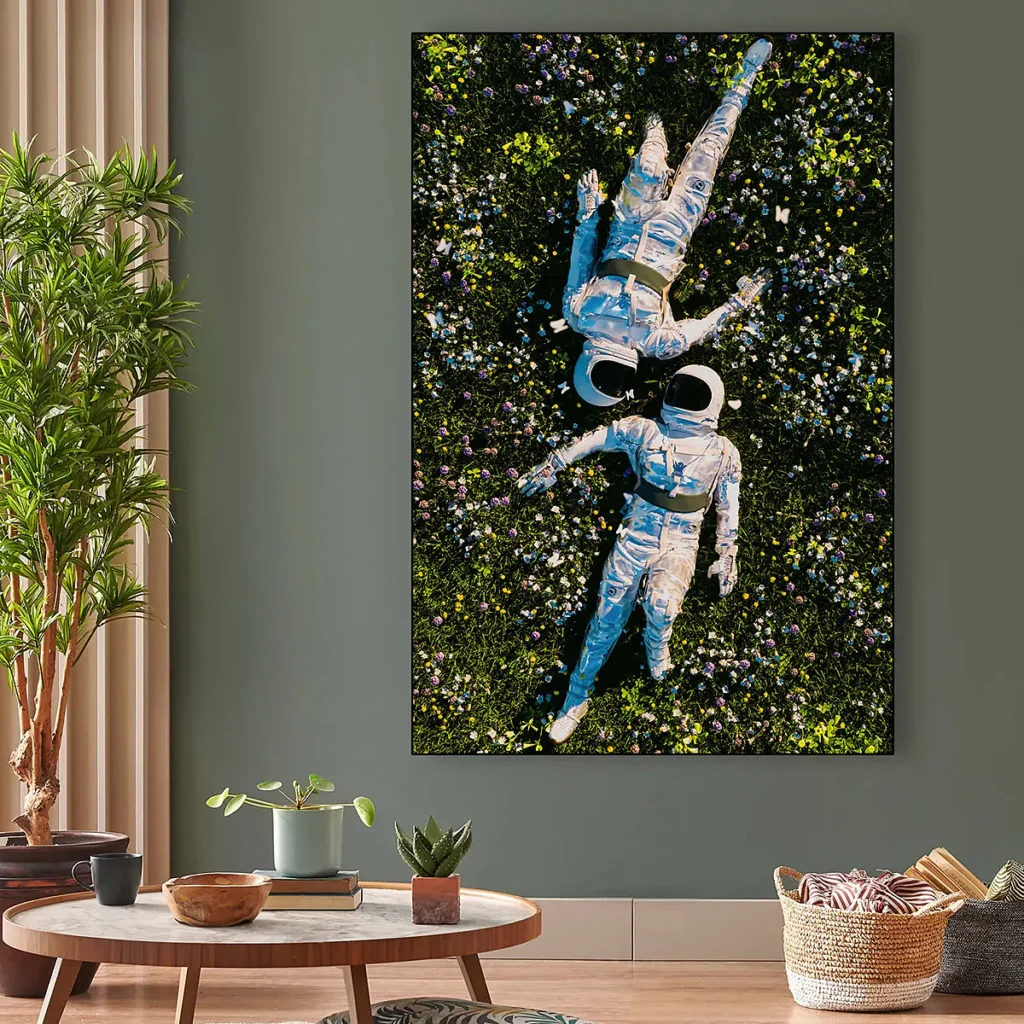
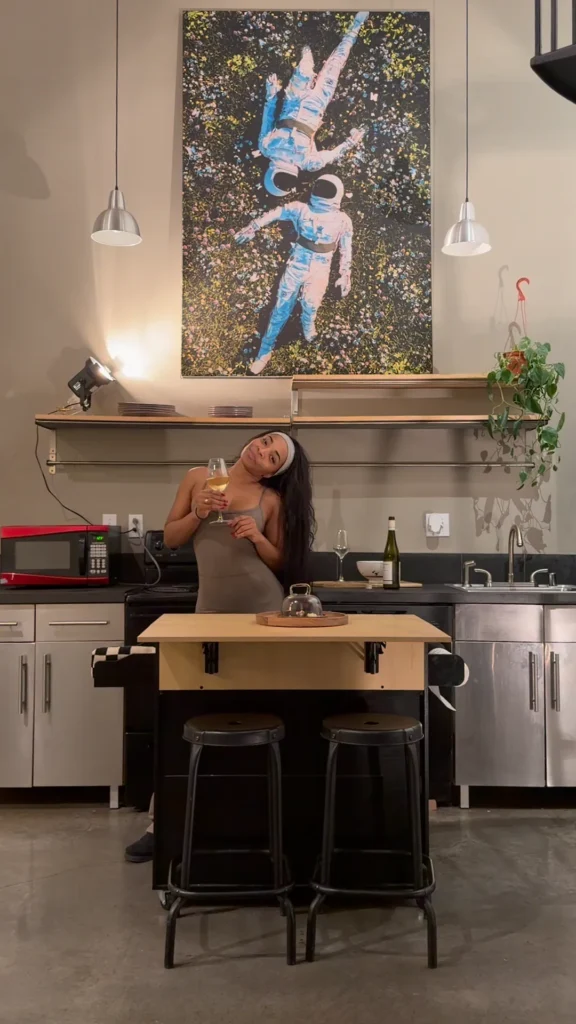
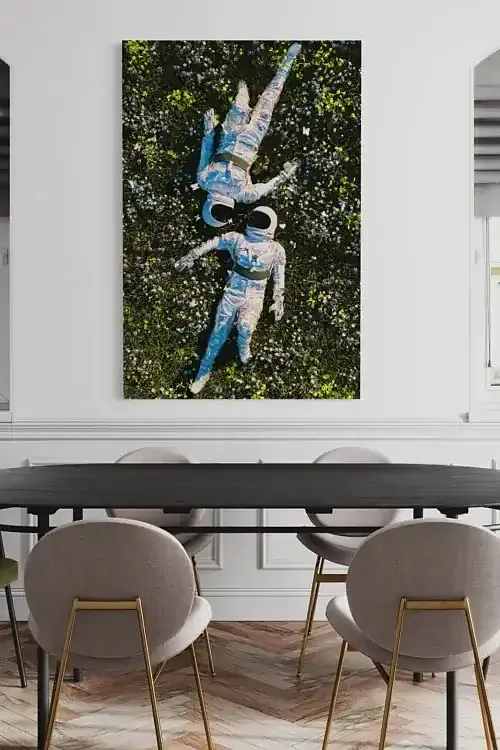
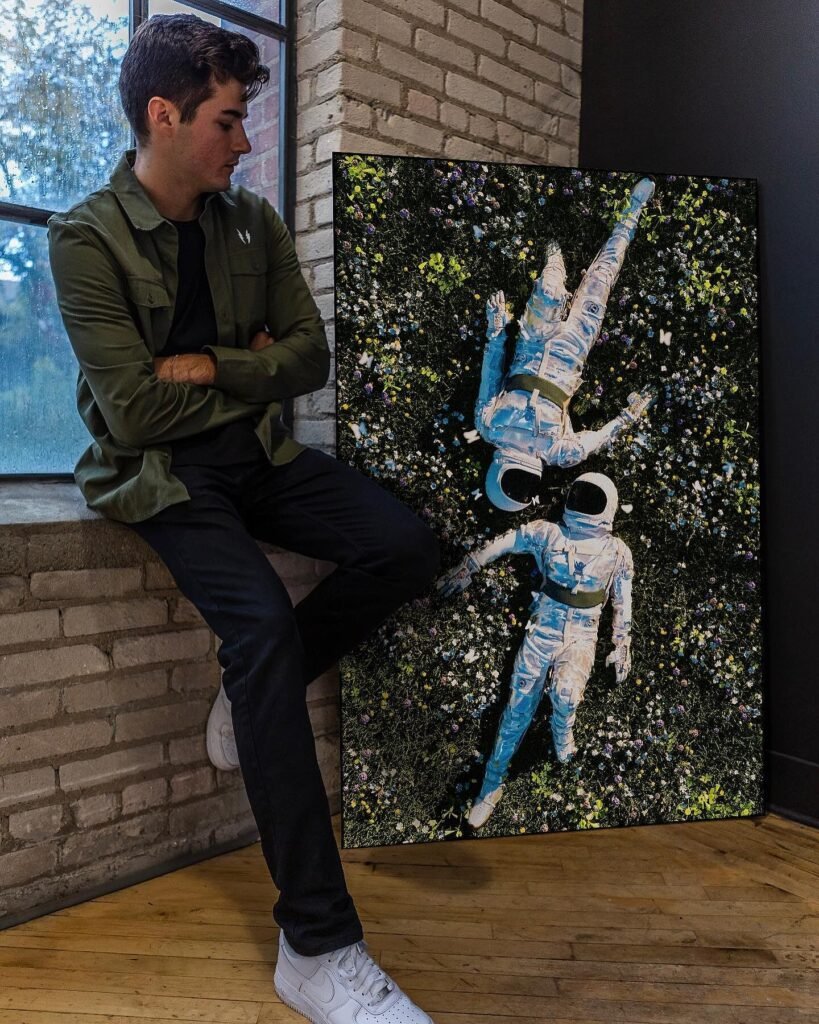
Works as a second statement piece in a large or open-plan room.
3. Neutral art: calm tones that match everything
Neutral art uses beige, cream, grey, and soft earth tones. It is the easiest style to match, and it suits minimalist, Scandinavian and Japandi rooms. Look for subtle texture or layered tones, which add depth without adding colour.
Related reading: what wall art goes with a beige sofa and Japanese wall art for modern homes.
Looking for more minimal designs? Try our best Japanese wall art for modern homes.
Neutral Art Pick 1
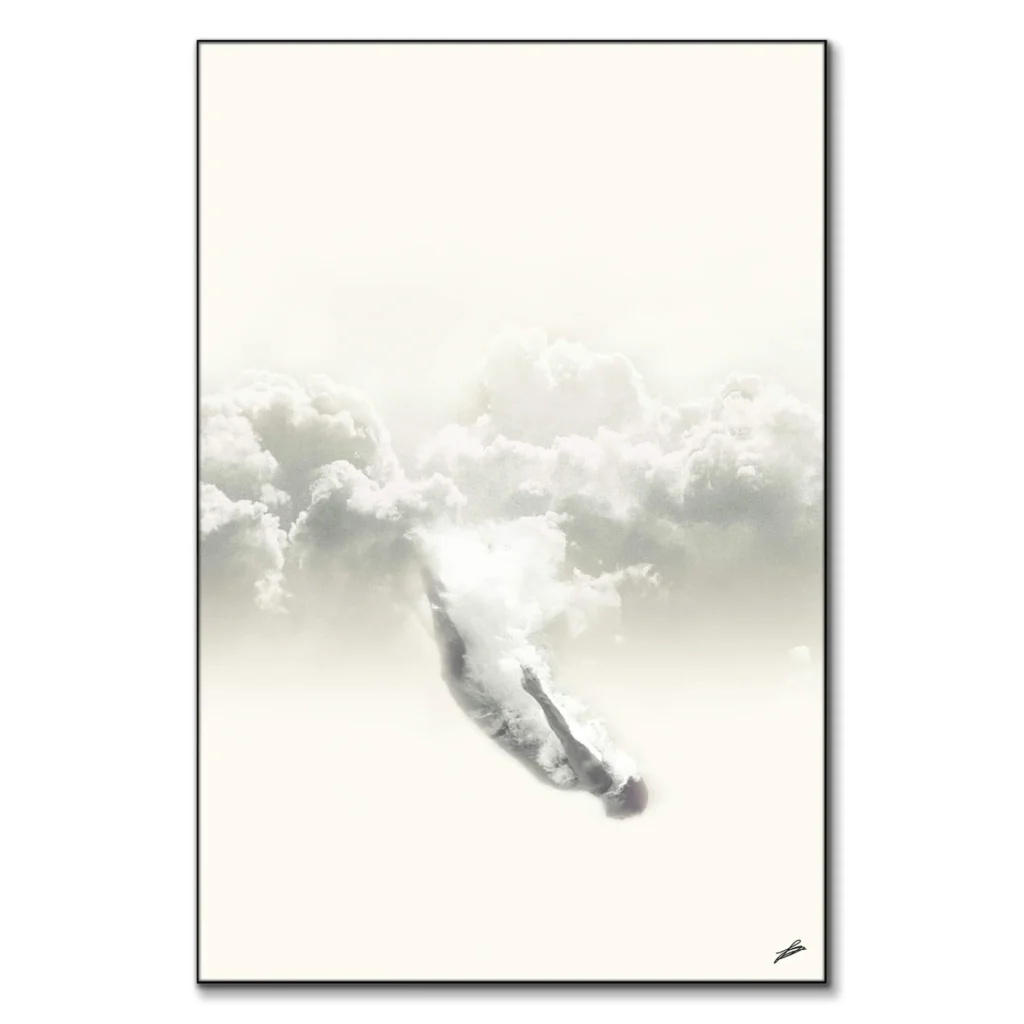
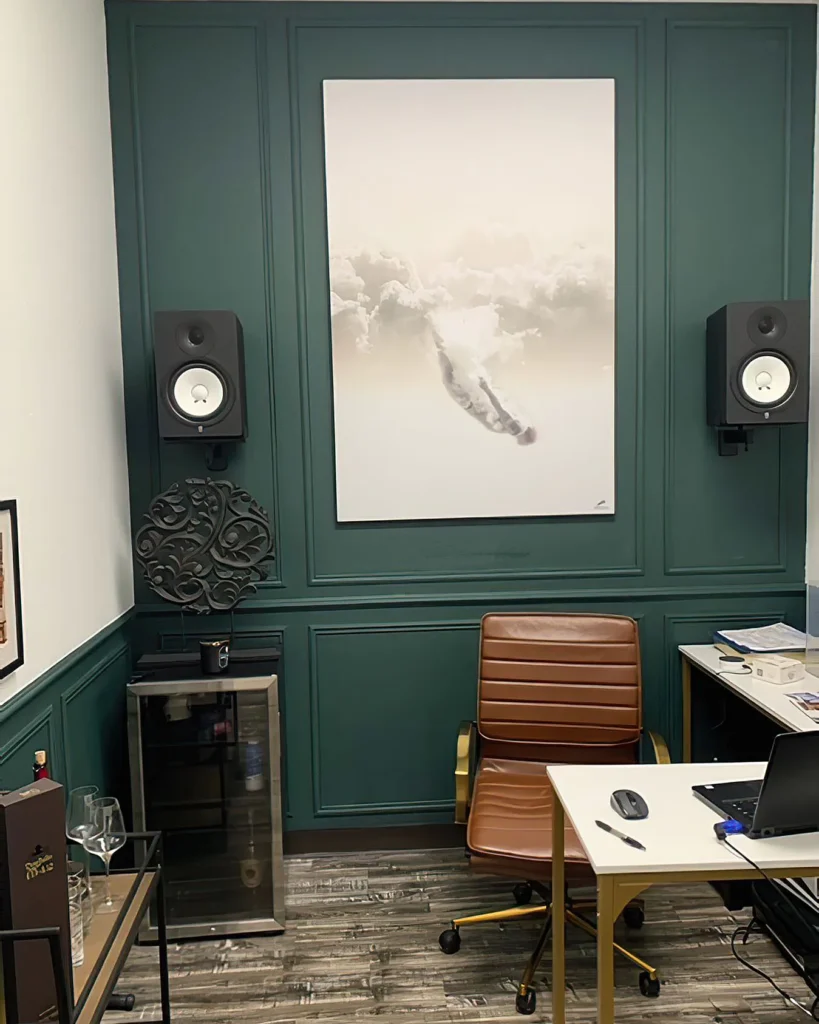
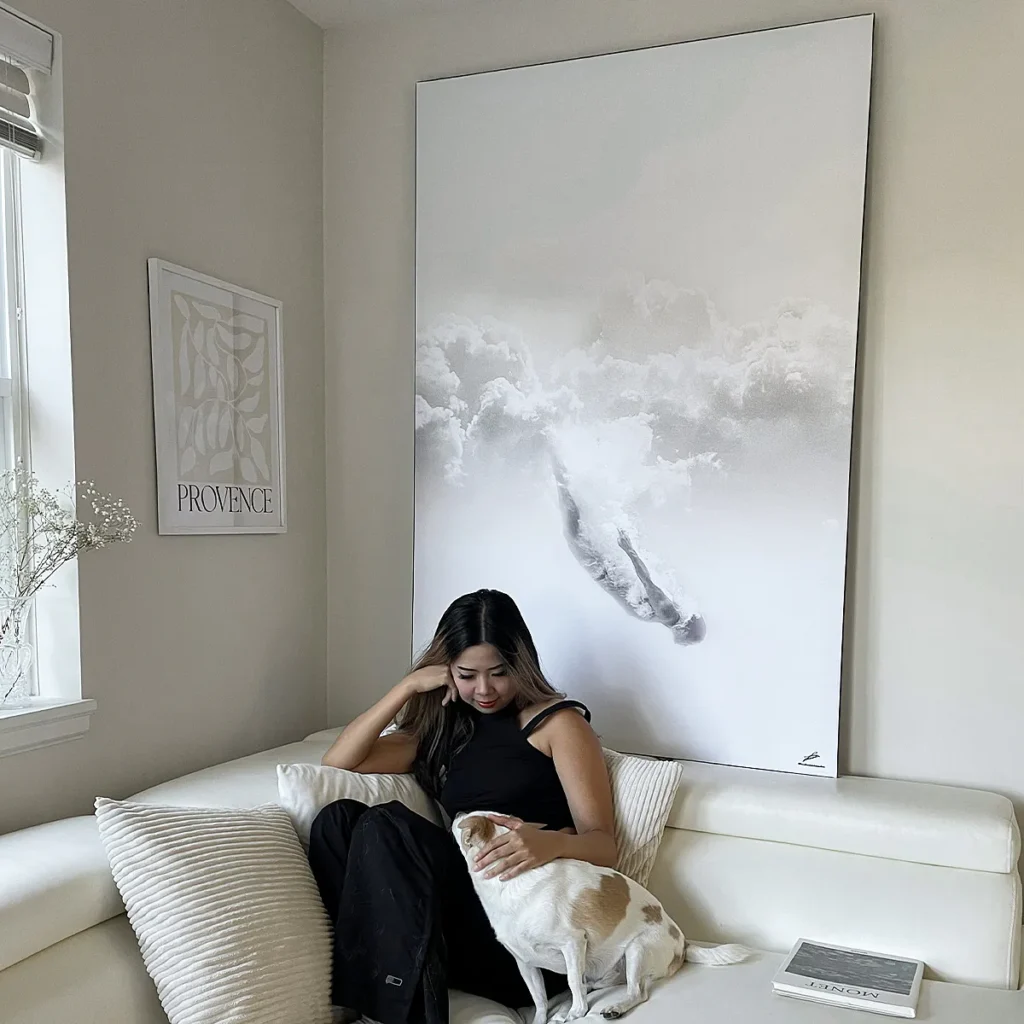
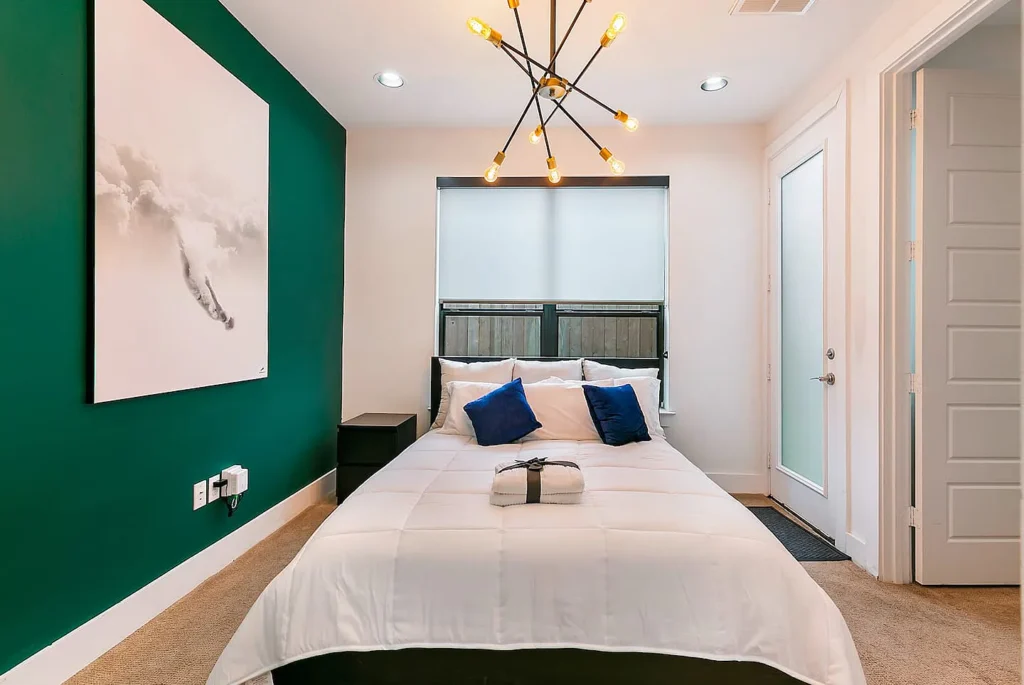
The easiest choice for a sofa wall, because soft tones go with almost any furniture and colour scheme.
Neutral Art Pick 2
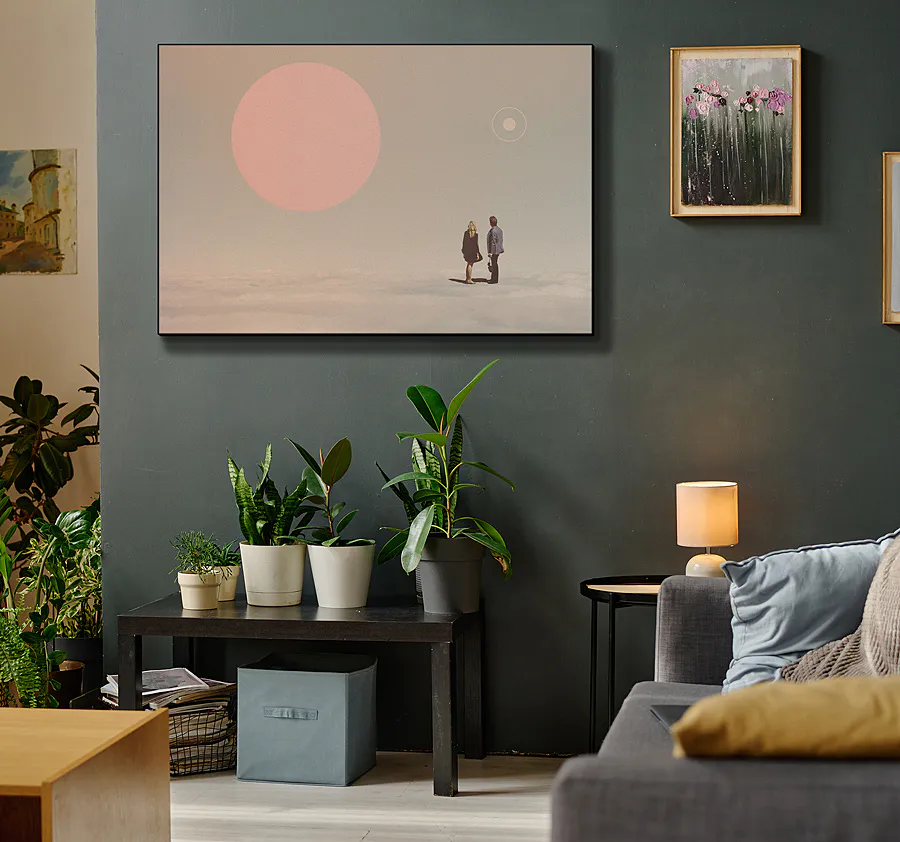
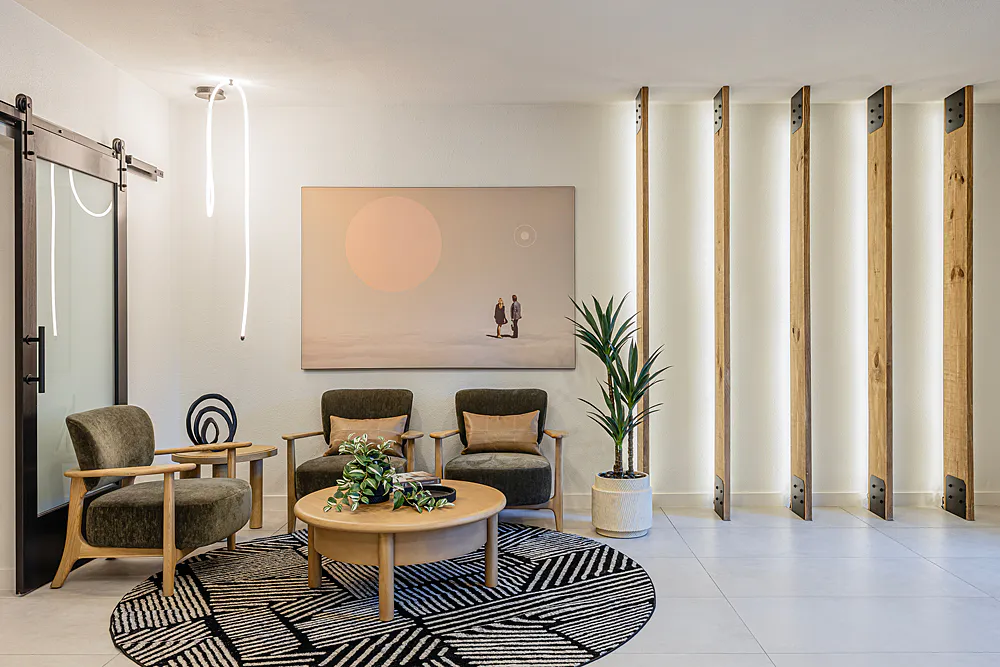
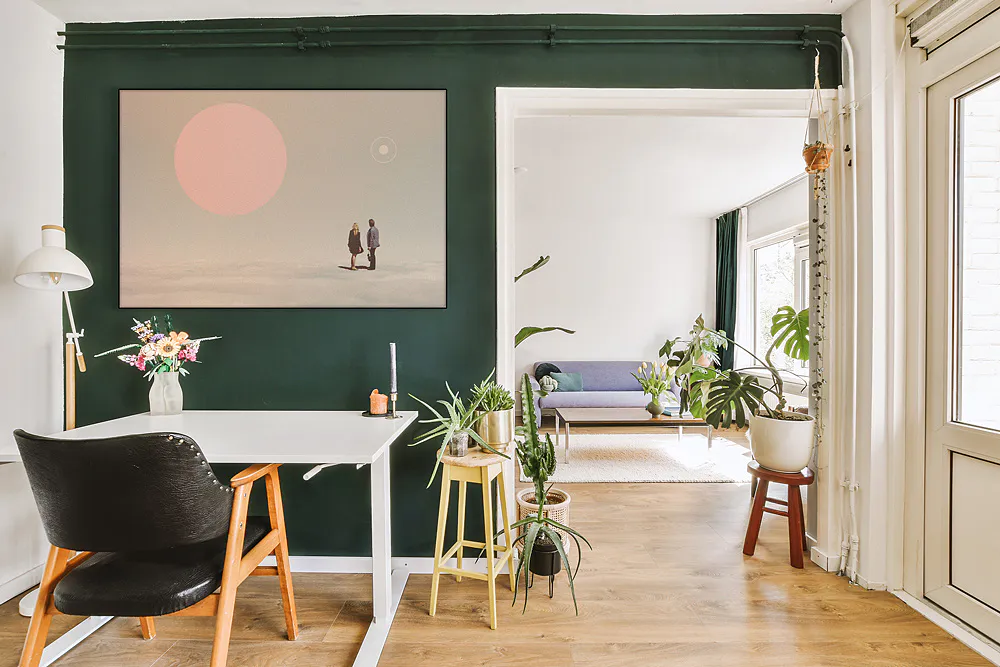
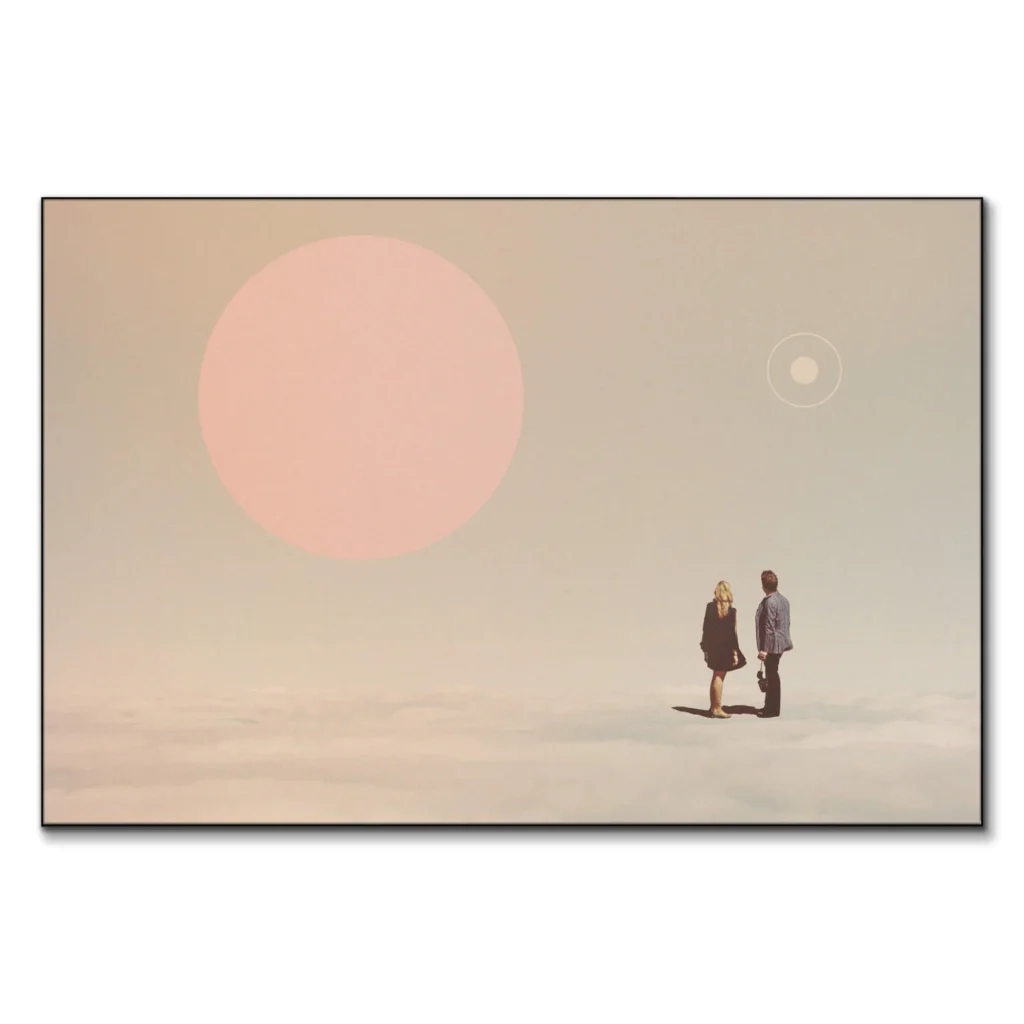
A calm option for a minimalist or Scandinavian-style room. Choose a size at the upper end of your range for more impact.
Neutral Art Pick 3
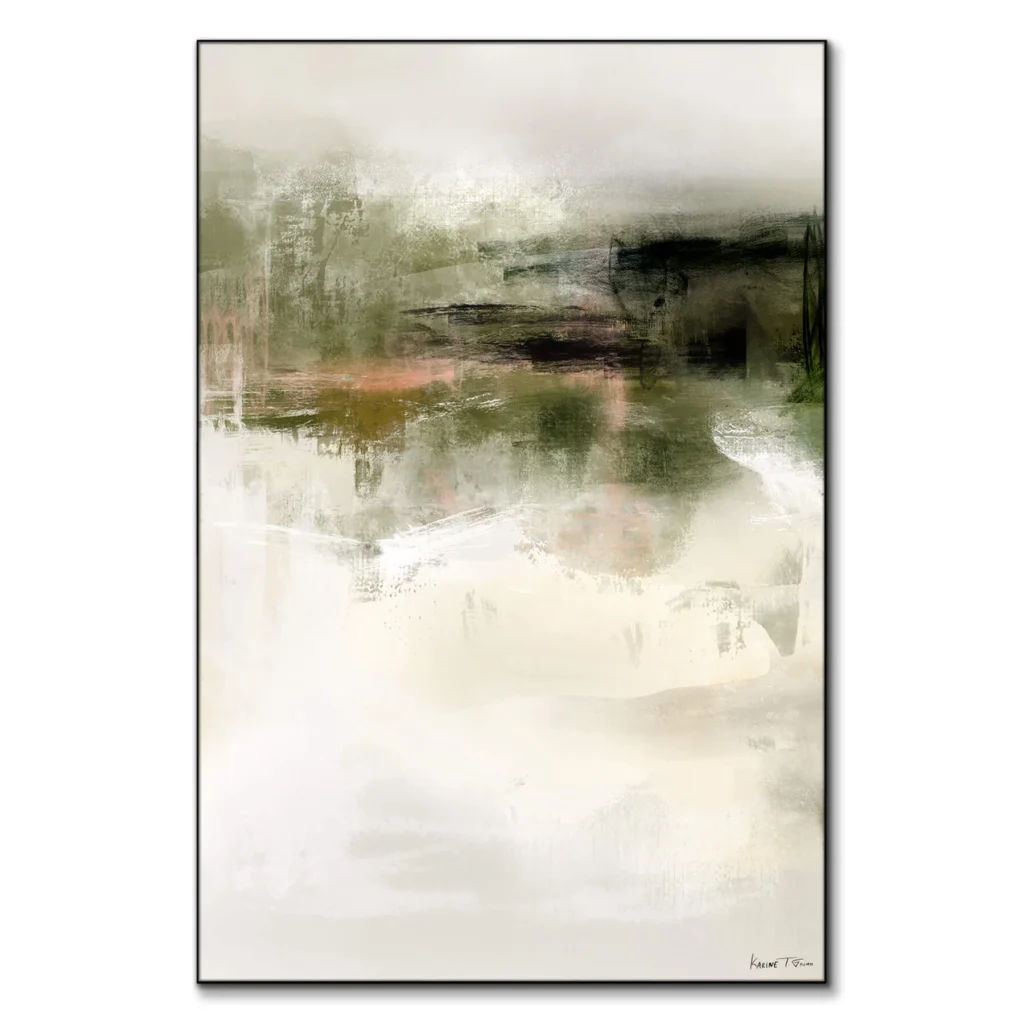
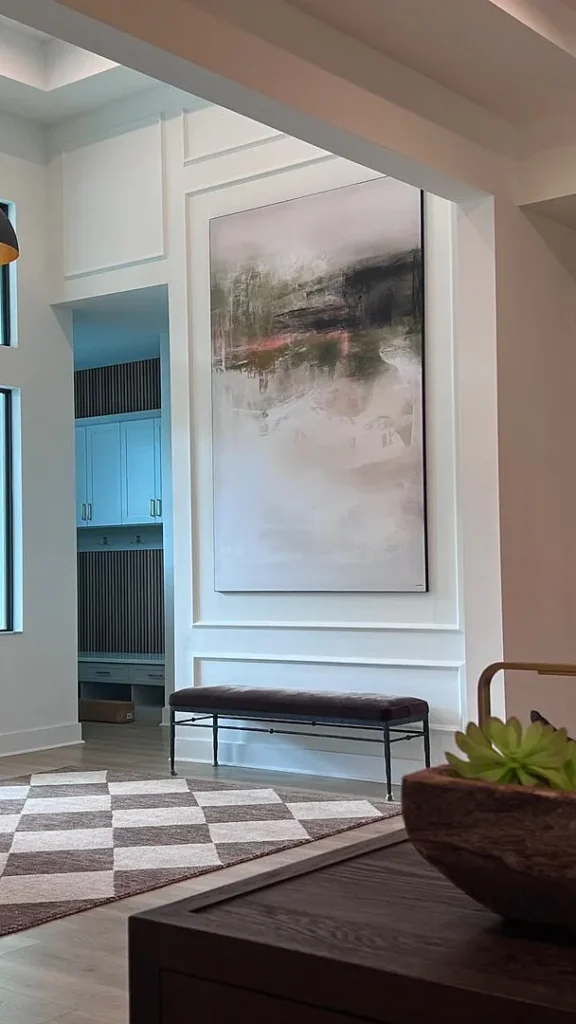
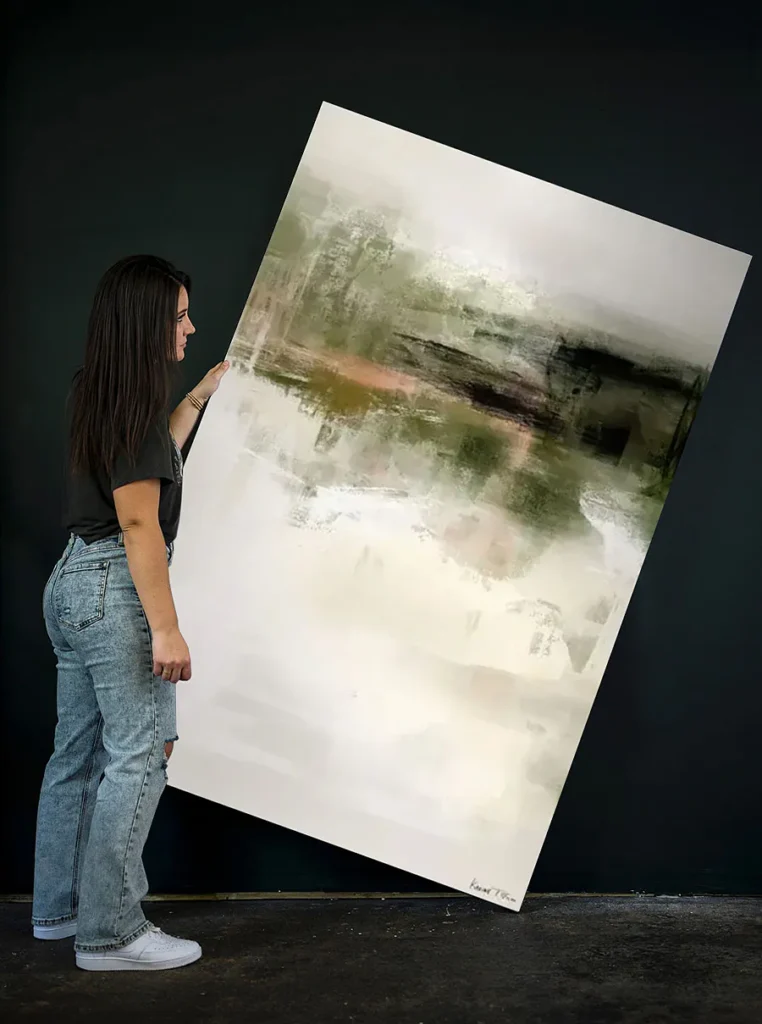
Works in a room that already has strong colour and pattern, giving the eye somewhere to rest.
Neutral Art Pick 4
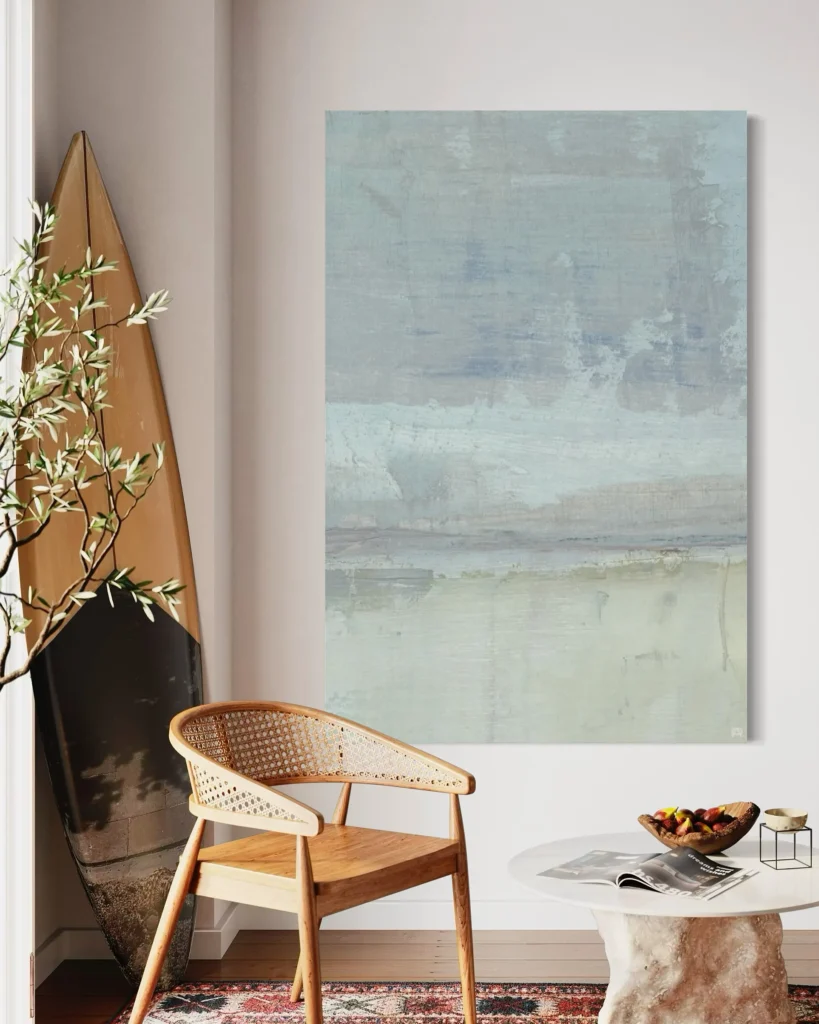
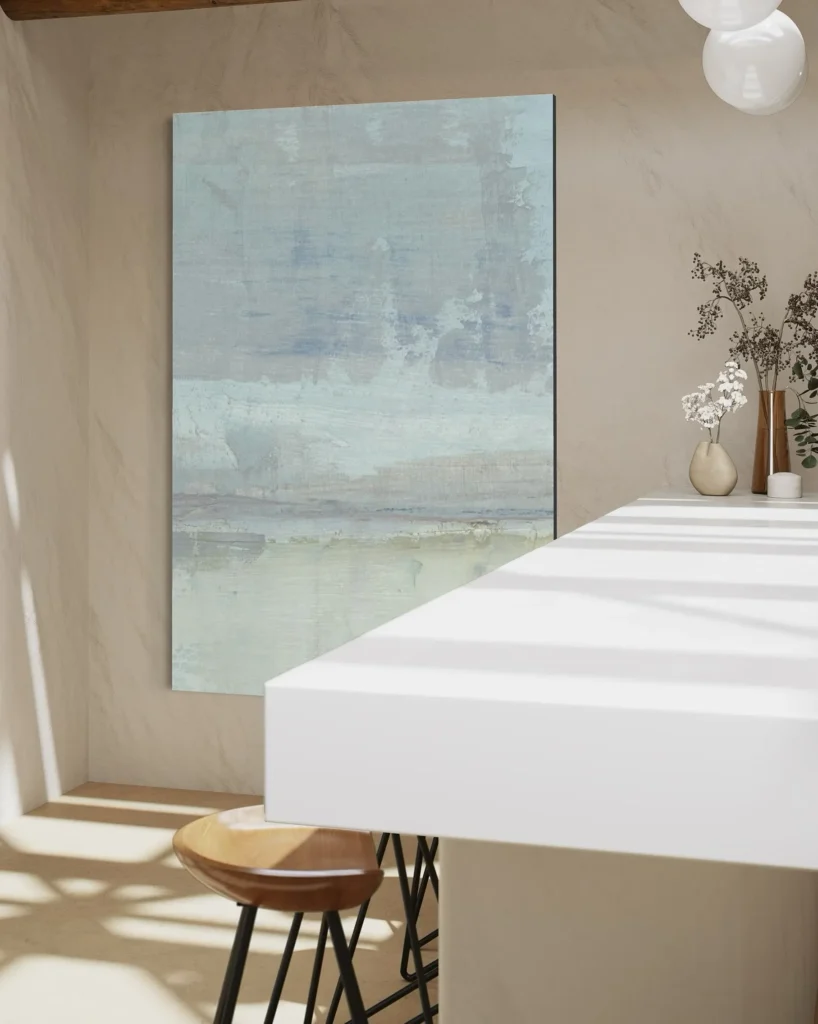

A good fit for bright, airy rooms, or as one half of a matching pair.
4. Nature art: landscapes and greenery for a relaxed room
Nature art, from landscapes to leaves and seascapes, makes a living room feel calmer. It pairs well with wood, linen and natural fabrics. A wide, horizontal scene also makes a wall look longer.
Related reading: floral wall art for modern homes.
Love flowers and greenery? See our best floral wall art for modern homes and nature poster ideas.
Nature Art Pick 1
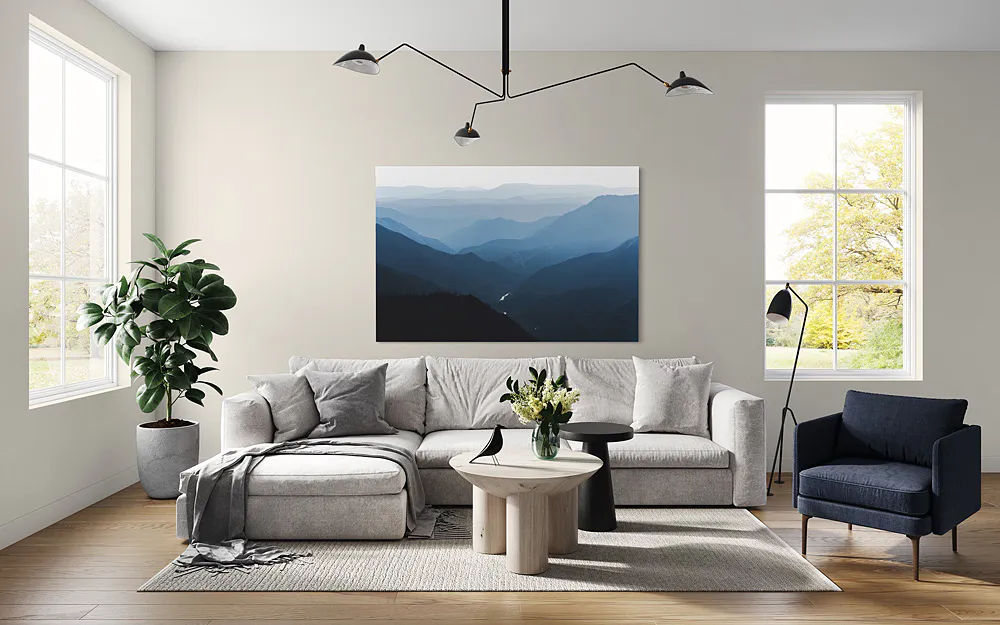
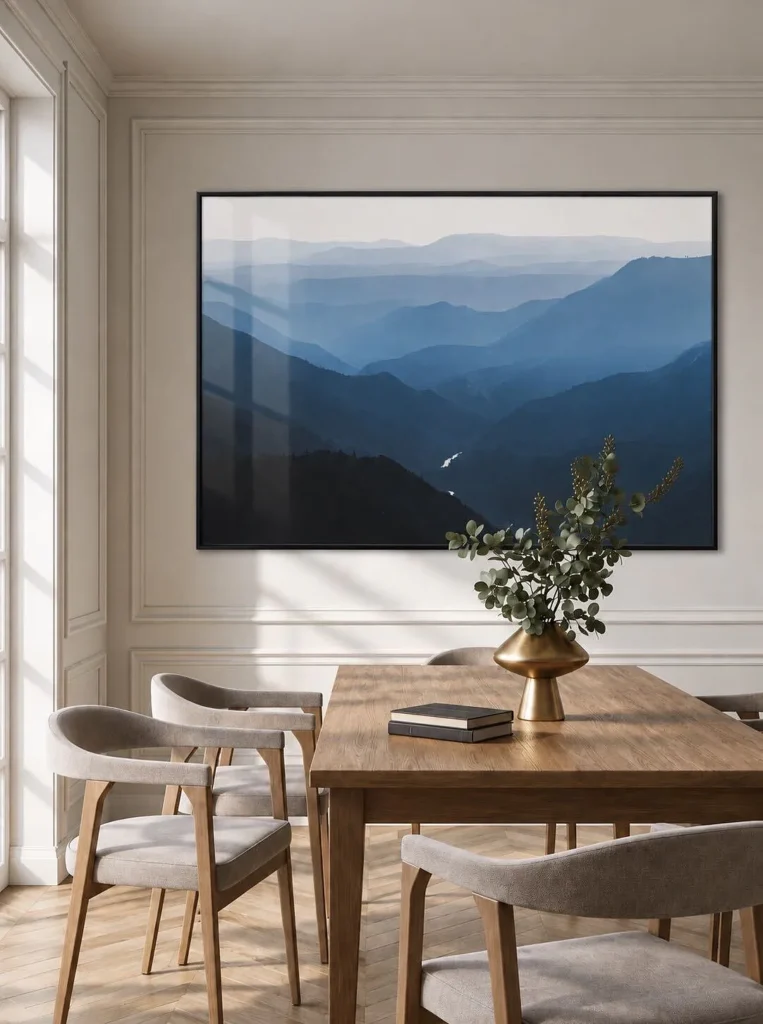
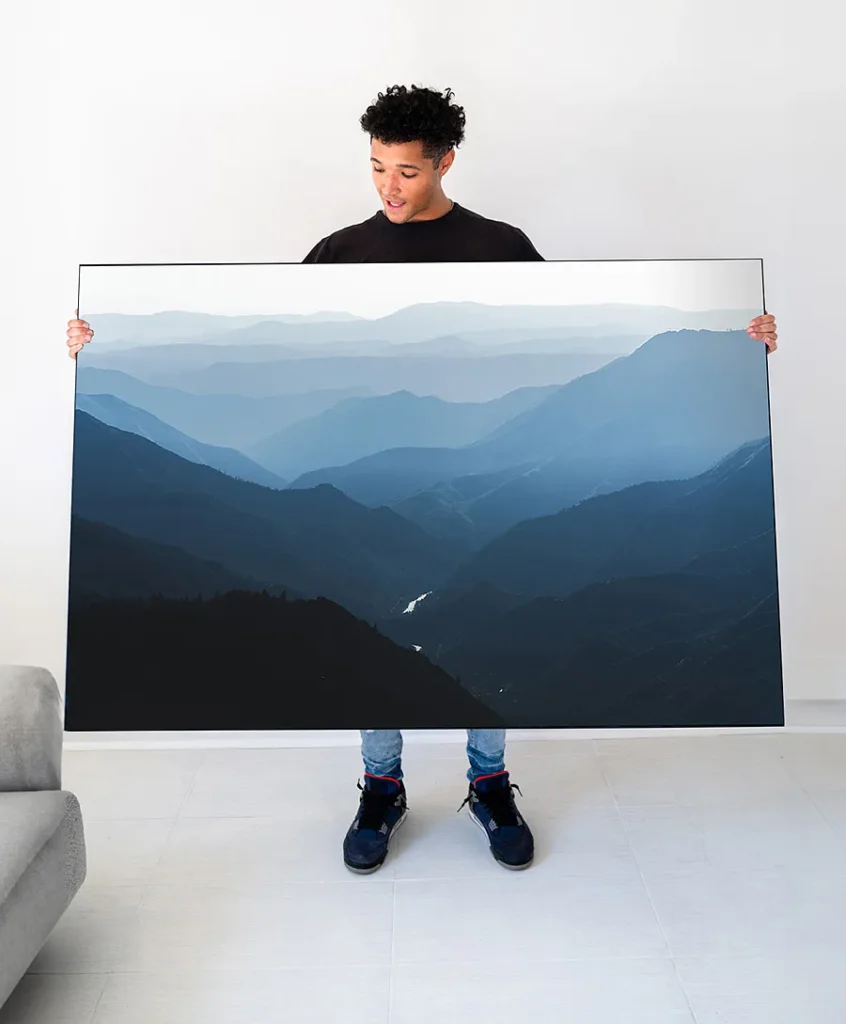
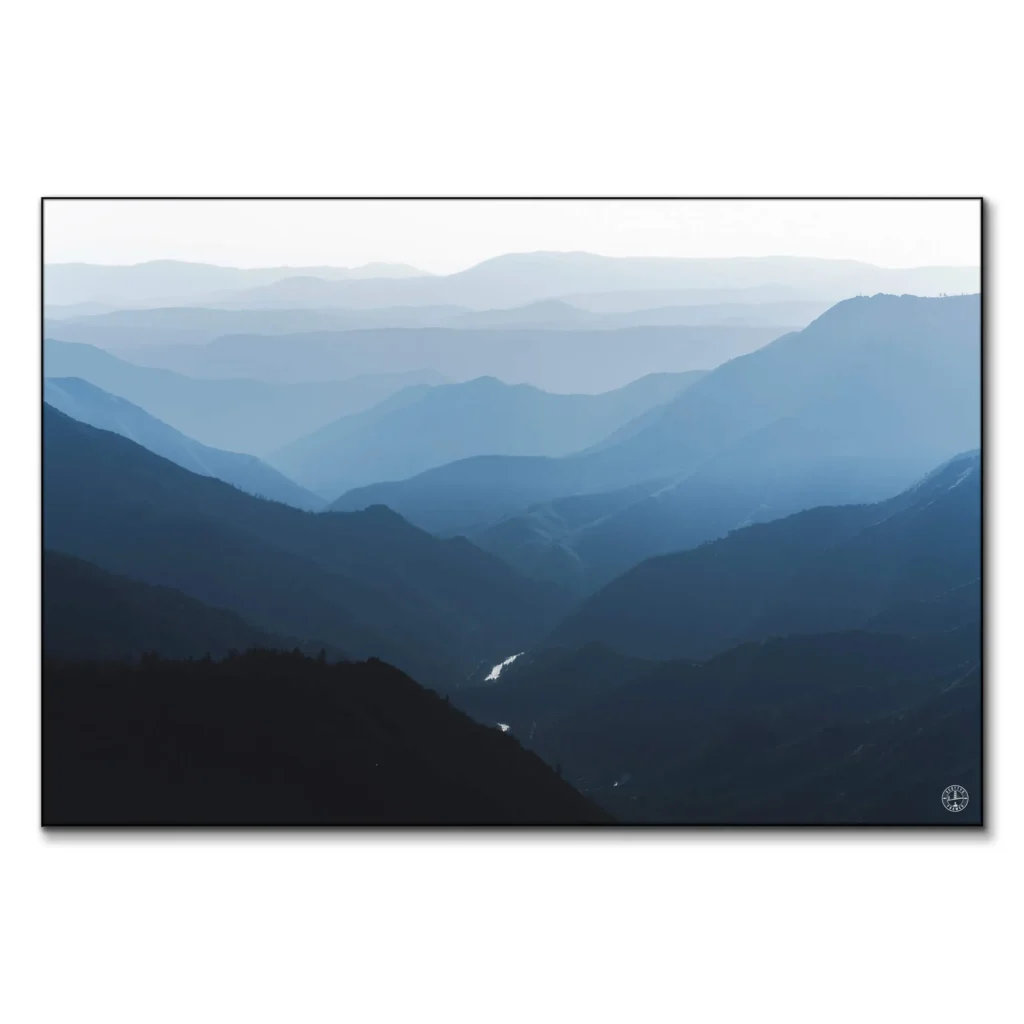
A natural centerpiece for the wall above a sofa, especially in a room with wood or linen.
Nature Art Pick 2
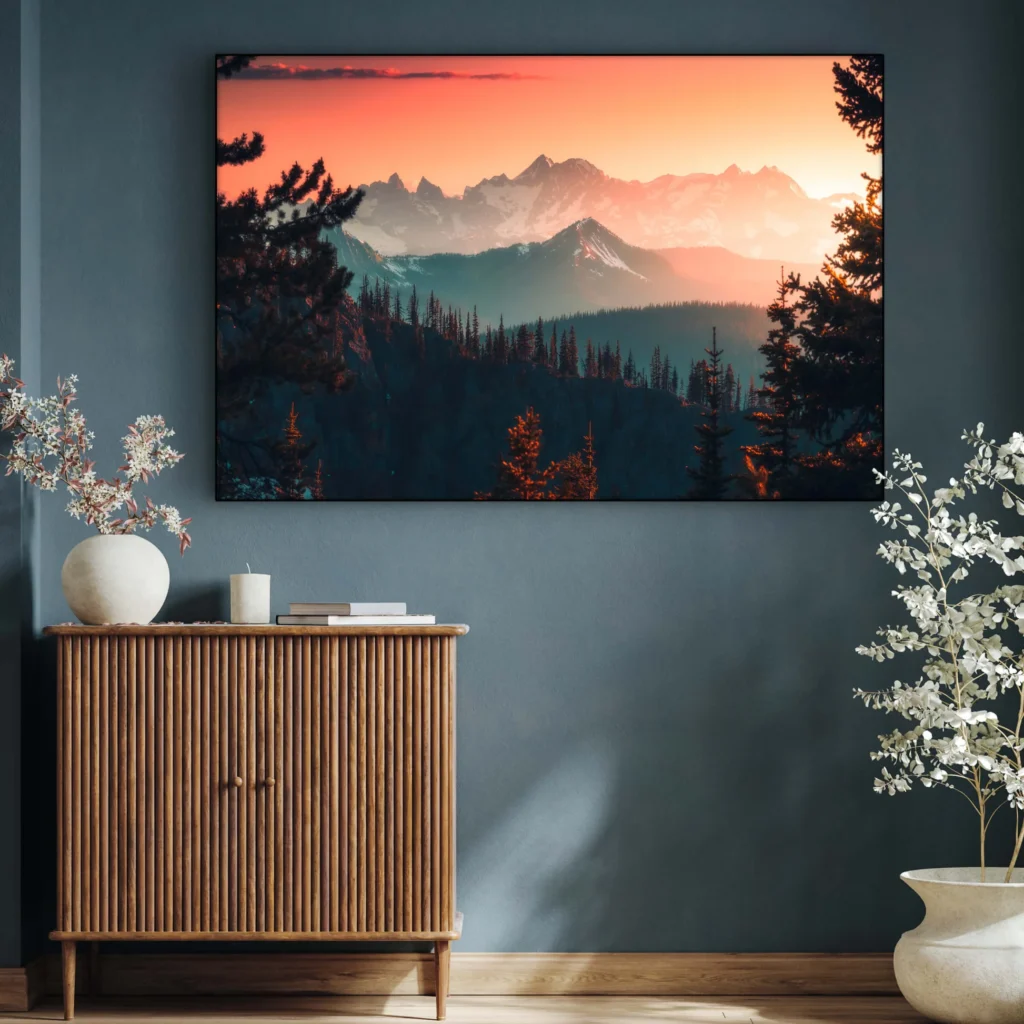
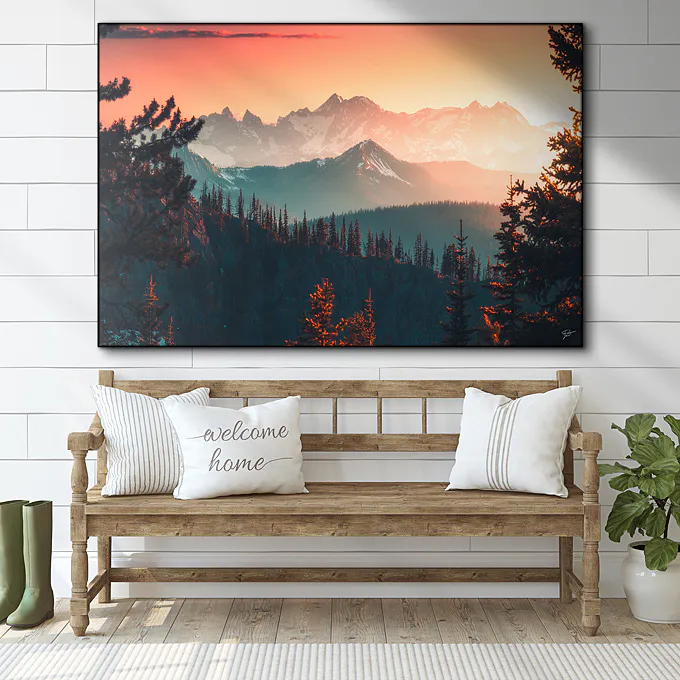
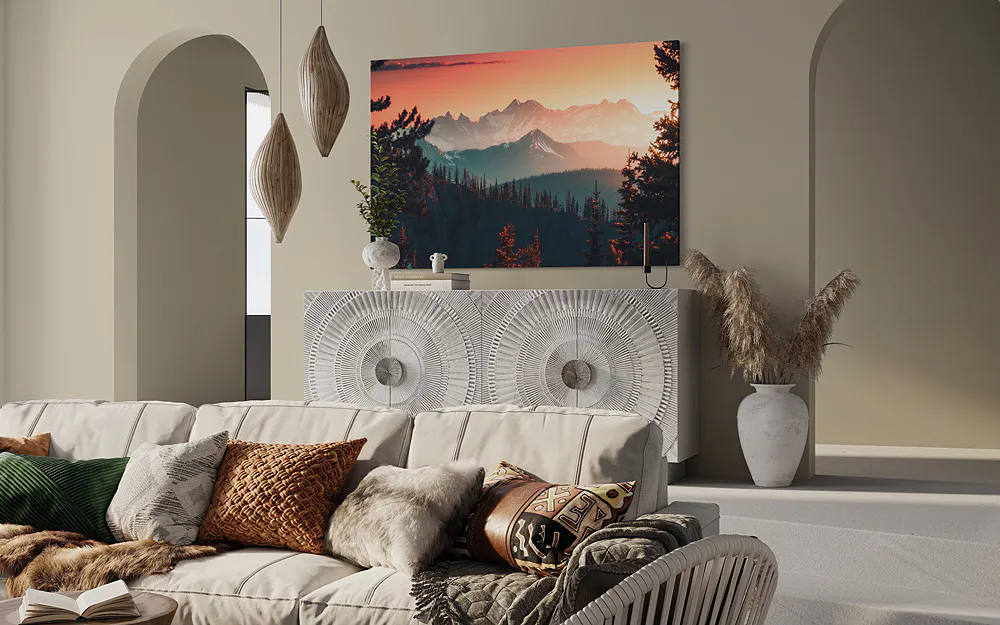
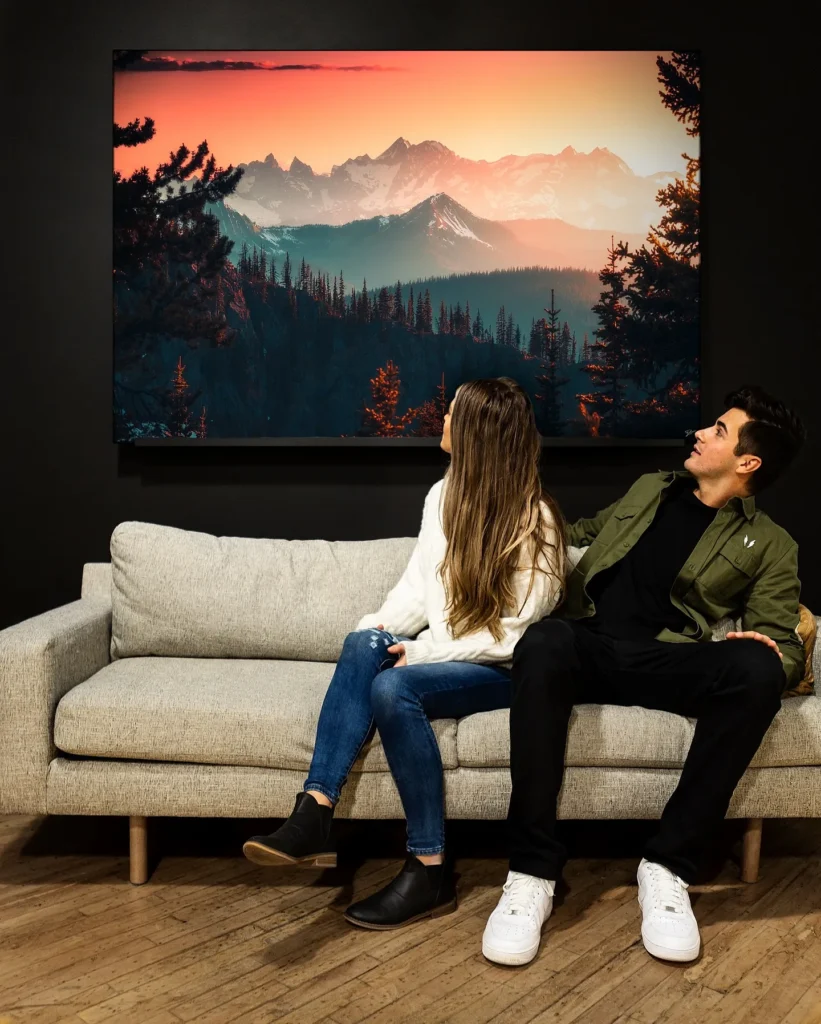

A soothing choice for a reading corner or a quiet seating area.
Nature Art Pick 3
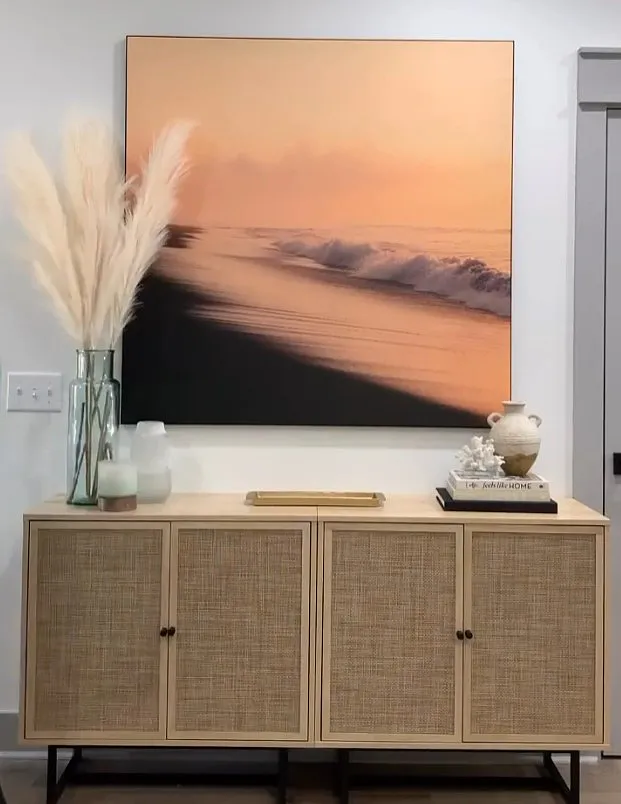
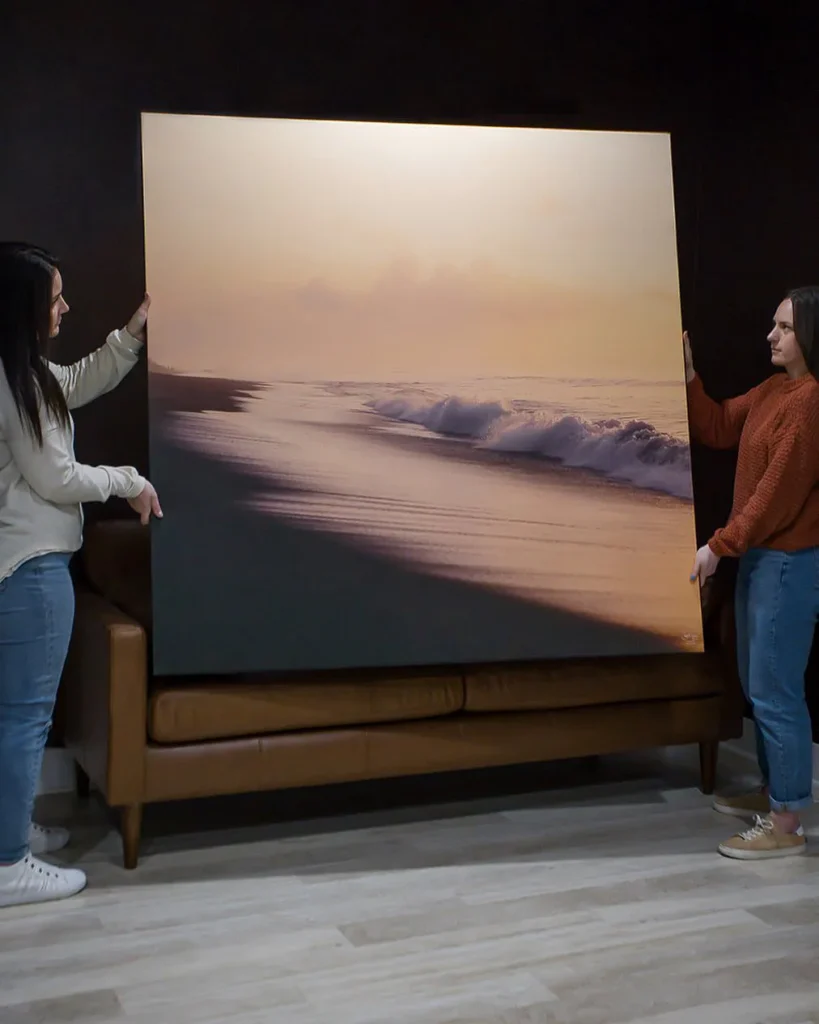
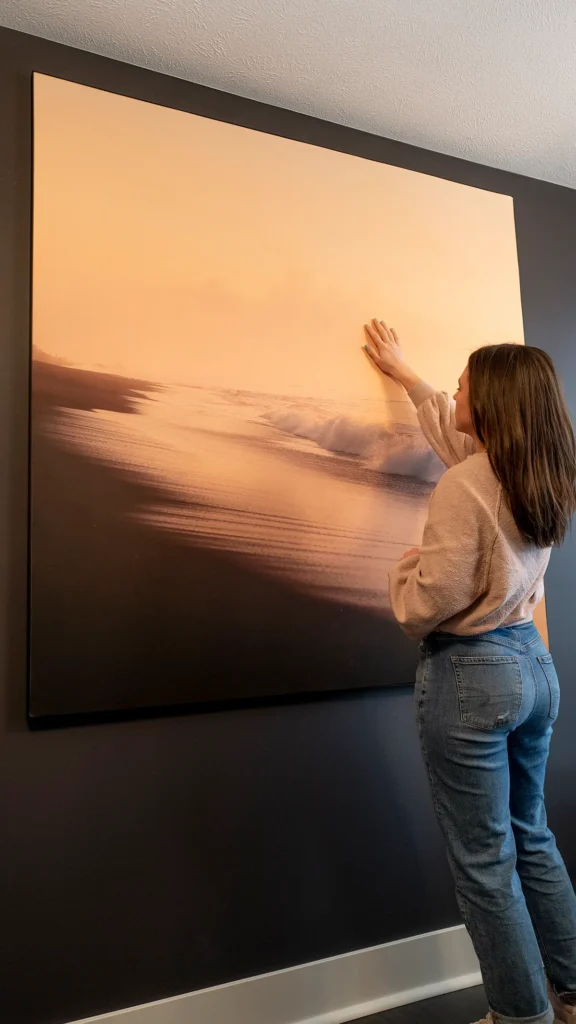
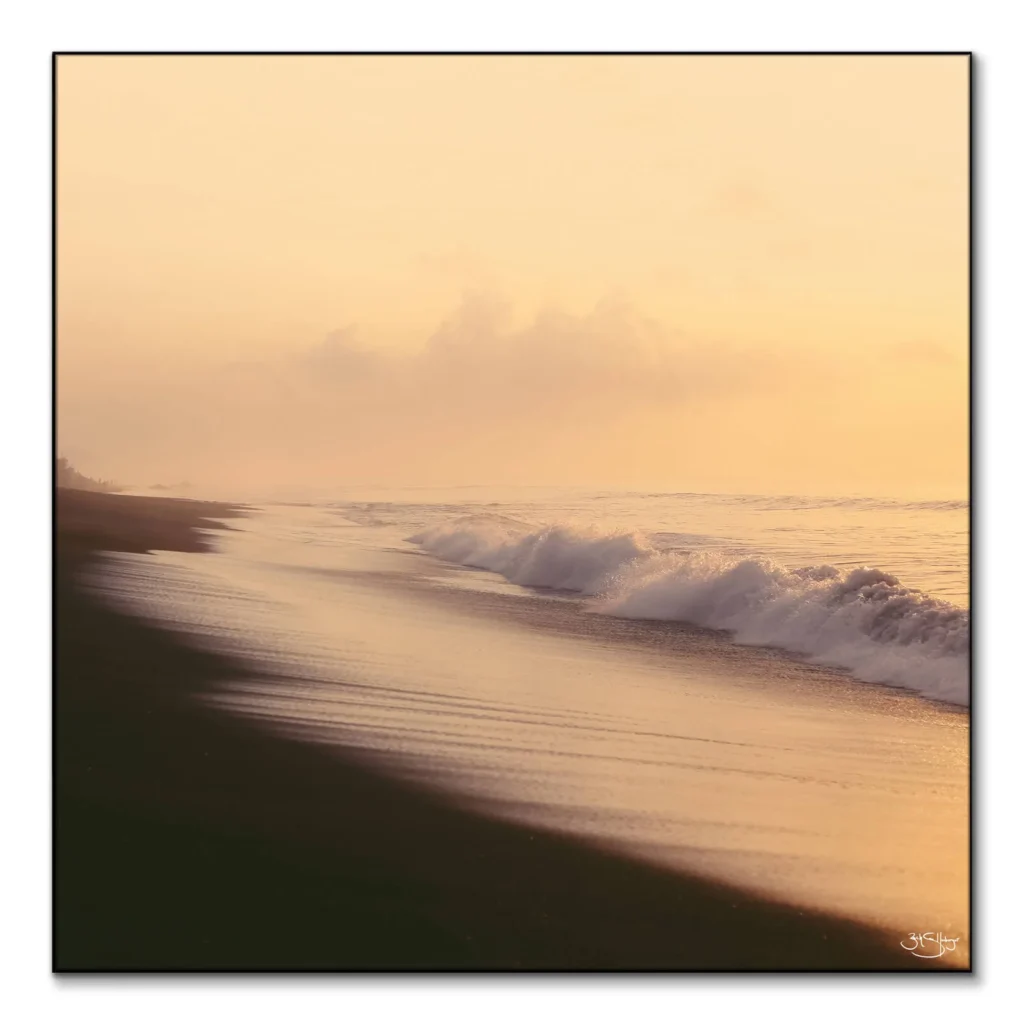
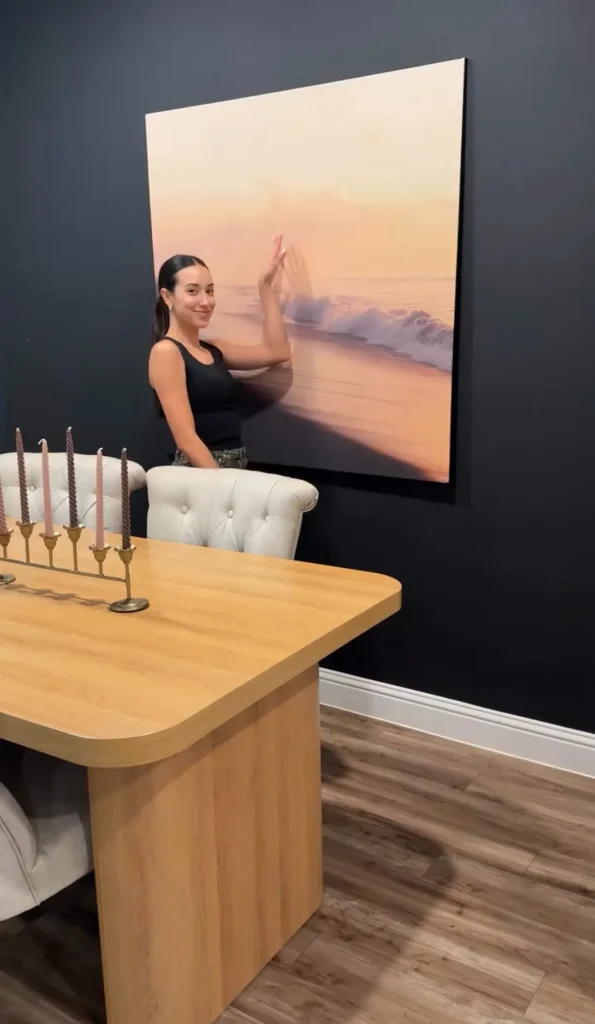
Brings colour and life to a room with white or beige walls.
Nature Art Pick 4
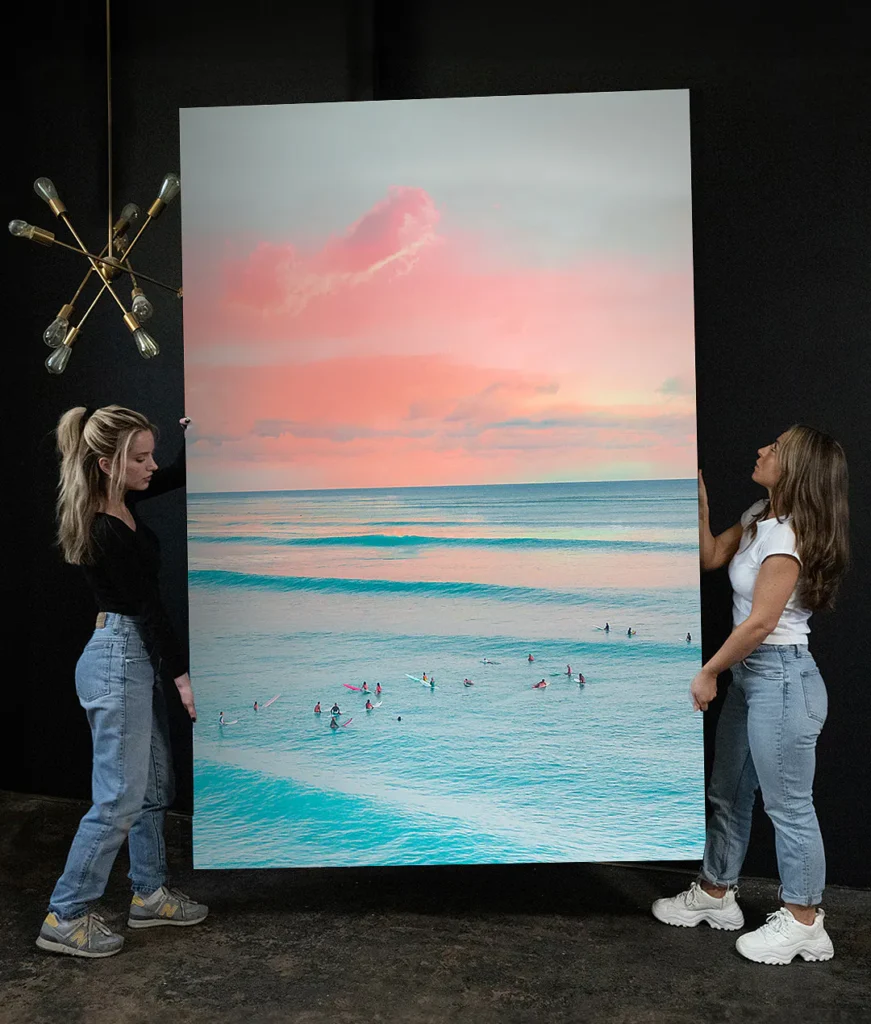
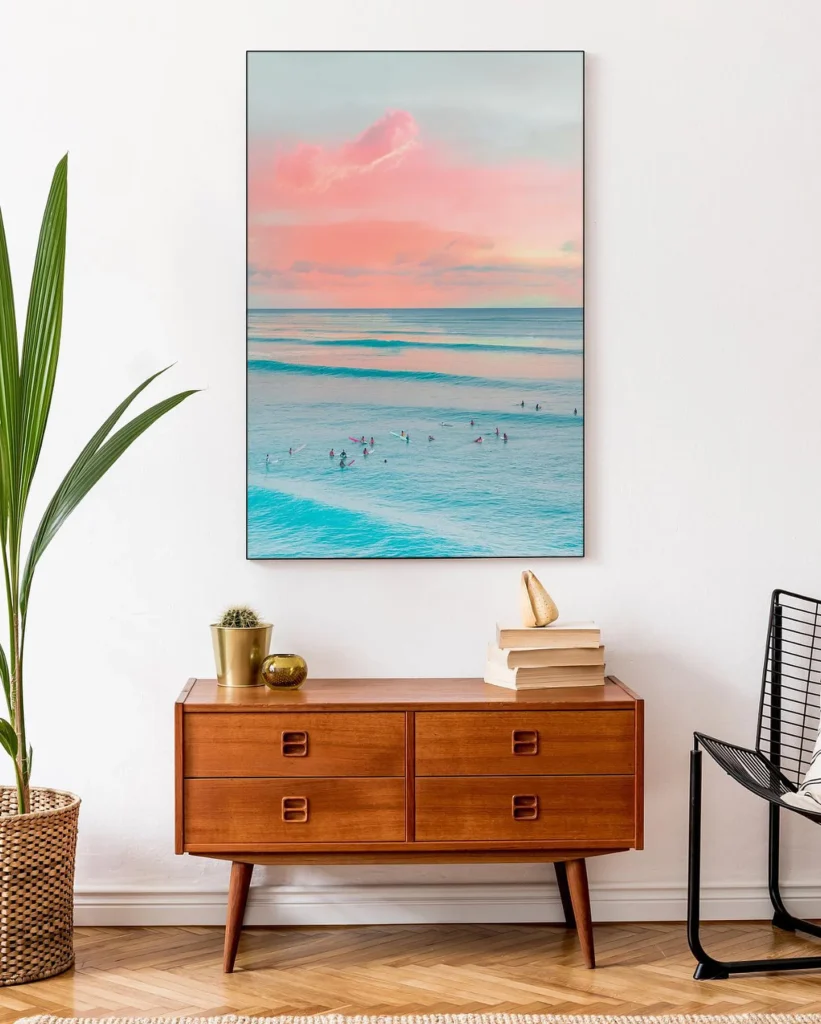
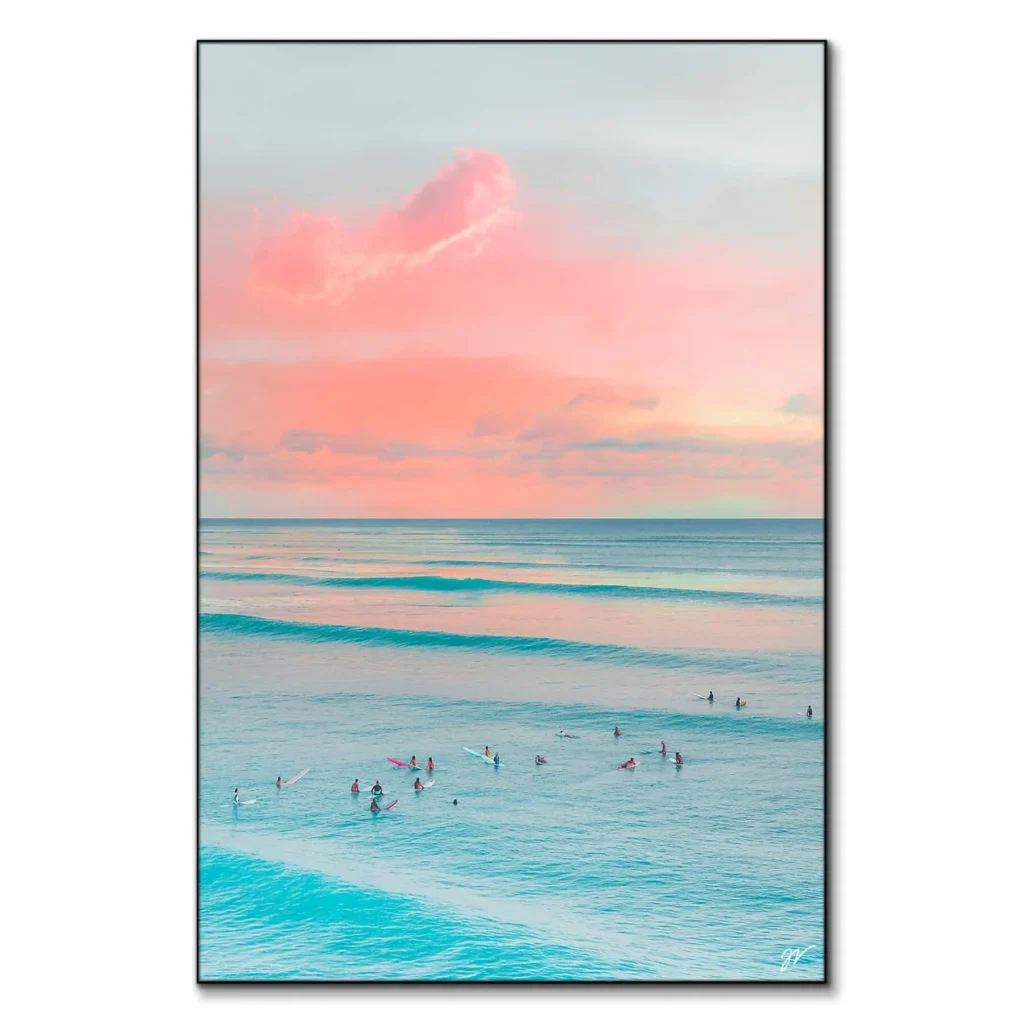
Works well in an open-plan living and dining space, where scenery adds depth to a long wall.
Which style fits your room?
| Your room | Start with |
|---|---|
| Neutral, minimalist, modern | Neutral art |
| Warm wood, rattan, natural fabrics | Nature art |
| Plain walls, simple furniture, want a focal point | Pop art |
| Dark or moody, eclectic furniture | Surreal art |
| Bright, airy, white walls | Nature art or neutral art |
How to match large wall art to your living room colours
Use one of three approaches, and stick to it.
- Echo: pick two tones already in the room, such as the sofa, rug or curtains, and choose art that repeats them. This is the safest option.
- Contrast: place a bold or dark piece on a pale wall, or a light piece on a dark wall, to create a focal point.
- Neutral: choose beige, grey, black and white or soft earth tones when the room already has plenty of colour and pattern.
Avoid matching art perfectly to every cushion and throw. A little mismatch looks collected, while a perfect match looks staged.
Have a beige or cream sofa? Read what wall art goes with a beige sofa for seven colour combinations.
Canvas, framed print or acrylic: which is best?
| Format | Look | Weight | Glare | Best for |
|---|---|---|---|---|
| Rolled or stretched canvas | Soft, textured, no frame needed | Light | Low | Large sizes, modern or boho rooms, easy hanging |
| Framed print under glass or acrylic | Crisp, gallery-style | Medium to heavy | Higher (glass reflects light) | Photography, line art, classic prints |
| Float-framed canvas | Canvas with a thin frame for a finished edge | Medium | Low | Statement pieces that need a polished edge |
| Acrylic or metal prints | Glossy, vivid colour | Heavy | High | Modern, bright rooms away from direct light |
If the wall faces a large window, choose canvas or non-glare glass to avoid reflections.
Browse more canvas prints and framed prints on Glitchart66.
Still deciding? Our canvas vs framed print vs acrylic guide compares all three, and you can browse our canvas prints and framed prints.
How to hang heavy large wall art safely
- Check the weight first. Every piece should list a weight, and every hook or anchor lists a load rating. Pick hardware rated well above the art’s weight.
- Use studs or proper wall anchors for anything heavy. Never rely on a plain nail in drywall for a large piece.
- Use two hanging points on large frames to keep them level, and add a small spirit level.
- Consider a French cleat for very heavy frames, since it spreads the load along the wall.
- Renting? Use adhesive strips only if the packaging rates them for the weight and your wall surface. Otherwise, lean the art on a console or sideboard, which is a popular and renter-friendly look.
7 mistakes to avoid with large wall art
- Buying art that covers less than half the width of the furniture.
- Hanging the center above 60 inches (152 cm) from the floor.
- Leaving more than 10 inches (25 cm) between the sofa and the art.
- Skipping the paper or tape template before ordering.
- Using a thick, dark frame in a small, light room.
- Ignoring glare from windows and lamps.
- Crowding the wall with small decor items that compete with the main piece.
Large wall art price guide
These ranges are approximate and vary by country, brand and size.
| Budget | Typical price (USD) | What you usually get |
|---|---|---|
| Entry | $30–$100 | Unframed or canvas prints, large posters, ready-to-hang prints |
| Mid-range | $100–$300 | Quality framed prints, large stretched canvas, multi-panel sets |
| Premium | $300–$1,000+ | Hand-painted or textured pieces, limited editions, custom sizes |
Spend more on the piece that sits above your sofa, since it is the one every guest sees first.
Frequently asked questions about large wall art for living rooms
What size is considered large wall art for a living room?
Large wall art starts at about 30 × 40 inches (76 × 102 cm). For a sofa wider than 84 inches (213 cm), look at 48 × 32 inches (122 × 81 cm) or bigger, or a set of panels that spans 60–75% of the sofa width.
How big should wall art be above a sofa?
The art should be 60–75% of the sofa’s width. For an 84-inch (213 cm) sofa, that means 50–63 inches (127–160 cm) of art, whether it is one piece or a group of panels.
How high should large wall art be hung above a sofa?
Hang it so the center sits 57–60 inches (145–152 cm) from the floor, and the bottom edge is 6–10 inches (15–25 cm) above the sofa back.
Is one large piece better than several smaller ones?
One large piece gives a cleaner, more modern look. A 2–3 panel set suits wider walls and is easier to ship and hang, as long as the gaps are even and small.
What colour wall art works best in a living room?
Choose art that repeats one or two colours already in the room, or go neutral with beige, grey, and black and white. Neutral art is the easiest to keep when you change cushions or rugs.
Can I use large wall art in a small living room?
Yes. One large piece usually makes a small room look more organised than many small frames. Keep the width within 60–75% of the furniture, and choose light colours and a thin frame.
Should I choose canvas or a framed print?
Canvas is lighter, has less glare, and suits modern or boho rooms. A framed print gives a crisp gallery look but weighs more and can reflect light.
How do I hang large wall art without drilling?
Use adhesive hanging strips rated for the weight of your piece and the wall surface, or lean the art on a console or sideboard. For heavy frames, drilling into a stud is safer.
More ideas for compact spaces are in our small apartment wall art picks.
For budget-friendly ideas, see our 12 best wall art picks for a small apartment.
Final thoughts
The best large wall art for your living room is the piece that fits your furniture width, hangs at the right height and suits the colours you already own. Measure first, test the size with tape, then choose the style that matches your room from the picks above.
If you are still unsure, start with a large abstract or landscape piece in a neutral palette. Both work with almost any sofa, and both are easy to refresh later with new cushions or a different rug.
For more room ideas, read our 12 best living room wall art ideas for modern homes, explore the full living room section, or let the Wall Art Finder suggest a piece for your space.
Ready to shop? Browse our living room wall art collection, or try our Wall Art Finder to match art to your room.